




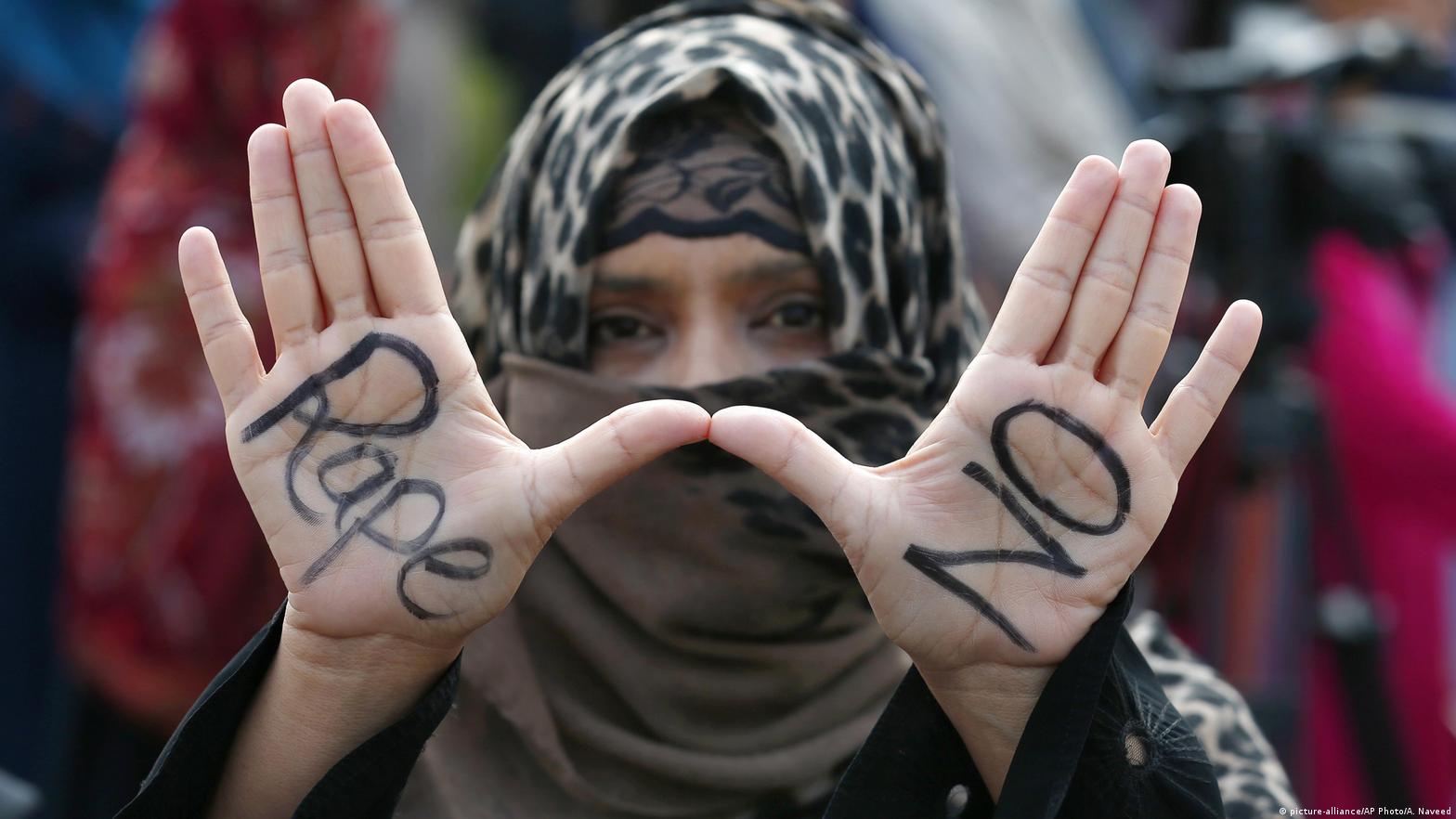
Child Rape and the Collapse of Human Security in Pakistan
As September 2026 passes its midpoint, Pakistan is still arguing about the things that flatter its self image: the credibility of our deterrence, the tempo of hostilities on our frontiers, the merits of carving new administrative units out of tired provinces, etc. While the commentariat measures the republic by the range of its missiles, Sahil, monitoring the press on child protection since 1996, counted a different casualty. Between January and June, 1,914 children were reported abused across Pakistan, close to eleven every single day. Of these, 1,015 were child sexual abuse, alongside 558 abductions, 35 child marriages, and 98 cases in which the assault was filmed. Forty nine infants were found abandoned by the roadside. These come from press monitoring alone so they capture only what reporters saw. The summer was worse.
On 6 July, six year old Muhammad Wali vanished from outside his home in Karachi’s Napier area; his body was recovered two nights later in a sack near Lea Market. A neighbour he called uncle confessed to raping and strangling him. On 4 August, in Qayyumabad, an eighteen month old girl named Aizal Ali was carried out of her home by a seventeen year old relative who said he was buying her something to eat. She came back unconscious and died in hospital. On 10 August, five year old Ayat Noor went missing in Haripur. Aizal was too young to report anything and Wali never got the chance. Neither appears in any dataset yet, because ours are published half a year late.
Human security rests on freedom from fear in the ordinary spaces where life is lived. By that measure we are a state that has armoured its borders and left its nurseries undefended.
Forty five per cent of reported abuse occurred inside the victim’s own home, 43 per cent of perpetrators were known to the child, and 57 per cent of incidents were urban. The danger is not on the Line of Control. It is in the next flat/apartment and it usually has a name the family already knows. Girls were 58 per cent of reported victims, and children between eleven and fifteen the most vulnerable cohort. But treating this as a crime against daughters alone is a failure of both analysis and compassion.
The National Commission on the Rights of Child recorded 5,024 charges of child rape and sexual abuse in 2025, of which 35 percent involved boys.
Karachi police traced seven assaults on boys aged ten to fourteen to a single DNA profile. Rawalpindi registered three assaults in one April news cycle, a teenage boy and two teenage girls, across Westridge, Dhamial and Waris Khan.
In Peshawar this week, a magistrate remanded four men over a home invasion assault. Boys carry this in silence because our vocabulary gives them no dignified way to speak of it.
Islamabad is the most policed ground in the country, and the Interior Ministry’s own submission to the Senate is the cleanest indictment we have. Of 567 rape cases registered in the capital between January 2021 and June 2025, 200 involved children, 93 boys and 108 girls. Two hundred and twenty two accused were arrested. Twelve were convicted. Twenty six were never traced. That is the record in the city that hosts every ministry, every commission and every donor funded pilot. The capital also gave us Noor Mukadam. Zahir Jaffer was arrested at the scene in July 2021, convicted in February 2022, and had his review petition dismissed by the Supreme Court only this June.
Five years of litigation, a defence built on late invocations of mental illness, and a family name heavy enough to fund it. That case ended correctly. The scandal is that it took inherited wealth and the stamina of a retired ambassador to get there. Ordinary complainants have neither. They are worn down, bought off, or persuaded that a compromise is justice. Where influence attaches to an accused, commercial or political, the file does not vanish so much as it slows to a stop.
Equality Now, assessing our legal response to sexual violence in April, found a national rape conviction rate of roughly 0.5 per cent. Khyber Pakhtunkhwa produced one conviction from 258 cases, and Sindh none from 243. The Human Rights Commission of Pakistan logged 6,624 registered rape cases in 2023, one every forty five minutes, and seventy per cent of gender based violence goes unreported. This is not a shortage of law. We have the Anti Rape Investigation and Trial Act of 2021, one hundred and seventy four notified special courts, Anti Rape Crisis Cells meant to be one stop centres for reporting and medico legal examination, an offenders register and a Zainab Alert. What we lack is the will to fund and audit any of it. The Cells are frequently unavailable outside major cities, courts decline to enforce the compensation the Act mandates, and evidence windows measured in hours outrun our forensic reach. Yet it works where it functions: Sindh’s conviction rate rose from five per cent in 2020 to seventeen in 2025 where those courts actually sit.
The judiciary is not merely slow, it is sometimes the problem. Last September the Lahore High Court held that a marriage contracted after puberty is valid even where the girl is below the statutory minimum age.
When the superior judiciary supplies that reasoning, no crisis cell downstream can compensate. Meanwhile UNICEF reported this month that among children surveyed across twenty one countries who suffered technology facilitated sexual abuse, fewer than one per cent told any authority, with Pakistan flagged among the higher risk states.
Punjab under Maryam Nawaz Sharif is the honest test of this argument. Its Virtual Centre for Child Safety, branded Mera Pyara, was named a Global Champion at the United Nations backed WSIS Prizes this year and reports acting in over 54,000 missing children cases. But a reporting portal is an intake valve, not a justice system. It does nothing about the prosecutor carrying three hundred files, the medico legal officer absent at two in the morning, or the appellate judge who reclassifies rape as fornication.
An award for governance innovation sits awkwardly beside a 0.5 per cent conviction rate.
Every atrocity produces the same reflex, a demand for public hanging. We already provide for the death penalty and chemical castration, and neither has moved the curve because deterrence depends on the probability of conviction rather than the severity advertised. When twelve of two hundred and twenty two accused are convicted, the gallows are a rumour. Men released after short sentences return unmonitored to the same streets, and they offend again.
A serious response is boring and it is costable. Ring fence the Crisis Cells with a dedicated budget line and publish district level conviction data. Staff each with a trained female medico legal officer around the clock. Make the special courts exclusive rather than nominally designated. Criminalise the out of court compromise in child sexual offences. Fund the offenders register and oblige schools, seminaries and childcare employers to query it.
A state that can mobilise a strategic response in hours but cannot secure a medico legal examination for a six year old in forty eight has not misallocated resources. It has misunderstood what it is defending. Sovereignty over a population that cannot send its children to the corner shop is an abstraction. Measure this republic not by the calibre of its deterrent but by Wali, by Aizal, by Ayat, and by the eleven children reported harmed today.