



Gen Z • Technology • Social Impact (22 September 2026)
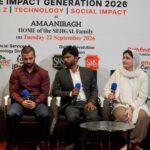
The event “The Impact Generation 2026:
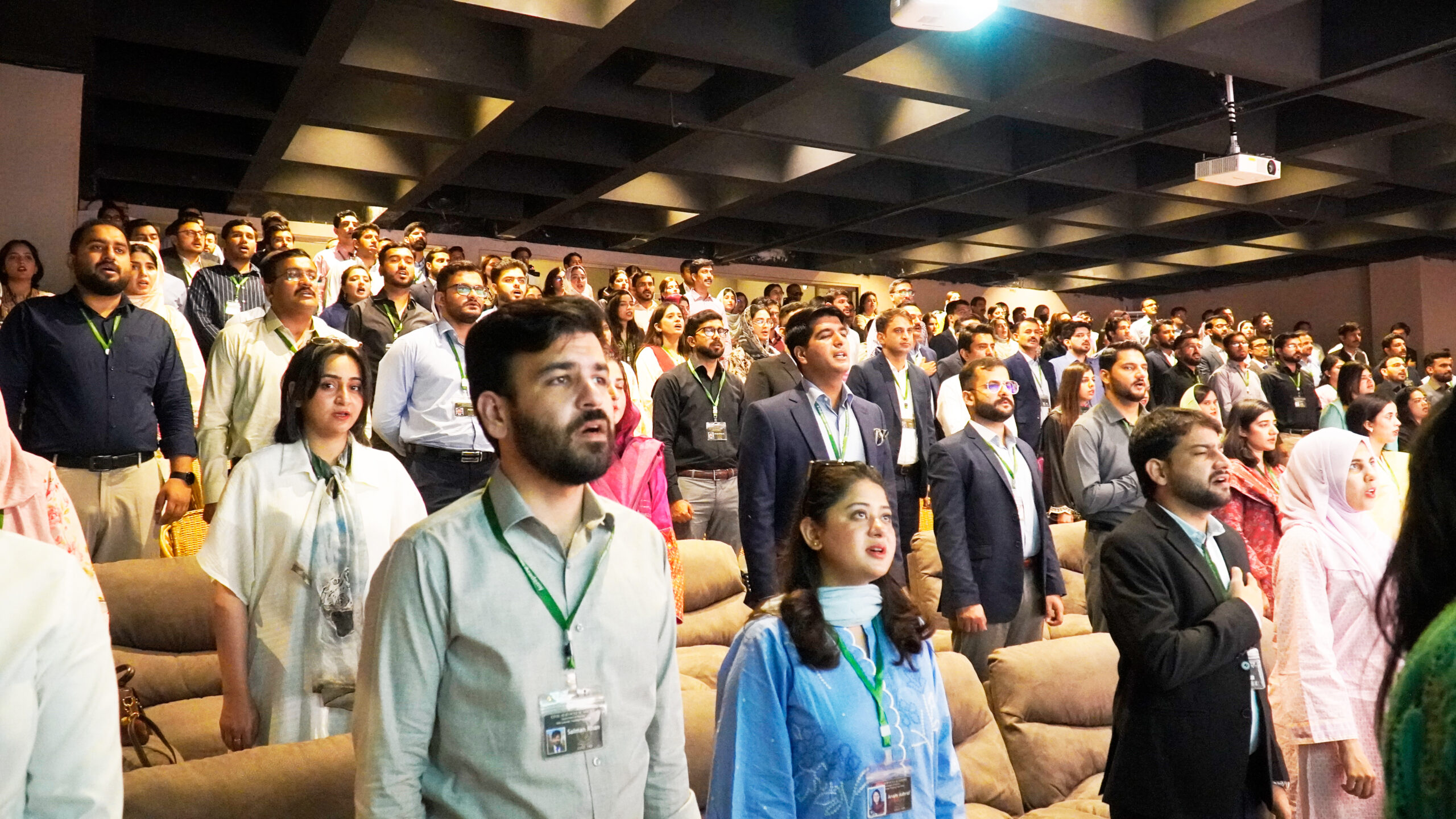
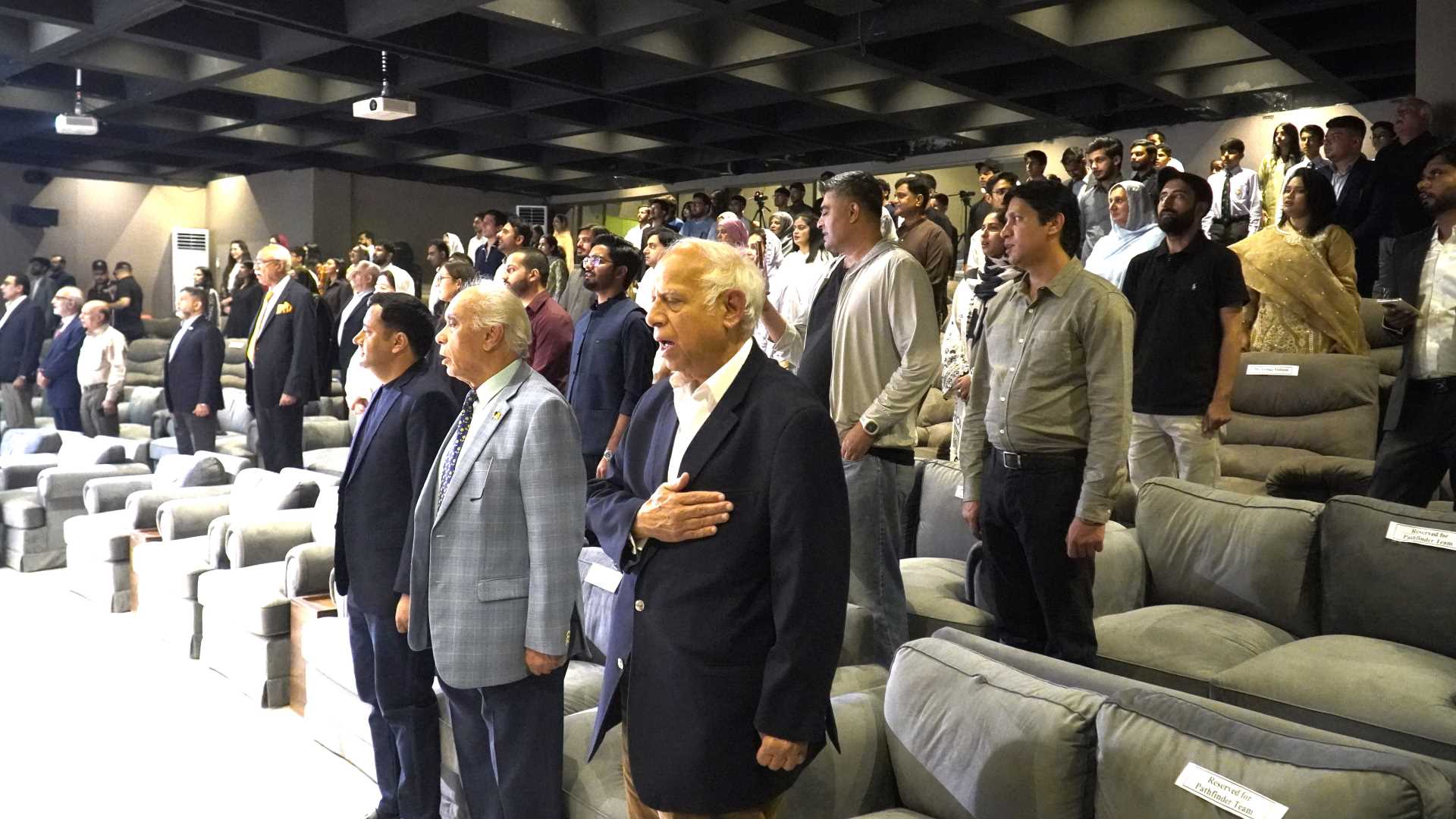
Gen Z, Technology, Social Impact” was organised by PATHFINDER CITADEL of Pathfinder Group on 22 September 2026 at AMAANIBAGH, Islamabad, to explore how Generation Z can harness technology, artificial intelligence, and innovation to address societal challenges and contribute to Pakistan’s development. Bringing together Gen Z, young entrepreneurs, technology experts, researchers, policymakers, and distinguished speakers, the event examined the opportunities and challenges presented by digital transformation, the future of employment, entrepreneurship, and the responsible use of AI. The discussions highlighted the importance of developing indigenous technological capabilities, promoting digital skills, empowering women through technology, and encouraging young people to become creators of innovation rather than passive consumers. Through interactive discussions and practical examples, the gathering underscored the potential of Pakistan’s youth to transform ideas into impactful solutions, promote inclusive development, and contribute to a more innovative, resilient, and prosperous future for the country.
Sehrish Mustafa (Moderator)
The Impact Generation 2026 is a clear look at how digital natives are weaponizing technology to solve real-world problems and leave the planet better than they found it. Gen Z, technology, social impact.
These are three words, but behind them are much bigger questions. What happens when artificial intelligence changes the way we work? What happens when digital technology creates entirely new pathways to employment and entrepreneurship? And what happens when a generation with unprecedented access to technology decides not to just consume it, but use it for innovation and social impact?
These questions are no longer theoretical. Around the world, international organizations, governments, investors, and technological companies are working to translate digital ambition into measurable impact. Recently, Pathfinder CITADEL had the opportunity to engage in an international conversation organized by the Digital Cooperation Organization (DCO) in Riyadh.
The message coming from that discussion is particularly relevant to Pakistan:
Digital transformation is not simply about technology. It is about policy, infrastructure, skills, financing, and partnerships. This platform will bring together young entrepreneurs, technologists, and change makers, and we will try to understand how this generation is turning challenges into opportunities.
To formally open this evening, it is my privilege to invite AVM (Retd) Asad Ikram, President and CEO, Pathfinder CITADEL, to deliver the opening remarks. He has been instrumental in establishing key organizations, including the Navigation System Department at the Advanced Engineering Research Organization, the Telecom and Marketing Department at LTE Engineering Limited, and Aviation Research, Innovation, and Development Initiatives at the Pakistan Aeronautical Complex.
For his meritorious services over the years, he is a recipient of Sitara-e-Imtiaz and Tamgha-e-Imtiaz.
AVM (Retd) Asad Ikram, President and CEO, Pathfinder CITADEL
Ladies and gentlemen, especially the young people we have here today, including the even younger students joining us from the school. It is such a privilege to be here today and to welcome you all to this gathering, where we have people with grey hair as well as those who are still in school. This is something that we at Pathfinder Group feel very privileged to be able to do.
So, why do we bring people from different age groups together? We do so to enable them to learn from one another, question one another, and gain knowledge from one another. Given the topic of today’s event, covering Gen Z and social impact, this is particularly close to our hearts because every generation has a new task to accomplish and new tools to work with. The generation sitting at the back, Gen Z, has access to tools that are far more advanced than those available to all previous generations combined.
The question, however, is what we should do with these tools. First of all, I can sit down and keep scrolling through TikTok, Facebook, and other platforms. There are so many things to do, and I can enjoy the jokes, songs, and whatever else is available. But is that really what I should be doing, or can I do something better than that? The first answer is that I Sehrish Mustafa can learn something. Yes, that is a start, but why do I want to learn? Why do I want to acquire knowledge? You should be able to ask yourself that question: why? I think the answer is that learning should enable us to make a difference, not only in our own lives but also in the lives of the people around us. That is what social impact is all about. It is not about waking up late, staying up late at night scrolling through social media, and telling ourselves that we will develop better habits tomorrow. We have to approach this consciously. We have to think about what we want to achieve and work towards it. This is called selfdiscipline. It means making a schedule for yourself and then using technology in a productive manner.
Now, coming to technology, we hear a great deal about AI, or Artificial Intelligence. There are a few things that are very important for us to understand. First of all, what is the basis of artificial intelligence?
It is based on data that human beings have collected over the ages, particularly during the last 100 years, as more and more information has been recorded. Algorithms are then applied to this data. The question is how we extract information from that data and, subsequently, how we use that information. Of course, this depends on how we, as human beings, allow AI to be used. It should help us make better decisions, but we should not allow it to make decisions on our behalf. Decisionmaking, particularly when it involves human lives and fundamental rights, must remain a human responsibility.
For example, imagine a robot operating on a patient in a hospital. What if we allowed the robot to carry out the entire operation independently? What if something went wrong and the patient died? Similarly, what if I suggested that the responsibilities of the police should be transferred to robots, or what we call Robocops? They would have guns in their hands and the authority to use lethal force. Would that be acceptable? No. Therefore, it is very important to understand how we should advance artificial intelligence and, more importantly, how we should regulate and control it.
However, to achieve this, it is essential that all of us sitting here, along with the wider Pakistani population of 250 million people, ask ourselves an important question: will we simply use the AI tools provided by Google, Claude, and other companies, or should we develop our own? If the data belongs, the algorithms, the thought, and the value system all belong to someone else, then whenever I ask these systems a question, whether it concerns something right or wrong, they will provide an answer based on their own perspectives and values. What should happen instead?
I want an answer that reflects my own culture. How will that happen? It will happen when the data is our own and the algorithms are developed by us. And who will develop them? You have to do it. The younger generation has to take the lead in this effort.
We do not have our own algorithms to the extent that we need them, so we rely on those developed by others. These algorithms can influence the way we think and shape our perspectives in whichever direction their creators choose
This brings us to the concept of Global Shapers. At present, there are two countries that dominate this space: The United States and China, because they possess the necessary hardware, software, and technological capabilities. The second category consists of the global takers, who use the technologies developed by others. Of course, this includes everyone else apart from the Americans and the Chinese. However, there is another position between these two categories that we should aspire to occupy, and that is the position of global makers, particularly global AI makers. We must develop our own tools so that we can use our own data and build systems that reflect our own needs, values, and priorities.
Closely connected to this is another question that is often asked: what should we study? What will be useful tomorrow? Which technology should we pursue? What is going to emerge in the future? Someone expressed this idea very well by saying,
“Don’t try to predict the future; make the future yourself.”
To do that, we need the self-discipline I mentioned earlier. We need discipline, the right way of thinking, and the mindset that tells us we have to become leaders.
Leadership is not developed by sitting in front of a television. Leadership is built through sacrifice. This does not mean that you have to give up your life. Rather, it means sacrificing your time and giving up many other things you might want to do. It means sacrificing sleep when necessary and making choices that allow you to concentrate on what truly matters. You have to remain focused, and that is extremely important. This commitment should provide you with the impetus to move forward.
We are a country of 250 million people, the fifthlargest population in the world. Why should we not be leaders? If we change our mindset, we can get there. Even if we stumble along the way, no one can stop us from achieving our goals if we remain determined and continue moving forward.
I recently visited Saudi Arabia. When you sit in a taxi there, and the driver asks you where you are from, and you tell him that you are from Pakistan. They immediately say, “Pakistan Zindabad!” Why do they say that? They say it because of the international trust Pakistan has earned through its efforts to help resolve and mediate the conflict involving Iran, the United States, and Israel. That is the reason they express such sentiments towards Pakistan.
It is easy to talk about such things, but putting them into practice is always very difficult. Nevertheless, people like us, people from among our own ranks, have taken these steps and made such efforts possible. If they can do it, why can’t all of us do it? That is why I am genuinely thrilled to see so many people from the younger generation here today.
Sehrish Mustafa (Moderator)
I have a question for all of you. If you had technology, talent, and zero fear of failure, what problem would you solve? Because today it is not simply about talking about technology but about understanding how we can turn technology into opportunities, ideas into businesses, and talent into impact.
For an interactive discussion with Gen Z, I would like to invite a policy professional analyst at the Tabadlab, a very dynamic and young member of Global Shaper, Ms Mahrukh Faraz.
Mahrukh Faraz:
I am a consultant by profession working in the digital and emerging economy space. Since I am embedded within the Ministry of Information Technology and Telecommunication (MoITT), the major focus of my work has been planning for the implementation of AI in Pakistan. My responsibilities also broadly include managing the MoITT portfolio and ensuring that its impact is measurable and relevant to the global trends we observe.
Given the nature of my work, I face a conundrum almost every day. I often wonder how the work I do today will affect the jobs, careers, and opportunities available to me in the coming years. After all, I am working on something that could eventually mean that my job might be taken away at some point. Even if it is not eliminated, it could be altered in some way. This is one of the primary reasons why we are having this conversation today.
We have a Gen Z audience here, and we are going to conduct a live survey and interactive session to understand how we all think about AI, technology, and entrepreneurship. We also want to identify whether there is any common ground in terms of our motivations, the dilemmas we face, and the concerns we share regarding AI and emerging technologies. My one request is that everybody participate actively. I have a series of questions to ask as a warm-up, and I would also encourage those who are younger at heart, even if they are slightly older and more senior, to participate.
To begin, could everyone raise their hands energetically if they use AI almost daily? So, approximately 70 per cent of the room uses AI regularly. How many of you think AI is becoming more powerful every day, performing better and providing better responses? And how many of you think it could be dangerous in some way?
Do you think it is going to be dangerous? How many of you think it will be beneficial? I also want to know how many people in the audience, particularly the younger participants, want to start a business. Oh, wow! That is not a lot of people. I can see about nine or ten hands. How many of you already have a business idea in mind?
Great! That is quite a few. And how many of you plan to pursue your ideas here in Pakistan? How many of you do not think there is much value in pursuing them here and would rather go abroad? This is good. Only two people have raised their hands for the latter option. This gives me a useful baseline from which to explore a few questions in greater depth. For my first question, I would like to understand the reasons behind your preferences before taking a few responses from the audience. How many of you prefer a nine-tofive job or believe it is a more feasible option for the future than entrepreneurship? Or does nobody think a nine-to-five job is a good option? How many of you are currently working nine-to-five jobs? All right, but I would like to ask one of you to explain your perspective. And how many of you, presumably everyone else, think entrepreneurship is a better option? The response from the audience is great.
Could someone who is currently working explain the case for a nine-to-five job? Since we are discussing AI generation, I would also like to hear from someone who believes that a nine-to-five job is not a good idea. Does anyone have a reason they would like to share?
A female from the audience: I have been working as the Vice Chancellor of Karakoram International University, where we have been working closely with young people. We have seen some very successful entrepreneurs who have established highly successful businesses.
During my interactions with many of my young students, particularly girls from Hunza and other parts of Gilgit-Baltistan, I found them to be very forthcoming and enthusiastic about pursuing opportunities beyond traditional employment.
They were not particularly inclined towards conventional nine-to-five jobs. I could see that the younger generation, particularly Generation Z, has a strong tendency towards disruptive thinking. They do not want to follow the same path as us by working conventional nine-to-five jobs.
I believe this is a positive trend. Entrepreneurship and disruptive thinking are particularly important when we discuss AI and its implications. I see tremendous potential in this country and among its young people, especially Gen Z.
Mahrukh Faraz:
Thank you, sir. Is there anyone who would like to talk about entrepreneurship?
Zunaira Omar:
I have experienced both. I started with a nine-tofive job and then ventured into entrepreneurship. I have actually founded two companies. I believe that, for the younger generation, a nine-to-five job provides an initial learning ground that can be extremely valuable throughout the entrepreneurial journey. If you move directly from your studies into entrepreneurship, you face a steep learning curve.
You have to learn how to establish an organisation, how it operates, and what its various functions are. Therefore, while entrepreneurship is, and should be, the goal, I would still recommend gaining some initial work experience. Working a nine-to-five job for a few years allows you to understand how an organisation functions before venturing into entrepreneurship.
In my case, I started my own business quite late, after working for around 15 years. I am glad to see that young people today are taking this step much earlier in their careers. However, I do believe that structured learning and professional experience are also very important.
Mahrukh Faraz:
I actually agree with you. Does anyone else have a case to make for a nine-to-five job? Why do you think a nine-to-five job is the way to go?
Audience Member:
I do not mind sharing my thoughts. The first thing I would like to tell everyone here is that we may not be raising our hands in favour of nine-to-five jobs, but if you are not working nine to five, you will probably have to work nine-to-nine. And that does not necessarily make things any easier.
Mahrukh Faraz:
It could also mean working 24 hours a day! So, I agree with Zunaira. Although I have not yet embarked on an entrepreneurial journey myself, I certainly agree that spending the initial years working with an organisation that has well-established processes and mechanisms for understanding and managing things can help you develop the skills you need. Such an environment can accelerate your professional development and refine your abilities, preparing you to become an entrepreneur. So, I agree with you on that. There are just two more questions I raised earlier that I would like to explore in greater depth. First, there was considerable polarisation in the audience regarding the benefits and dangers of AI. I would like to hear from volunteers who are optimistic about AI and can explain why they feel that way, as well as from those who believe AI has negative implications and can share their reasons. Are there any volunteers who would like to contribute?
Air Cdr (Retd) Farhan Ahmed:
As I see it, AI is neither inherently good nor inherently bad. I would say that it is simply a technology, and technologies are generally developed for the benefit of people.
Their purpose is to augment human performance and enhance efficiency. The danger does not necessarily arise from the capabilities of the technology itself, but from how it is used and the absence of an appropriate governance structure.
People like Sam Altman and Elon Musk have all called for a slowdown in AI. This does not mean slowing down innovation or the development of the technology itself. Rather, the purpose of this slowdown is to establish proper governance and control mechanisms within the technology so that it can be made more beneficial to humanity. That is what I believe. If you remove the governance structures from this technology, then, yes, it could become one of the most dangerous paths that humanity is pursuing.
Mahrukh Faraz:
I completely agree with you that the ethical use of AI has become one of the most widely discussed issues because of the implications we are beginning to witness. I do not know whether anyone anticipated that AI would evolve so quickly, but now that it has, everyone seems to want its development to slow down. Would anyone else like to share their views, either in favour of or against AI?
Audience Member:
I agree that AI is becoming increasingly dangerous, and the reason is that whenever we have an idea we want to brainstorm, we turn to AI instead of using our own brains. As young people, we face many emotional challenges, and instead of connecting with real people and seeking their advice, we turn to a machine. We are becoming increasingly dependent on AI and sharing more and more data with it about how we manage our emotions and how our emotional intelligence works. With all this information, AI can begin to influence and control us.
Audience Member:
My name is Muhammad Waqas, and I would like to add one thing. Everyone is talking about how dangerous AI is, but I would like to ask how dangerous a car could be. Everyone wants to buy a car to travel, but we also know how many accidents occur on the roads. Does that mean we should stop adopting new technologies? No. It simply means that we need to take the necessary precautionary measures.
Mahrukh Faraz:
I completely agree with Waqas that every new technology must operate within a governance framework, as sir mentioned, with appropriate rules, regulations, and protocols in place.
I also noticed a dichotomy in the responses to another very interesting question, which was whether people would prefer to pursue their entrepreneurial careers in Pakistan or abroad.
Could someone help me understand this better? Is there anyone who would like to stay in Pakistan and explain why they believe it is the right decision?
Audience Member:
I want to stay in Pakistan. As a student of International Relations, I have observed a lack of awareness in our society. My future goal is to establish a think tank or foundation that can help raise awareness among people. I believe it is possible to build a future in Pakistan. Many people choose to go abroad, but it is equally possible to stay in this country, work for its development, and serve its people.
Dinar Wali:
I would say Pakistan, not necessarily out of patriotism, but because there is a strong business case for it. There is an economic case as well because the gap between the problems and the solutions available is enormous. When you look at countries such as the United States and China, you see that they have many people working to address their challenges. The greater the number of problems, the greater the opportunities to develop solutions. We need to apply technology and the right tools to these problems, find solutions, and turn those solutions into viable businesses. Once you solve a problem, you become an entrepreneur. For me, an entrepreneur is someone who solves problems. We have plenty of problems in Pakistan, and we need to solve them.
Audience Member:
I believe there is enormous potential for technology in Pakistan. In fact, the fewer the existing solutions in a particular area, the greater the opportunities for innovation and development. When you go to the United States or other developed countries, you find that considerable progress has already been made in many fields. Therefore, I believe we should focus on working in Pakistan and developing solutions here.
Audience Member:
I was offered the opportunity to immigrate to the United States twice, but I declined both times. I am a medical doctor. In the United States or England, I would have been one of many doctors. In Pakistan, however, I am one of the few.
Mahrukh Faraz:
I agree. Actually, I once had a conversation about this with some of my friends who live abroad. I remember speaking to someone who asked me,
“Don’t you feel that you are missing out? People who move abroad will have
better opportunities in life.”
My response was that I actually feel privileged because I received an excellent school education and then attended a great university in Pakistan. Because of the opportunities I have had, I am part of the cream of this country. When many talented people leave Pakistan to pursue opportunities abroad, it creates more room for those of us who remain here to contribute and make a difference. Whatever I do in Pakistan is likely to be far more noticeable and have a more visible impact than it might elsewhere in the world. Fortunately, I am also in a profession where I feel that my work is globally competitive. So, I completely agree with your perspective.
Before I wrap up this discussion and set the stage for the panel discussion, there is one last thing I would like to do. Imagine that tomorrow we wake up in a Pakistan where we have access to all kinds of AI tools, advanced technologies, and highly skilled human resources. Imagine that all these resources are readily available to you. What is the one problem in Pakistan that you would want to solve?
Audience Member:
If I could identify one problem that we should eliminate from Pakistan, it would be inflation. In fact, I would like to see inflation eliminated not only in Pakistan but throughout the world. I believe inflation is like a balloon that can be deflated if we manage our resources and use the available tools properly.
Kamran Khan (Audience):
I am an aquaculture professional. I completed my Master’s degree in Germany, where I studied and gained practical experience in aquaculture systems. After completing my studies, I returned to Pakistan. Whatever savings and investments I had, I invested in my STARTUP here. Through this venture, I am generating employment opportunities and serving my people. Regardless of the circumstances, I intend to remain in Pakistan. I will face the challenges and do my best to contribute to the country’s development, Insha’Allah.
Syed Ahsan Ali:
I am from Skardu, Gilgit-Baltistan, and I teach at the Federal Urdu University. One issue I would like to address with the help of AI is the problem of governance in Pakistan. As a university teacher, I interact daily with many talented students. They possess considerable talent and potential, and they have the determination to bring about positive change in our system.
However, the problem they face is that they are not given sufficient opportunities to demonstrate their abilities. I would therefore like to help transform the system so that these young people have the opportunities they need to express their potential and contribute meaningfully to society
Abdullah:
In Pakistan, when we talk about a child’s development, we tend to focus primarily on providing education rather than identifying and nurturing a child’s individual capabilities. If we look at countries such as China, Japan, and South Korea, we can see the importance they place on investing in children during their early developmental years. They recognise the importance of identifying children’s abilities at an early age and creating an environment in which those abilities can flourish. I believe Pakistan should adopt a similar approach by investing in children’s development early and helping them discover and develop their individual strengths.
Audience Member:
If I had the opportunity to use AI to address one issue, I would focus on something that affects not just Pakistan but the entire world. I would use that opportunity to address the growing dependence on AI chatbots. In my opinion, these tools have significantly disrupted human life, and I believe we need to reconsider the extent to which we rely on them.
Audience Member:
I actually have a question for you. What kind of funding is the Government of Pakistan providing for research in AI and information technology, particularly in comparison with countries such as India, the United Arab Emirates, and Saudi Arabia? Earlier, you asked how many students would like to go abroad. I run a school, and I can tell you that many students are preparing to leave Pakistan.
Whether you speak to students from Khyber Pakhtunkhwa or Balochistan, you will find that a considerable number of them are planning to pursue opportunities abroad. Regarding the dangers of AI, many executives of companies working in AI, as well as experts in the field, have been expressing concerns about its development. Some have reportedly left their positions or stepped away from the field. Geoffrey Hinton, who is widely regarded as one of the pioneers of modern AI, has also cautioned the world about the potential dangers, warning that we may be entering a highly uncertain and risky period.
I believe these concerns are becoming increasingly important and may even feature in discussions between US President Donald Trump and China’s leadership.
Mahrukh Faraz:
I recently joined the Ministry of Information Technology and Telecommunication about a month ago, although I had already been working on the AI portfolio before joining the Ministry. As you know, Pakistan introduced its first AI policy in 2025. I would agree that, by international standards, our policy framework is not yet as robust or well-developed as it could be. This is one of the reasons why other countries have more advanced policies: they entered the AI ecosystem much earlier than we did.
However, sir, the initiatives currently underway place considerable emphasis on upskilling and developing our human resources.
The government has set a target of training one million people by 2030. This includes government officials, students, teachers, and private-sector professionals. For now, a major focus is on people working in industry and academia.
The government is also establishing an innovation fund within Ignite. Thirty per cent of Ignite’s funding is now being allocated to what we call the National AI Innovation Fund (NAIF). Through this initiative, the government intends to send 100 professionals abroad to pursue PhD degrees in AI and technologyrelated fields. In addition, approximately 400 AIspecific projects and pilot initiatives are expected to receive support through sponsorship and incubation programmes. These are the primary initiatives I am aware of, and these are the areas in which we are currently working to make progress.
I think this provides an appropriate starting point for our broader conversation. Regardless of whether we choose a nineto-five job or pursue entrepreneurship, the ultimate goal is to ensure that our professional lives contribute to something meaningful. Whether we work to earn money, create an impact, or gain influence, we should carry a sense of purpose into our professional lives. At some point, and at some level, our work should be aligned with creating a positive impact for our country.
Even if making an impact on our country is not our primary motivation for earning a living, having even a small intention to contribute can go a long way towards strengthening and expanding our digital economy and supporting the country’s overall development.
With that thought in mind, I would encourage everyone to reflect on these ideas as we move on to the next panel discussion.
Sehrish Mustafa (Moderator):
Only 3 per cent of Pakistan’s GDP is allocated to education and health combined, which is inadequate.
The budget for higher education has already been reduced, and I believe that efforts to upgrade technology, research, and skills are also drawing from this already limited allocation, which is insufficient to meet even the basic requirements of the education and health sectors.
The situation is certainly challenging, but let us hope for the best. At least we are moving in the right direction.
So, let us return to our main topic: the ultimate trio of Gen Z, technology, and social impact. Today is all about a generation that does not simply scroll through history but actively rewrites it. We are looking towards a future where algorithms meet activism and technology is not merely a tool but a superpower for creating meaningful change.
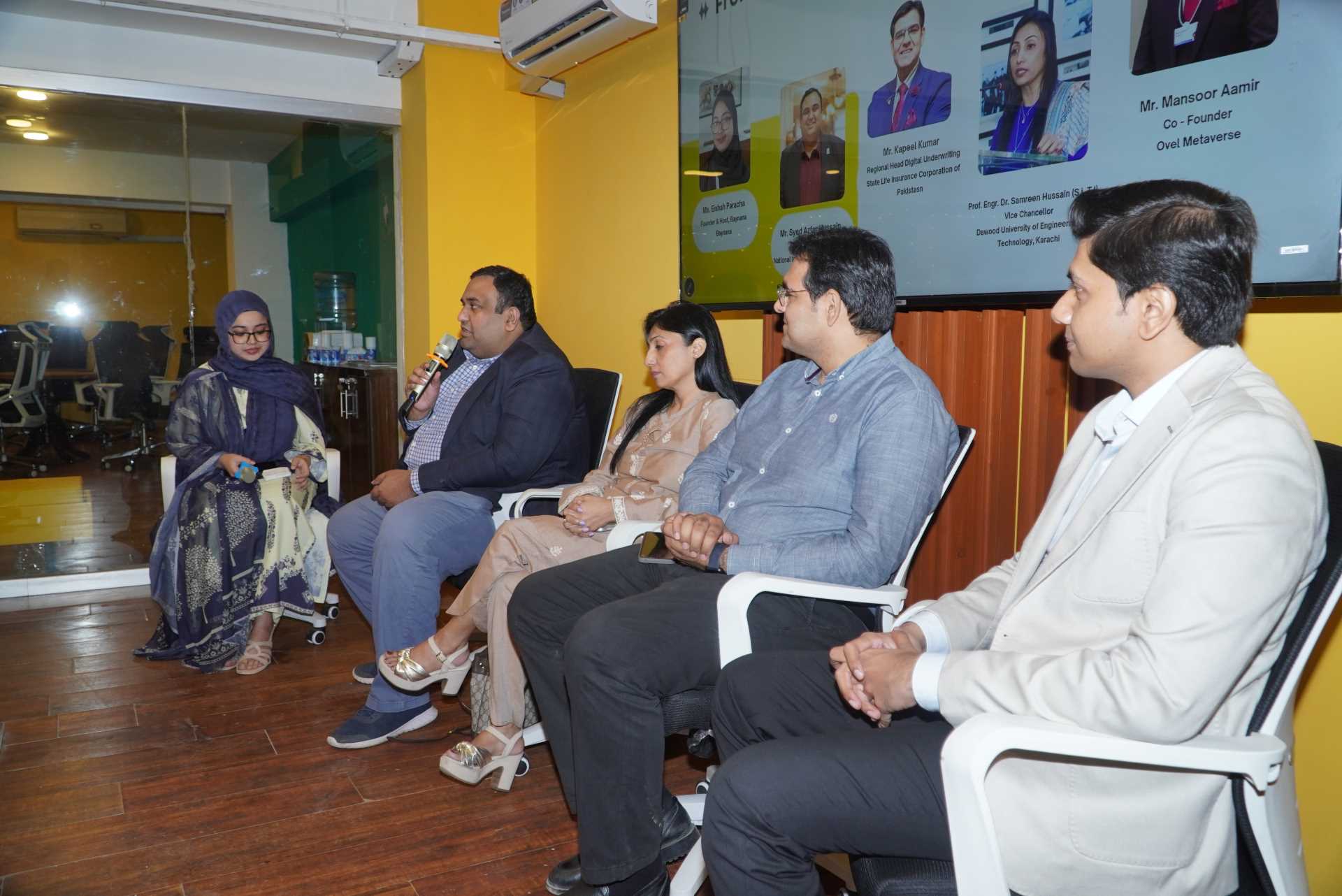
The moderator of the panel discussion on “From Scroll to Impact: How Gen Z Can Use Technology to Change What Matters” is Air Cdre (Retd) Farhan Ahmed.
He is Director and CEO of Pathfinder CITADEL. He has 32 years of distinguished service in the Pakistan Air Force and has played a pivotal role in advancing Pakistan’s aerospace and innovation landscape. As Managing Partner of Innovator Garage International, he has led transformative initiatives in innovation, human capital development, and project management. In recognition of his exemplary services to the nation, he has been awarded the prestigious Sitara-e-Imtiaz (Military) and Tamgha-e-Imtiaz (Military).
Our distinguished panelists are Maaz Ali and Syed Aman Shah from Vector AI. Maaz Ali is the founder of Vector AI, while Syed Aman Shah is its co-founder and Chief Strategy Officer (CSO). Aman Shah is an entrepreneur who focuses on business strategy and ventures that generate social and economic impact. Zunaira Omer, founder of CMOontheGo. She is a software engineer with extensive experience in digital marketing and digital transformation across local and international projects. Mohammad Waqas is a BIM and AI engineer. He is a senior civil infrastructure engineer and an associate at the Railway Estate Development and Marketing Company, Ministry of Railways. He brings more than 15 years of experience in civil infrastructure and publicsector estate development.
FROM SCROLL TO IMPACT: How Gen Z Can Use Technology to Change What Matters
Air Cdre (Retd) Farhan Ahmed:
What is AI, and what is this generation? I believe the two are closely connected. As far as we are concerned, Gen Z is a source of inspiration for us. They represent the future. Having observed them, interacted with them, and worked with them, I find that they are much more secure in themselves than previous generations. As the saying goes, every generation has its own talents, roles, and tools that it carries forward. The question is how effectively you use those tools and make the most of the environment in which you operate. How do you capitalise on what you have and the opportunities available to you? You have numerous opportunities, greater awareness, and access to an enormous amount of information that can help you become more knowledgeable and empowered. I am very happy to see people of this generation using their voices to question those in positions of authority and the relevant regulators. That is a good thing and a wonderful part of the process of growing up. However, there is one important point to remember: ask yourself the same questions you ask others, and consider whether you meet the same standards by which you judge them.
Nevertheless, moving forward, I would like Gen Z to talk more about these issues and participate more actively in this discussion. I will start with you, Zunaira. Considering your experience with technology and your background in the media industry, you mentioned the conventional 9-to5 workday, the 9-to-9 routine, and even working around the clock. You have seen all sides of the industry. How would you reconcile the current capabilities and tendencies of this generation with the technology they are adopting and embracing?
Zunaira Omer, Founder, CMOontheGo:
I lead a team of 30 people, around 50 per cent of whom belong to Gen Z. The main point of discussion here is the availability of technology and how we perceive and use it. I feel that Gen Z, when viewed through the lens of Maslow’s hierarchy of needs, is not satisfied with earning good money alone.
What they want is self-actualisation. I believe this is one of the ways they differ from our generation, and I really appreciate that about them.
When it comes to technology, I think mindfulness is the most important factor. I am a marketer, and we are the ones who retarget you with advertisements and persuade you to buy things you do not need. In that sense, we are the evil ones in the room. So, as an evil marketer, I would advise you to build your own algorithm rather than letting the algorithm build you.
How can you do that? When you scroll through Instagram, you may notice that if you start liking certain posts or even pause briefly while viewing them, you can end up going down a rabbit hole. That is how the algorithm begins targeting you with similar content.
Therefore, you need to consider the content you consume and ask yourself three questions: What is the intention behind this content? How will it affect you? And who is the person delivering that content? Ask yourself these three questions and then build your algorithm accordingly. That is how you can develop a feed that supports your goals rather than simply encouraging you to keep scrolling.
Air Cdre (Retd) Farhan Ahmed:
Let me return to another point you raised: the 9-to5 or 9-to-9 workday. My view is that this generation may not be suited to the traditional 9-to-5 routine. The environment in which they live and work is not necessarily compatible with that model. Some people call this disruptive, but I would call it innovative. Nevertheless, I believe you are also part of Gen Z, or at least close to it, and you are an entrepreneur as well. You began your entrepreneurial journey during or immediately after graduation. There was a debate in the hall earlier about whether people should first gain a foundation through employment and then begin their entrepreneurial journey. Do you think starting a job first helps prepare someone for entrepreneurship, or can it become a constraint that holds them back before they eventually venture into business? In other words, does employment help or hinder someone who wants to become an entrepreneur?
Syed Aman Shah, CSO, Vector AI:
I am a FAST graduate. Back in 2019, there were very few graduates specialising in AI from FAST, and the demand for such graduates was enormous. Almost everyone had secured employment before graduating. Now, in 2026, the batch that graduated in 2022 has reached a very different situation, with 95 per cent of students from one of the best universities in Pakistan being underemployed.
We have an AI company and want to employ many people. There is a great deal of talent available, but we do not have the capacity to bring everyone on board. Sometimes, we are surprised to see people struggling to find employment. Why is this happening? Back in the day, companies such as Motor and Affinity, which were considered unicorns, used to hire the top-tier talent, perhaps 10 or 15 people. One of my friends from the 2019 batch wrote code that made 600 people redundant.
There is a catch here. As Sir Farhan mentioned, there are reasons why Gen Z and the new generation might not be suited for the traditional 9-to-5 routine.
First, the competition has become so intense that it is now a matter of survival of the fittest. If no one is coming to save you, you have to save yourself. To do that, you must be innovative. For me, the biggest advantage of AI is not simply the technology itself, but its ability to transform how we work. Its most significant contribution is that it has reduced the time between having an idea and executing it.
You no longer need someone to spend hours manually logging data in a large company because AI can perform that task for you. It can set up your emails, help book your flights, and handle all those small, routine tasks that previously required considerable time and effort. Therefore, my message to everyone sitting here, particularly the younger generation, is to get hands-on experience with AI and technology.
The world you are entering is not the same world your parents entered. If you are not innovative enough, you may struggle to survive in this changing environment. Even the education you are receiving today might not be sufficient to prepare you for the future or enable you to provide your children with the opportunities you want for them unless you learn to adapt and innovate.
Air Cdre (Retd) Farhan Ahmed:
Let us not frighten anybody with this discussion. I agree that technology and AI will take over many lower-level and entry-level jobs. However, remember that AI will also create many new jobs. There were no data centres in the past on the scale we see today, but now we need people to work in them. What matters is your ability to adapt to the technology and the age in which you live.
Do not be frightened. There will be plenty of jobs and opportunities, regardless of the technology available or the direction in which it takes us. You simply have to equip yourself with the right tools.
Waqas, after completing your civil engineering degree, you transitioned into the field of AI. How difficult or easy was it to change fields? You have now established your own startup, Mashallah. How have you navigated this journey, and how difficult or easy is it to make such a transition in today’s technologydriven environment?
Mohammad Waqas, BIM and AI Engineer:
I think changing fields is a very difficult decision. What I want to highlight is that more than 90 per cent of my batchmates are not connected with emerging technologies.
Only around 10 per cent are actively engaged with them. When I decided to change fields and move towards AI, some of my friends advised me against it. However, I felt that I needed to take this step. I wanted to understand emerging technologies, and I realized that if we do not adopt AI now, we risk becoming outdated in the future. I already had some exposure to AI because, after completing my degree in civil engineering, I pursued BIM engineering.
Initially, it was difficult, but I gradually learned how to work with it. I also conducted extensive research in this area. It has been a wonderful project and a valuable learning experience.
Air Cdre (Retd) Farhan Ahmed:
Waqas, you are a civil engineer who transitioned into AI and have now developed a comprehensive construction application. You simply enter the dimensions of your plot, and the application provides all kinds of details, including the construction design and interior design. It generates a complete 2D plan and a full 3D design, along with the estimated construction cost and the Bill of Quantities (BOQ). It can automatically generate these details, including the interior design, which can be customized according to your preferences. You can change virtually every aspect as you wish.
That is his journey: transitioning from civil engineering to becoming an entrepreneur through the use of AI. It is a good example of how people can combine their existing professional knowledge with emerging technologies to develop innovative solutions and establish their own businesses.
Well, Maaz, also has something of a roller-coaster journey, and I believe you are now entering calmer waters. You have been involved in entrepreneurship for quite some time, although perhaps not as long as some might think. How would you assess your journey, and what advice would you offer to this generation? If young people want to take the entrepreneurial path, what steps should they follow? Let us go through them chronologically so that they can build their understanding step by step.
Maaz Ali, Founder, Vector AI:
When you start a business, the first thing you have to do is leap. Gen Z understands the distinction between right and wrong and is willing to stand up for what it believes is right. The distinction between right and wrong applies to your neighbourhood, your home, your company, your immediate surroundings, and your friends. It also applies to your country and your international engagements. When you enter into international partnerships, there is an important line you must draw between earning revenue, making money, and doing the right thing. It is easy to make money if you disregard all boundaries and principles. However, if you want to live a life of 30, 50, 60, 70, or even 80 years while maintaining your principles, and ultimately hope to attain eternal life, the path becomes more challenging.
Nevertheless, Allah has placed nine out of ten avenues of provision in business, as the saying goes, and He has also placed difficulties along the way for a reason. Therefore, I do not think there is anything to be afraid of. As I said, the question is difficult, and entrepreneurship certainly comes with challenges, but these challenges should not discourage you.
We often become confused and start asking ourselves how we will sell products in the AI and technology sectors. However, three things will always remain essential to human life. People will always need food, which means there will always be opportunities in the food business. People will always need clothes, creating opportunities in retail. And people will always need a roof over their heads, which creates opportunities in hospitality and construction. Without trying to turn this into a slogan, food, clothing, and housing are fundamental human needs that are here to stay. People will always need them, so there is no reason to be afraid of starting a business in these sectors.
We all eat at some of the excellent restaurants in Islamabad, and many of these businesses continue to thrive. Why is that? They face risks and challenges, too, but they continue to operate and succeed.
Someone has written about this as well, highlighting the fact that businesses can survive despite the risks they face. So, there really is nothing to be afraid of.
Air Cdre (Retd) Farhan Ahmed:
Zunaira has built her career around technology, I believe that technology has created more opportunities for women. I would like you to shed some light on how it can empower them. We all talk about women’s empowerment, but in my opinion, empowering women also means enabling them to become financially independent. I believe financial empowerment is the most effective way to achieve this. How can technology help women achieve financial independence?
Zunaira Omer, Founder, CMOontheGo:
As I mentioned earlier, I run two companies. One of them employs close to 30 people, has been operating for the past six years, and serves clients across the globe. Since it is a marketing company, I think we need to understand that the consumer is still human. When AI entered the picture, there was enormous hype surrounding it. We experienced this firsthand, as some of our clients began telling us that they no longer needed our services because they could use AI instead. We were also told that our fees should be reduced because we were now using AI and, supposedly, were no longer investing as many resources into our work. That hype continued for about a year. But what has been the result? One term that is now being used frequently is “AI slop”. Even LinkedIn provides an option to report content that appears to be AI slop. Why is this happening? Because everything is beginning to look the same when people rely on large language models (LLMs) to produce content.
There are fewer mistakes, but there is also less authenticity. There is so much noise that people feel overwhelmed. In this environment, authenticity is what makes content stand out.
When people say that AI will replace our jobs, I disagree with that generalisation. I have participated in multiple discussions on this subject and have also been involved in discussions on AI policy and AI governance. We need to understand that the nature of jobs will change, rather than assuming that all jobs will simply disappear.We must identify where human input remains necessary and which tasks can be automated. This is particularly important because many entry-level jobs are already being automated.
Companies and academia therefore need to work together to understand what kinds of entry-level opportunities should be created and how academic institutions need to prepare students for them. If you put a gun to my head, I could still write something independently. However, young people who grow up relying on AI may not develop the same ability to write on their own. That is an important concern I want to highlight.
Now, coming to women in technology, more than 80 per cent of my workforce consists of women, and they work from different parts of Pakistan. I have team members in Quetta, Mirpur, Karachi, Lahore, and Islamabad. They have graduated from some of the top universities in Pakistan. The reason they work with me is that we provide a results-oriented work environment. They do not have to come to an office and can work remotely from anywhere, provided they deliver the required results.
I can tell you from experience that, when given the opportunity, these women perform exceptionally well and often outperform their male counterparts. I completely agree with what Farhan Sahib said. Technology is the key because it allows people to perform certain kinds of jobs from virtually anywhere. I believe this flexibility is one of the major factors helping women achieve greater professional opportunities and financial independence.
Air Cdre (Retd) Farhan Ahmed:
I think we have managed to bring the discussion together and cover the main points. However, remember that AI is just a technology. What matters is how we embrace it and how we use it. Therefore, use it wisely and for your own benefit. Most importantly, become a creator of AI rather than merely a user of AI. If you remain confined to the role of a user, you risk becoming dependent on technologies developed by others. This dependence can become a threat to your national security and national identity. We must therefore encourage our young people to enter the AI development and innovation space.
They are the ones who can help take Pakistan forward and enable us to become creators of technology rather than merely consumers of it.
Sehrish Mustafa (Moderator):
Thank you so much for such an inspiring discussion on technology and its impact. Now, we will discuss a significant problem in Pakistan and around the world:
Climate change. We have someone in the room building climate-smart agriculture:
Mr Dinar Wali. He is a Geospatial Computational Researcher, Entrepreneur, and Founder & CEO of RegenX.eco, developing climate-smart solutions through regenerative agriculture, renewable energy, and Geospatial technologies.
His research focuses on forest loss, glacier dynamics, mangrove ecosystems, carbon storage, and climate change in Pakistan, alongside regenerative agriculture initiatives for high-altitude communities and specialty crops like saffron.
Dinar Wali, Founder & CEO of RegenX.eco:
There has been a lot of discussion about artificial intelligence, but I am not going to focus on the artificial side. Rather, I am going to talk about the natural side. I am a Geospatial Computational Researcher, and my work revolves around the natural world.
We conduct analysis and geospatial modelling, and apply them in Pakistan, particularly in agriculture. We also work on climate modelling. 14 mountains in the world are 8,000 meters and above, and five of them are in Pakistan. The US does not have five mountains of 8,000 meters; China does not have that either. Pakistan has them. This is an opportunity for you. But the real question is: how are we going to take advantage of this opportunity?
Obviously, there is a problem as well, because the climate change issue we are facing is probably a consequential problem. Perhaps it is going to become an existential problem. But we have to model it. We have to understand what is happening. What are the opportunities? What are the prospects? What are the perils? So, this is the work that I am doing.
K2 is the world’s second-tallest mountain, and I would probably say that it is more pristine than Everest because summiting it takes a great deal of effort. We have glaciers in the north, and outside the polar regionsthe North Pole and the South Pole- Pakistan holds the
largest glacier density in the entire world.
We have to spread awareness about this, and then we can brand it the way Taiwan did, or the way other countries have done. We talk about TSMC, two-nanometer and three-nanometer chips, and artificial intelligence, which you were talking about. But how about spreading awareness about our own natural resources? This is huge. I would say it is a national treasure. This is our treasure trove.
The Baltoro Glacier, located in Gilgit-Baltistan, is one of the world’s largest glaciers outside the polar regions. If you go to Concordia from Shigar through Baltoro, it will take seven or eight days. I would like all of the youngsters to go and visit these places. Unless and until you ground your knowledge, AI is not going to make any difference. In order to make AI better, you have to ground it, and you can ground it naturally. But the ultimate AI, I would say, is not LLM. It is not large language models, not text-in, text-out, promptin, prompt-out, encoder, decoder, and so on. The ultimate AI that is going to change the world is going to be physical. So, do you know what physical AI is? It is about the natural world. It is about rendering. It is about simulation. It is about planning. And it is about acting in the real world, not just language models.
I have been modelling the Baltoro Glacier since 2000, giving us 26 years of data; the problem is that it is an extreme-altitude glacier. Normally, we say that glaciers are melting, but Baltoro is not melting. The other low-altitude glaciers, of which there are thousands in the northwest of Pakistan, are a different story, and ultimately, this is going to have an impact on agriculture. When we model the data, we use multi-sensor data fusion. We use satellite imagery, synthetic radar, and mathematical modelling and algorithms to understand what is happening on Baltoro. With the data from 2000 to 2026 about Baltoro, I see accumulation, not melting, because of its extreme altitude. Snow is constantly falling, and the temperature is always below zero. So, we see a great deal of glacier accumulation on Baltoro. But Baltoro is not a huge problem for us. In July, we saw climbers trying to summit Broad Peak. Unfortunately, 10 of them lost their lives because an avalanche took place. But the problem is in Passu Glacier. The Passu Glacier is not accumulating; it is losing its mass balance. And when the glacier loses its mass balance, it picks up velocity. The glacier comes down, it forms a lake, and then the lake bursts.
This is what we call a Glacial Lake Outburst Flood (GLOF). The problem with Passu Glacier is that, once it bursts, the water can come over the entire village beneath it. All of you may be aware of what happened in Nepal recently. And, God forbid, we could have a similar kind of situation if we do not take steps. And it is not only the responsibility of NDMA or any government organisation.
They can do it, but what about us? What about researchers? What about entrepreneurs? What about Geospatial data? Terabytes of data are available online. How many of you are using it?
If you use it, you can save people’s lives. And it is not only about what happens during a disaster; in Pakistan, it is also often all about post-disaster response.
Disasters happen, and then we see movements going here and there. But what about pre-disaster mitigation? In order to mitigate disasters, you need to work with data. And where is the data coming from? It is all available online. You can have ECMWF datasets, real-time satellite imagery, and synthetic aperture radar. These are the datasets that we have to apply and use.
As for the low-altitude glaciers, one of the reasons they are very interesting is that we always say that because of global warming, the temperature is rising, and because of the rise in temperature, we see glaciers melting. Yes, that is the phenomenon. But a more serious phenomenon affecting low-altitude glaciers is not simply the rise in temperature; it is pollution. It is the deposition of black carbon. You see, the color of the glacier changes from white to black. When it becomes black, it absorbs solar radiation, and its melting accelerates. We can model it. We can observe it, not with deterministic
100 percent accuracy, but with a significant level of confidence, up to 80 or 90 percent. And then we can predict what is going to happen there. Obviously, it is going to have an impact over the next 10, 15, or 20 years. And perhaps we may become a waterscarce country, because where is our water coming from? It is coming from the glaciers. This is both an opportunity and a threat that we have to look into.
I have modelled some of the glaciers in northern Pakistan with my team, and we are continuously monitoring them. We also share our data with the government, with the Ministry of Climate Change, and with the Gilgit-Baltistan government. When the incident happened at Broad Peak, we also shared our data about it with the Alpine Club of Pakistan. So, as researchers and entrepreneurs, we see this as a responsibility. Whatever models we develop, we share the data with them. We model glaciers in the Karakoram and the Himalayas, as well as in the Hindukush, particularly in the Chitral region.
A flood tragedy occurred last year in the Ghizer District. When a glacier loses its balance and its mass changes, it picks up velocity. Then lakes form and the water density increases, and when it rains, these lakes can trigger flooding. This flooding washed away a large portion of the village beneath it. Fortunately, there was a shepherd up in the mountains who made a call, and people’s lives were saved. But a shepherd cannot be there all the time. We need to use technology to model these situations in a better way. The Netherlands exports around 8 billion US dollars’ worth of tulip seeds. And it is not only tulips; it is floriculture more broadly. It employs 40 percent of the labor force and contributes 25 percent of GDP. In the Netherlands, the subsurface and topsoil are very different. The kind of topsoil we have in Pakistan, the Netherlands does not have that. But they use technology, they use science, and they have some of the most sophisticated agricultural technology in the world. They export flower seeds worth up to $8 billion. We can do the same in northern Pakistan and anywhere else in Pakistan.
We grow saffron. We also grow tulips. And when we grow saffron, one acre can employ five people, mostly women, because it is very delicate and requires a great deal of attention to detail.
You guys were talking about AI. For me, the successful test of AI would be a robot that can pick saffron threads. If somebody can develop that, they will create a trillion-dollar company. Think about that kind of AI. It is okay to work with LLMs, but, most importantly, we should also be thinking about physical AI. If I am going to pick these threads, for a man, it can take about one minute to pick one flower.
A woman can pick 10 to 15 flowers per minute. We have the environmental system in place. We have the local ecology in place. We just have to enable it. This is not rocket science. This is how we can grow saffron up in the mountains, as well as tulips, freesia, and the rest of the flowers that we import from the Netherlands, and regenerate them in northwest Pakistan.
In high-altitude mountains, this is the problem: we have less land, but we have a river on the left and a river on the right. What is in the middle? It is barren land. We can just develop it. This is the opportunity. Put solar panels there, pull the water up, and enable 8,000 acres of farmland. Once you do that, you can employ thousands of people. Use AI, use data, use spatial data, and you can do that. This can be done in northern Pakistan and in Punjab. We know that Punjab is the agricultural heartland, but we have to model what kinds of diseases certain crops are picking up. What about their moisture stress? What about soil analysis?
These are the things that we need to understand. Now we have the tools and the technology in place. We have to use them. Young people like you can work with farmers, train them, and apply these models. Most of them are available as open source. They are scientific models. You just have to use them and apply them.
One of the things that I am very proud of is that, last year, I was at the University of Central Florida, and something came up in the literature about Pakistan. It was about mangroves. Do you know that in the Indus Delta, there are mangroves covering up to 114,000 hectares? We can go beyond that, but you can sell mangrove carbon storage for $30 per ton, and you can do a million tons per year, and you can make millions of dollars.
Whenever I come to AMAANIBAGH, I am happy because of the trees here. What do trees do? They store carbon. And why is climate change happening? It is because there is too much carbon concentration in the atmosphere. More trees, more mangroves, and then people like us, young people like you, can use satellite imagery, conduct spatial modelling, model it, take it to the world and to other certification bodies, and then sell it in the international market. You can do that.These are the opportunities.
It requires grounding. It requires a little bit of knowledge about your own country. Unless and until you understand what is happening in Punjab, what is happening in Sindh, what is happening in the northern areas, what is happening with our glaciers, and you stop simply relying on the models developed in China or the US, you will not develop your own capabilities. Those are their intellectual property, not ours. Farhan correctly pointed out that we need to have our own algorithms. Where will those algorithms come from? They will come from these datasets. We will ground our knowledge through those datasets.
I have worked with different researchers around the world. In the US, there is an Inflation Reduction Act. It is basically about renewable energy and carbon sequestration, in line with the Paris Agreement. How many people in this room are looking at a domain or an area like this?
Just look up what you can do in the north, what you can do in Punjab, and what you can do in other places. This is a naturally blessed country. We also have the human resources. We just need to come up with our own model, our own dataset, and our own algorithm, and then take them to the rest of the world.
Sehrish Mustafa (Moderator):
We will now talk about the impact that the Pathfinder Group is creating through its corporate social responsibility (CSR) initiatives. For that, it’s my pleasure to invite Brig (Retd) Mujahid Alam, CEO of PathfinderCare Foundation, to share his remarks. He has served for 32 years in the Pakistan Army in senior command staff and diplomatic roles, including as a military attaché to the UK and Sweden. He spent 13 years with the UN. He later served as Principal of Lawrence College, Murree. He is the Chief Executive Officer of PathfinderCare Foundation.
Brig (Retd) Mujahid Alam, CEO PathfinderCare Foundation:
Bismillahir Rahmanir Rahim. I think technology is a wonderful thing, and AI is a wonderful thing, but we all understand that neither technology nor AI has a heart or a soul. What gives these things meaning is us, all of us sitting here. So, today, I would like to talk a little bit about humanity and about the human aspect of business organisations.
This is what I am going to brief you on and inform you about: PathfinderCare Foundation’s corporate social responsibility. You see, at certain moments in history, we are reminded that the true measure of a life is not found in the wealth we accumulate or the titles we earn, but in the quiet legacy of goodness that we leave behind. Every once in a while, a leader emerges whose vision goes far beyond boardrooms and balance sheets, a leader whose heart beats for people, for dignity, and for humanity itself. Today, as we speak about the CSR journey of the Pathfinder Group, we are really recognising the compassion and moral courage of one man, Ikram Sehgal, CoChairman of Pathfinder Group. His vision has not only shaped organisations, but has touched lives, opened doors, and given hope where hope was fading. His leadership reminds us that true greatness is not measured by profit or power, but by the quiet miracles we create for others. Corporate social responsibility should be the moral compass of a business, the conscience that asks not merely how much we can earn, but how much we can contribute.
Pathfinder Group is a distinctive example of this philosophy in action. Under the visionary leadership of Ikram Sehgal, the Group has demonstrated that commercial success and social responsibility are not competing objectives. They can, and should, reinforce each other. This philosophy has found expression in Pathfinder Group’s commitment to education, interfaith harmony, women’s empowerment, social welfare, youth development, and community uplift.
What makes this approach particularly meaningful is that CSR is not an afterthought for Pathfinder Group. It is part of our identity and institutional DNA. Our vision is to make CSR the heart and soul of Pathfinder Group, embedded in our values, culture, leadership, and everyday decision-making. We aspire to create a model of responsible enterprise in which commercial excellence and social progress move together, and where every success creates an opportunity for someone else.
Of all the initiatives and endeavours undertaken by Ikram Sehgal over the last many years and decades, I believe that these CSR initiatives of Pathfinder Group are among the most important and gratifying because of their direct impact and contribution towards nation-building. There are three core initiatives that we have under the PathfinderCare Foundation. These are Elena Care, Providentia Books Foundation, and Pathfinder Interfaith Harmony Initiative. Each of them deals with different aspects of social responsibility and, ultimately, with humanity itself. Elena Care is a unique welfare setup within a business. It is an internal welfare scheme that provides leading salaries, comprehensive healthcare, financial security, and long-term peace of mind for both serving and deceased employees of the company. We also have the Kashmala Welfare Center. All the benefits provided to the employees of the company, their day-to-day welfare and support, and investment in education are part of this overall approach. All employees of the company are covered by a compulsory health insurance scheme, and they are all members of it.
One thing that I would particularly like to highlight is the support provided in the event of an employee’s death. If an employee unfortunately dies in the line of duty, the benefits provided to the employee’s family include burial expenses and immediate financial assistance of Rs 300,000. The third thing is that the full salary is paid directly to the widow for two consecutive years after the employee’s demise. After that, a half-salary pension is paid until the eldest child turns 18. As soon as the son turns 18, he is guaranteed employment in the company. In the case of a natural death, burial expenses are covered, and the full salary is paid directly to the widow for the first six months, followed by half salary for the subsequent 18 months as a period of transition. To the best of my knowledge, no other business group in Pakistan, including much larger business groups than Pathfinder Group, provides this kind of benefit. In fact, to the best of my knowledge, even among businesses abroad, I do not think there are many, if any, businesses that provide these kinds of benefits and welfare measures.
The Pathfinder Group also supports the education of its employees, particularly junior employees. We have a wonderful Cadet College in Jajja, near Gujar Khan. Already, we have more than 70 students who have completed their Intermediate, including FSC, from there. They have gone on to universities and colleges, both boys and girls. Many of them have become engineers, accountants, and professionals in computer science and various other fields. At present, we have 37 young students from all over Pakistan, mostly children of junior employees, studying at Cadet College Jajja.
For women’s empowerment, the Kashmala Family Welfare Center is located near Pabbi, in a village in Nowshera, Khyber Pakhtunkhwa.
It provides healthcare and medicines, with a doctor available, as well as dental care and vocational training, all completely free of cost. More than 20,000 women and girls have already benefited from this initiative. Many of those who have been provided with vocational skills are now actually working and earning from their own homes.
Providentia Books Foundation is an initiative of Amaani Sehgal, the granddaughter of Ikram Sehgal. This is a wonderful project through which we have signed MOUs with various schools, colleges, and NGOs. We receive books, whether old or used, through donations from them. These include both curriculum books and recreational books. The books are then donated, completely free of cost, to underprivileged schools. We also help these schools establish libraries or library corners if they do not have such facilities at present. We have signed more than 180 MOUs. Providentia Books Foundation is now active in 17 cities of Pakistan, from Gilgit and Swat all the way down to Quetta, covering communities across the country. In fact, we are also expanding our reach towards Panjgur, Turbat, and various other towns. So, this is once again creating a wonderful and distinct contribution towards education.
Another initiative has been the Pathfinder Interfaith Harmony Initiative (PIHI)
I think you will all agree that, in our society, extremism has increased considerably, and there is a need to bring about a transformation. There should be very strong and harmonious relations between different faith groups and religious communities. We need harmony, both interfaith and intra-faith. For this purpose, Pathfinder Group has a legacy going back more than 30 years.
More than 135 churches across Pakistan have been provided with completely free protection
during Sunday services.
We have also established an Advisory Council comprising distinguished members from different religions and faiths.
We have Christians from all denominations in this council, as well as Hindus, Sikhs, Parsis, and two Jewish members. They are a husband and wife based in the US, but they are also part of the council, and we benefit from their advice. Our main focus is on the younger generation, and that is why we are very keen to engage with them. We travel all over Pakistan, visit colleges and schools, talk to students, and interact with them. We also, of course, interact with the religious community.
Ikram Sehgal is never short of initiatives and creative ideas. Our latest CSR initiative is the establishment of Pathfinder Community Well-Being Centers to empower widows and single mothers between the ages of 20 and 45 from underprivileged backgrounds. The objective is to provide them with sustainable skills training, enabling them to generate income, achieve financial independence, and build dignified livelihoods. The first dedicated centre, Insha Allah, will be functional very soon in Lahore.
These centers are going to be multi-service centers under one roof, providing training and skills in areas such as beauty clinics, cosmetics, and related fields. They will also have a skills training academy. Medical assistance will always be available, with an RMO or a doctor present, and medicines will also be available. There will be a daycare facility as well, along with various other facilities. As I said, the focus is going to be on young widows and single mothers from underprivileged families. We expect, and we will request, Global Shapers to be an active partner with us and to help us in this initiative. I am sure they are already doing wonderful work in collaboration with us in many towns and cities, and I am equally sure that they will collaborate with us very effectively in this initiative as well.
The last thing that I would like to mention, which again comes under CSR, is the Pathfinder Group’s contribution and participation in the World Economic Forum (WEF) at DAVOS in Switzerland. This is a legacy of 22 years of global representation. Every year, Pathfinder Group sponsors and hosts the Pakistan Pavilion there. The Group has also organised more than 57 high-level engagements, including the Pakistan Breakfast, Investment in Pakistan sessions, and Digital Pakistan Forums. These engagements have connected heads of state, global CEOs, investors, and policymakers to discuss economic futures and investment opportunities.
And this year, in January, something happened at DAVOS for the first time: eight startups were sponsored by Pathfinder Group and taken there. Now, there are many business groups that are much bigger than Pathfinder Group, but no other business group has this kind of presence there in DAVOS. It is Pathfinder Group that contributes in this particular way.
I would like to address the younger generation, the Gen Z, and the dear students sitting here. You see, at this stage of your lives, you hold an extraordinary power: the power to give your time, your talent, your energy, and your heart to something larger than yourselves.
Pathfinder Group’s CSR initiatives are built on a simple belief: that young people can change the direction of our communities and even the destiny of a nation. Providentia Books Foundation needs your passion to light the spark of learning in children who only need a helping hand. Interfaith harmony needs your voices, your empathy, and your courage to build bridges in a society that deeply needs understanding and unity.
I invite you, I request you, to please join us, volunteer, participate, and bring your ideas, your idealism, and your humanity. The future will be shaped by those who step forward, not by those who stand aside. Your contribution may seem small, but to someone out there, it could mean the world. We will welcome you with open arms. Let us build something meaningful together.
Dinar Wali gave this beautiful presentation on mountains, and I was reminded of reading about Reinhold Messner, the most famous mountaineer in the world. He is Italian and conquered Nanga Parbat way back in the 1970s.
He is here in Pakistan nowadays, and he came especially to celebrate his 82nd birthday in Skardu. He also went to the Nanga Parbat Base Camp. During that expedition, he lost his younger brother. They both reached the top, but on the way back, his brother could not make it. His comment to the press and media, just three or four days ago, was that the mountains of Pakistan, the glaciers of Pakistan, are far more valuable than all the oil wealth of the Middle East and the world. This is the kind of treasure that we have in Pakistan, and I fully agree with what Dinar said. I thank you all for your patience.
Sehrish Mustafa (Moderator):
Thank you, sir, for reminding us of all the wonderful initiatives for PathfinderCare Foundation. As we come to the close of this session, it is only fitting that we hear from the visionary leader whose commitment to Pakistan’s youth, innovation, and future has made this intellectual exchange possible today.
Today’s conversation with Gen Z reflects his belief that the ideas, aspirations, and questions of our young generation must have a meaningful place in shaping the Pakistan of tomorrow. He has devoted decades to strategic thought, nation-building, and creating platforms that connect Pakistan with the wider world.
From his longstanding engagement with the World Economic Forum, DAVOS, to his leadership in advancing digital financial inclusion and technology driven initiatives, his work reflects a consistent commitment to turning ideas into action. He’s a distinguished defense analyst, business leader, security expert, and a proud former Pakistani Army officer. Please welcome the Co-Chairman of Pathfinder Group, Ikram Sehgal.
Ikram Sehgal, Co-Chairman, Pathfinder Group:
I stand here as a very fortunate person. I am fortunate because a lot of people have believed in what we are doing. As I said, you can have your internal team, but you also need people from outside, and I would especially like to mention the Global Shapers today. We have been engaged with them, and we have found that our ideas are very much aligned.
We talk about Gen Z, but do you know how many people among Gen Z are uneducated and underprivileged in Pakistan? They are also Gen Z. It is our responsibility to bring them into the 21st century and prepare them for the 22nd century. We can work for ourselves, and we should work for ourselves, but we should also make sure that underprivileged people are given opportunities, particularly women. Women throughout the world have often been dealt a bad hand, but in countries like Pakistan, they face an especially difficult situation. I think it is important that we keep this in mind. When we talk about women’s empowerment, we should talk about emancipation in its truest sense, not merely as lip service or rhetoric.
Let me also congratulate the Pathfinder CITADEL team. They have become an international household name, as the Digital Cooperation Organization (DCO) has recognised them. Congratulations on becoming an observer member of the DCO.
Not many organisations have achieved observer status, and this happened just three days ago. The DCO is leading an initiative of the KSA government’s Ministry of Finance, through which they are going out to developing countries, Islamic countries, and other countries where they intend to contribute to their development and uplift. So, for a Pakistani entity that has been in existence for little more than a year to have achieved this is really extraordinary. Congratulations, AVM Asad Ikram, Air Cdre (Retd) Farhan Ahmed, Imran Jattala, and the entire CITADEL team. There are also two other initiatives coming through. Brig (Retd) Mujahid Alam mentioned one of them, the Pathfinder Community Well-Being Center. We intend to expand this initiative to more than 80 or 90 cities, reaching out to widows, particularly deserving widows and single mothers, and ensuring they can earn an income by building their own livelihood. They should not simply have to depend on the Benazir Income Support Program (BISP). They should be able to earn money themselves and be proud of the fact that they can earn a living independently and stand on their own feet. The other initiative is something that we are trying to develop is with the support of a start-up present here, Aqua Tech Fisheries, is to set up some fish farms. This will allow us to produce fish so that people can have access to fish as a source of protein, because Pakistan has one of the lowest protein levels in the world. As we develop this initiative, we will once again make sure that we involve underprivileged and deserving people. We should not simply give them a fish to eat; we should give them a net to catch fish so that they can continue to earn and make more for themselves. There are a number of things that we are doing, and we are going to require the help of the Global Shapers. Across the country, there are particularly those people who are uneducated, underprivileged, and deserving, but who have no hope at this moment. Let us give them hope. And I will tell you again that the future of Pakistan lies in the people who are sitting here today. I would especially like to thank Mr Asghar Malik, the head of the Danish School. Thank you for bringing the Danish School boys and girls here. I am very grateful to you. We have an association that goes back to Lawrence College, Ghora Gali, but I am very proud of you for becoming the first head of the first Danish School in Islamabad. And, Mashallah, I can see what you have achieved.
Now you have, from all the provinces, the best of the best among our young people. It is up to you to create something for Pakistan out of them. In the end, I will say this to you: one cannot do anything by oneself. One has to depend upon very good compatriots, very good colleagues and very good people. And I am blessed that I have the best of the best. When you think about it and look at all we have managed to do over the years, it is something to thank Almighty Allah for and say,
“Allah, thank you for blessing me with the best people in the world.”