Brief strategic overview.
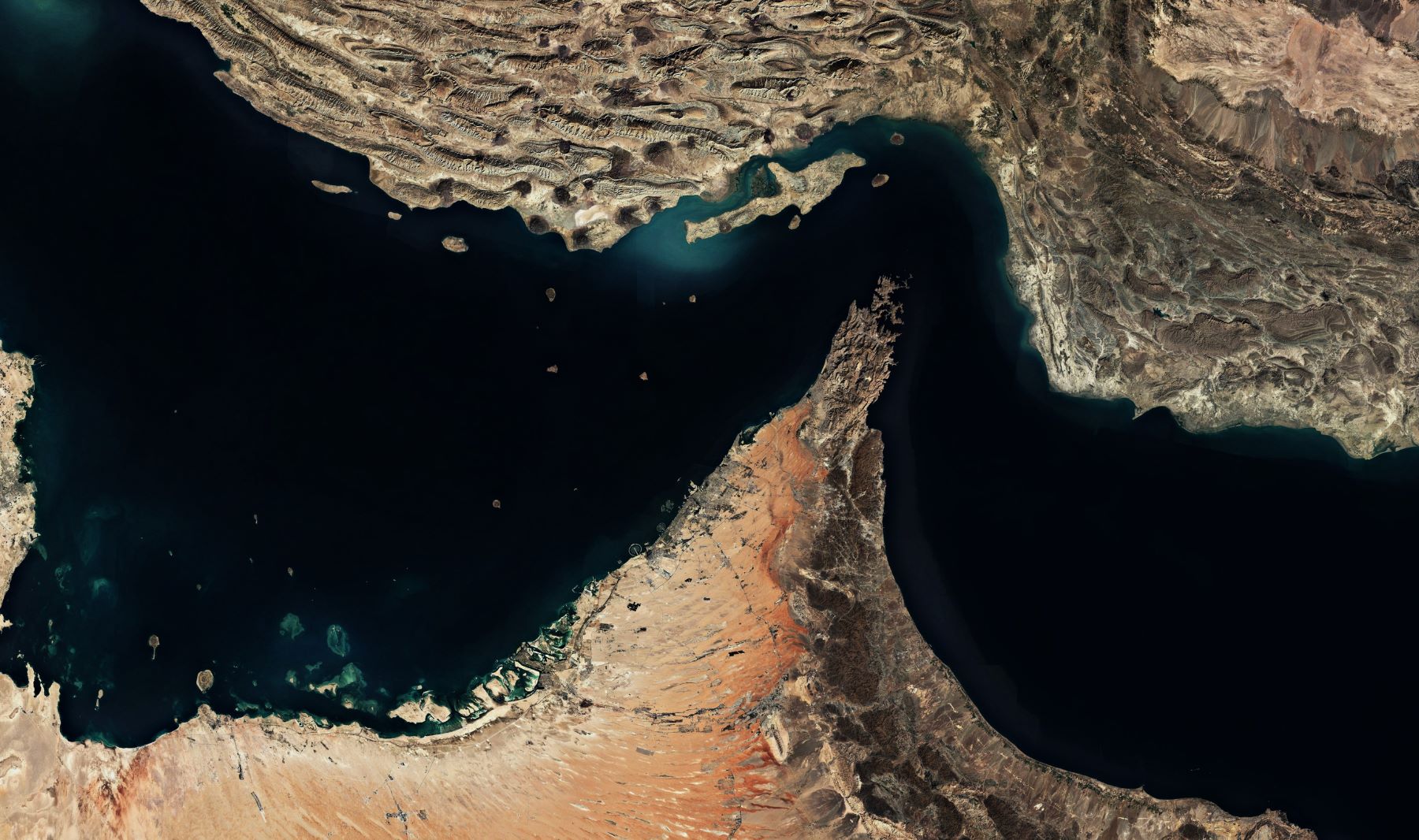
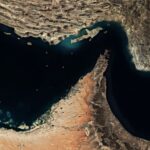
Recent developments in the global and regional arena require careful attention from our policy makers on how to maneuver Pakistan’s foreign policy and military strategy from a strategic positioning standpoint under the current challenging scenarios. These developments include, the ongoing Israel-Palestine conflict in the Middle East, Iran-US recent war, Strait of Hormuz crisis, Iran-Israel war in 2025, Pakistan-India war in 2025, and the standoff with the Afghanistan Taliban regime. The scenario is worrisome in many ways due to geo political, strategic and economic reasons. In such circumstances, this it is utmost important to be vigilant on who is playing around and who wants to destabilize the region even further.
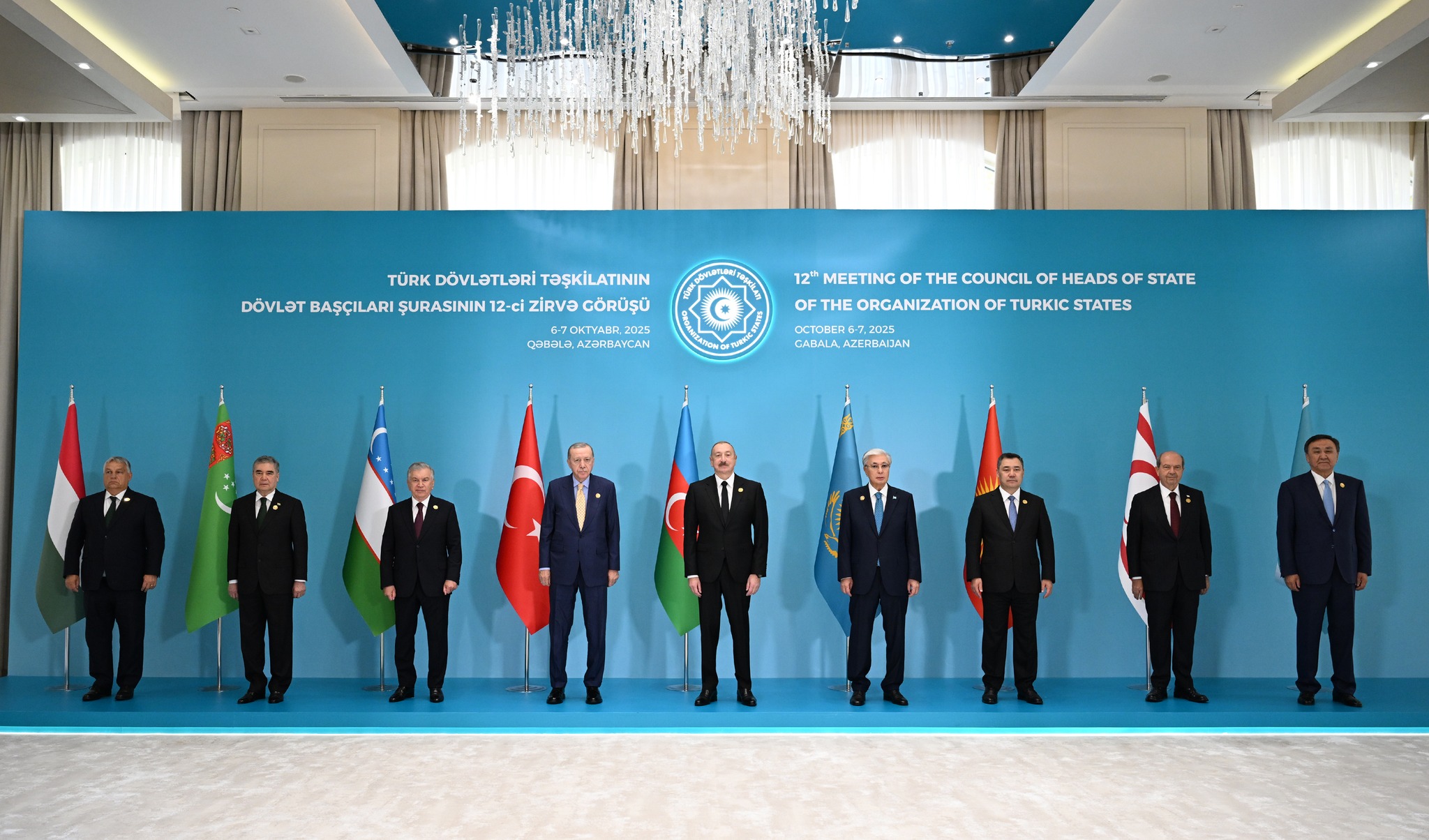
This challenging time is demanding regional like-minded countries (Türkiye, Pakistan, Azerbaijan, and Organization of Turkic States – OTS) to increase cooperation, not only economically but also strategically keeping in mind the worrisome regional geo politics. As we all know these countries are already tied in under the ECO bloc – the main objective of ECO was to develop necessary infrastructure and institutions among member states to make full use of available resources in the region and provide sustainable development. It should be kept in mind that Central Asia (Formerly Turkestan) was the region of the ‘Great Game’ between the British and Imperial Russia. This British-Russian competition was significant not only because of the hydrocarbon resources but also for the struggle for influence. Elaborating another historical fact of World War II, one of Germany’s central goals was to expand southeast into the Caucasus and Central Asia (Turkestan) to gain control of the vast farmland and natural energy resources. However, having said that about the main ECO functions, it needs to be stretched in terms of developing a joint military industrial complex.
Due to Pakistan’s strategic location, it provides the shortest outlet to landlocked Central Asian Republics to the Arabian Sea, Indian Ocean and further to the rest of the world. The Karakoram Highway is an ancient Silk Route between Afghanistan, Tajikistan, China and Pakistan and for having access to Gwadar port, this route provides the land link to Central Asian Republics through Tajikistan.
Pakistani ports which are around 1700 km away from Central Asian Republics are the shortest route for economic link between Pakistan and Central Asian Republics.
It can give boost to bilateral trade in raw material and manufactured goods. It is to be said that Pakistan has to build cultural and economic ties with Central Asian Republics which will provide a natural strategic depth to Pakistan against the hegemony of India in South Asia.
Pakistan and Central Asian Republics have many things common in their societies like the religion of Islam, having tribal system, architecture, art, design, and common TURANIC background etc. Turkestan was also named as TURAN and it is worth mentioning that the mountainous northern Pakistan was part of Greater TURAN as depicted in the historical maps.
Pakistan has to play very smartly in such demanding circumstances due to challenges from India, terrorism from Tehreek-e-Taliban Pakistan (TTP) and Balochistan Liberation Army (BLA) all using Afghan soil and CPEC related security matters that need to be accomplished as soon as possible. Some steps that must be taken in the short and long term by Pakistan, in order to be able to handle future challenges, are mentioned below.
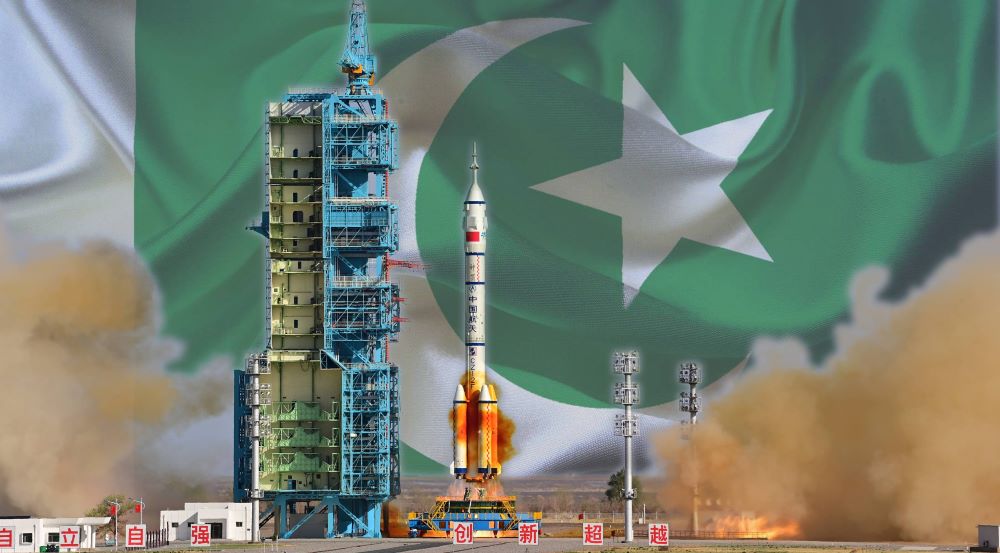
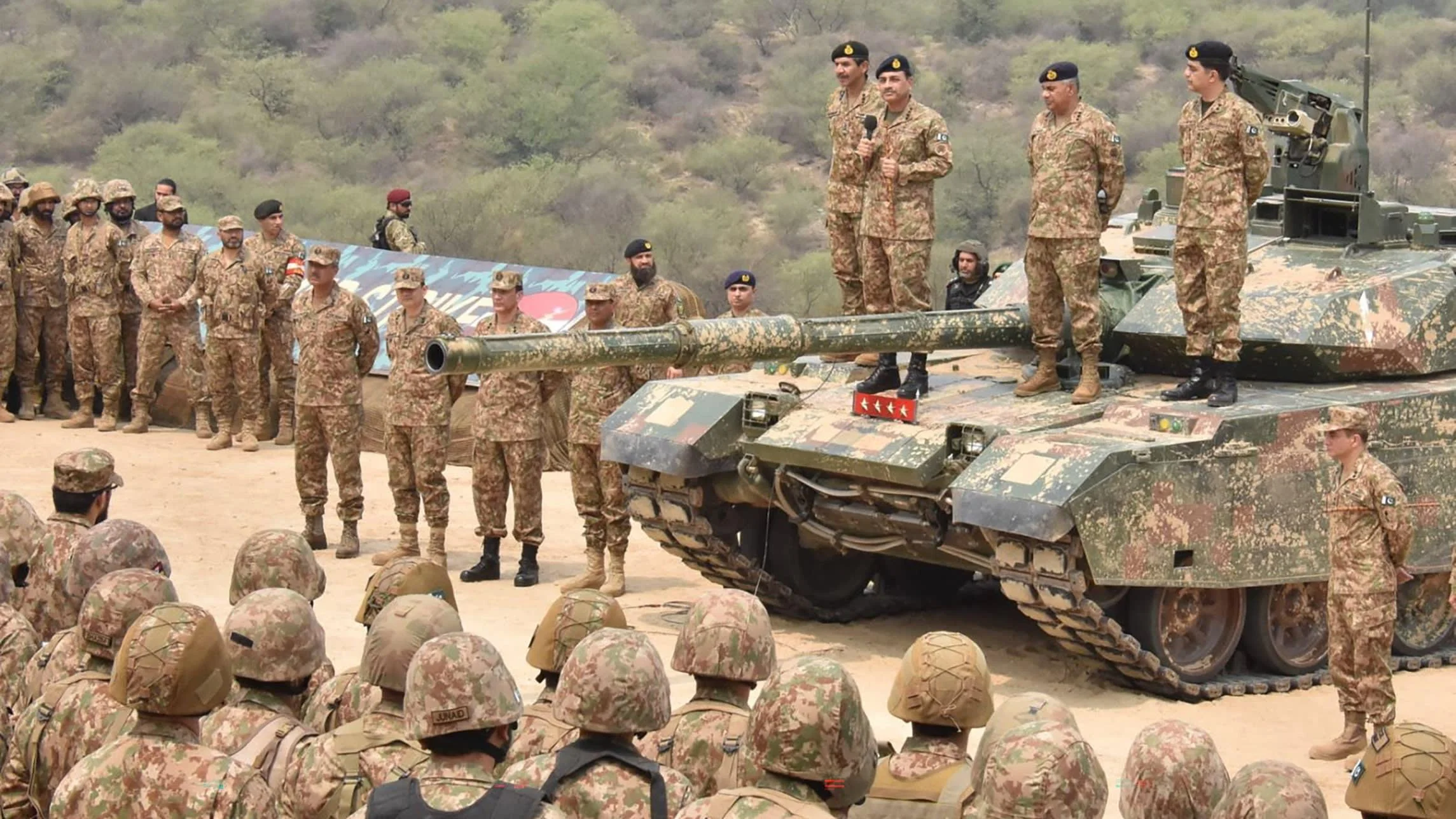
First and foremost: Pakistan must be self-sufficient and self-reliant in defence related matters and must build the military equipment industry as the backbone of the country’s economy. We can plan/reform in long terms for other commercial sectors but due to challenges and shortness of time, it is imperative to boost the military equipment related economic plan (SIFC) for bridging the vast foreign exchange gap. A strong and prosperous Pakistan will definitely be able to play a bigger role as and when the time arrives in the near or distant future.
The second milestone is to build a strong regional Muslim led military bloc that could initially start from Pakistan, Turkey, Azerbaijan, and Organization of Turkic states (OTS). Saudi Arabia and Qatar can be added in this bloc in case the situation and tension escalate high enough as a result of the Israel Palestinian conflict. Also, Saudi Arabia and Pakistan signed a defence pact in 2025 that can be further stretched to become a bigger alliance along with Türkiye. Keeping in mind the stretch of this bloc, as per my view, the Area of influence or dominion of Pakistan’s interest must be from Arabian Seas, Persian Gulf, Red Sea, Gulf of Aqaba, Mediterranean Sea, and the Black Sea. Some additional details are mentioned below.
The third milestone is Leveraging SCO and BRICS Membership, Trade through Middle Corridor and CPEC – all powerful tools for Foreign policy maneuvering:
Pakistan’s foreign policy has always been influenced by western oriented thinking with strong interaction with NATO. Many historical examples can be given like the Soviet intervention in Afghanistan. But the incident after 9/11 and consequent events compelled Pakistan to rethink its global engagement as far as dealing with big powers is concerned. The opportunity came through the Gwadar Port and CPEC that opened the doors for another power axis, that is China and Russia.
Moreover, Pakistan became a full SCO member few years back that gives a clear indication to the western bloc that Islamabad is responding to strategic paradigm shift due to consequence of war on terror and unilateral expansionism.
This club has been the potential center for regional geopolitics as well as economic wellbeing under OBOR. Pakistan has the key status due to flag ship CPEC project. This bloc has huge potential to extend CPEC’s scope to Central Asian States, the Caucasus and deep into Russia. If Iran is added, it could involve the Caspian potential. The challenge is to benefit from such a power bloc into our economic wellbeing and geo strategic gains, for example like the Kashmir issue. The challenge here is how to maintain fair and even-handed relations with NATO countries specially the United States. This enormous challenge requires an aggressive foreign policy and a very well-motivated foreign office staff. The successful caliber in foreign policy terms is to keep relations with both blocs but having a predominant tilt towards the region. NATO and western countries historically have less economic stake in Pakistan rather than strategic expansionism. On the other hand, China is there with full economic agenda. Pakistan must seek full membership of BRICS to respond further to the regional and global paradigm shift. The best practice would be to use pros and cons of both rival blocs and use them in Pakistan’s interests. Also it must be kept in mind that fair practices and stance on principles will be the ultimate strength in the diplomacy world.
Pakistan must leverage Turkey and its influence as a vital and fundamental tool of its foreign policy. Turkish – Pakistan and Azerbaijan military, naval alliance and strategic partnership along with Organization of Turkic states countries can be a rock-solid element in multiple domains keeping in mind middle east and central Asian geo-politics is concerned.
This writer is totally convinced that Turkey is one of the friendly countries that will come to support Pakistan in times of need. Pakistan has many tools and maneuvers in all aspects, and alignment with Turkey should be another strategic maneuver that will be beneficial not only for both countries but also for regional stability. Turkey has influence on many countries and Pakistan can leverage such influence with close strategic and diplomatic alignment. The joint Pakistan-Turkish Partnership will serve as a strong strategic power balancer for the Middle East and IOR. Elaborating further, Turkey has plans to promote its influence keeping in mind the historical Ottoman Empire factor, so Pakistan must help Turkey in this domain. The strategic goals of Turkey will always merge with Pakistan’s interest one way or another. The joint development of military hardware, research and development and economic investment on each other’s side will help boost relations and partnership between these two brotherly countries. The diplomatic stance of Turkey on Kashmir has always been in favor of Pakistan. Pakistan needs to boost aggressive economic advances in order to fully gain leverage from SCO membership at all levels including bridging between SCO and Turkey. Due to the SCO status, Russia is not an Indian ally any more in the sense that we used to observe in the past. The economic revival and boosting the trade with Turkey through Iran can be one great step in this regard since we already have RCD Agreement between Pakistan, Iran and Turkey. This can become another corridor (Turkey, Iran, Pakistan Economic Corridor – TIPEC) and can be linked with CPEC. In this way, Eurasian opportunities will be merged with benefits of CPEC related trade. But this all depends heavily on Iran and how its government wants to run Iranian foreign policy. Pakistan is a nuclear power, so we must show our muscles if, wherever and whenever required. Many countries have defence or semi-defence pacts with Pakistan, which we can leverage for boosting many sectors for betterment. For example, Pakistan is taking active part in the 34-nation Saudi led military Alliance. We can use this platform for selling military equipment, enhancing bilateral relations for trade, visa on arrival agreements, military training and other giant economic deals. Pakistan must work aggressively for getting military access to IOR and the North Arabian Sea Islands from Yemen, Somalia, Maldives, Oman, Sri Lanka, and Brunei.
If Turkey, Azerbaijan and Pakistan along with OTS countries join hands for development of such a strong bloc, many Muslim countries will follow and that will be the beginning of the fault lines that should exist in case any escalation takes place in the Middle East or in our dominion of influence.
Pakistan’s Inclusion in OTS and potential geo-political gains are due to the fact that Pakistan’s northern part (Gilgit, Skardu, Chitral, Kafiristan, etc) were part of greater Turan historically as per its location in the vicinity of the ancient Silk Road. The map depicted by a European archive has shown the boundaries of the Turan in which the northern parts of Pakistan were its southern outskirts. For instance, other than the communities from the northern parts of Pakistan, a significant number of people from the Hazara community are living in Baluchistan Province (in Great Spirit of Turan), and the Hazara people are a Turko-Mongol ethnic group living in Pakistan and Afghanistan.
Having said this and set the background for the subject, Pakistani people predominantly have deep roots with Central Asian Turanic culture. Pakistan is located in the sub-continent map that was mostly ruled by Sultans of Turkic dynasty. This background is enough for Pakistan to develop a thought process amongst scholastic circles and make sense to be closely associated with organization of Turkic states (OTS) in order to help revival of the TURAN vision.
Pakistan has been facing challenges from eastern and western neighbours in many ways including terrorism, sabotage, and sectarian politics, etc. The concepts of ‘Lar aw Bar’ Afghan which refers to lower and upper, referring to Pashtun regions divided by the Afghanistan-Pakistan border died down decades back but every Afghan regime has always kept this slogan alive.
Pakistan’s inclusion in OTS will help this Lar aw bar Afghan slogan to die down which is consistently used by all Afghan regimes against Pakistan. Moreover, Pakistan has been a victim of religious sectarian politics that is supported by different countries from the region, especially our south western neighbor. Being part of OTS will also help limit sectarian problem from our south western neighbor. Pakistan and the Central Asian Republics have many things that can be explored in terms of trade and military industrial complex in addition to common religion, tribal system, architecture, art, and design, and of course, common TURANIC background. There are some key visionary benefits linking with Organization of Turkic states, as described below,
Pakistan can get great benefit since it will help enhance trade & commercial interests.
• OTS membership will promote the idea of developing joint military industrial complex.
• Pakistan will get rid of the Lar aw Bar Afghanistan slogan
• OTS membership will help Pakistan limit and overcome the sectarian issues associated with our south western neighbor. This, therefore is in the greater “National Interest” of Pakistan for our policy makers to start thinking about linking our strategic and commercial interests with the OTS nations. As a first strategic move, Pakistan must seek for an Observer Status in the organization of Turkic states followed by getting a full membership in the near future.
Finally, the greater idea is to bridge the gap between ME and the Turkic world. Pakistan has signed the strategic defence agreement with Saudi Arabia in 2025. Additionally, Pakistan has deep strategic relations with Türkiye in all spheres and it is also being observed that Saudi Türkiye relations are getting to the next level with many defence and economic delas including revival of Hejaz railway project. Thus, this trilateral alliance can be of a greater geopolitical and strategic nature that will protect the interests of region and Islamic world.
Dr. Nurhan Toguc contributed to this article. The author is thankful to Dr. Nurhan for her valuable contributions to the article and the Turan concept.