




For two decades, Western strategists, energy traders, and foreign ministers spoke of “Saudi-UAE” as though it were a single geopolitical organism – a hyphenated superpower anchoring the Gulf’s stability and America’s regional architecture. That organism is dead. What has replaced it is not a managed rivalry but a terminal fracture: two states pursuing incompatible visions of regional order, each now actively working to destroy the other’s strategic position. The Gulf Cooperation Council, always more aspiration than institution, has become an empty vessel. The real contest has moved elsewhere – into proxy battlefields in Sudan and Yemen, into OPEC boardrooms and US Treasury corridors, and into the backchannels connecting Abu Dhabi to Tel Aviv and Riyadh to Islamabad.
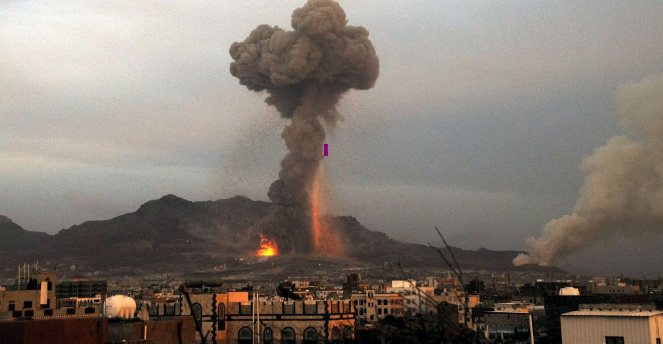
Two events mark the points of no return. On December 30, 2025, Saudi Arabia executed a direct airstrike on Emirati-supplied weapons shipments at the Yemeni port of Mukalla. On April 28, 2026, the UAE formally withdrew from OPEC. These were not diplomatic incidents to be managed. They were declarations – one kinetic, one economic – that the old rules no longer apply. Understanding why requires following the logic of each pillar in a rupture that has been building for years.
The Mukalla Red Line – When the Cold War Turned Kinetic
The Mukalla strike was not an escalation. It was a statement of finality. Saudi Arabia had watched for years as the UAE expanded its footprint in southern Yemen through the Southern Transitional Council – a secessionist proxy that threatens not only Yemen’s unity but the geographic coherence of Saudi Arabia’s southern frontier. When Emirati-supplied weapons reached Mukalla, Riyadh concluded that Abu Dhabi had crossed a threshold that rhetoric could no longer address. The significance of the strike lies in its precedent. For the first time in the Gulf’s modern history, one GCC member state conducted a direct military operation against the strategic assets of another. The code of non-aggression that had underwritten Gulf stability since 1981 – imperfect, often strained, but intact – was formally broken. Every subsequent diplomatic formality between Riyadh and Abu Dhabi since that date has been performance. The structural reality is that Saudi Arabia has concluded the UAE is an active threat to its national security, not a partner with divergent interests. That conclusion does not reverse.
The OPEC Exit – Declaring Independence from Saudi Hegemony
Abu Dhabi’s withdrawal from OPEC on April 28, 2026 was choreographed for maximum effect. The timing was not accidental. The UAE had already secured a bilateral US Treasury swap line – financial infrastructure that insulates it from the dollar liquidity pressures that have historically made Gulf producers dependent on OPEC solidarity. With that lifeline in place, Abu Dhabi no longer needed the cartel’s price floor. It had outgrown the arrangement. The exit is simultaneously an economic strategy and a political message. The UAE possesses among the lowest per-barrel production costs in the world. Unconstrained by OPEC quotas, it can flood the market at prices that remain profitable in Abu Dhabi but catastrophic for a Saudi Arabia carrying the debt burden of Vision 2030, NEOM, and a state apparatus that requires oil above $80 per barrel to balance its budget. The arithmetic is deliberate. The UAE is not simply leaving OPEC; it is preparing to use its production capacity as a weapon against Saudi solvency. This is zero-sum competition conducted through energy markets.
High-Tech Zionism vs. the New Muslim Shield
The ideological fault line beneath the economic and military contest represents the sharpest point of divergence between the two powers. Dr. Ahmed Al-Tuwaijri, one of the Arab world’s most rigorous analysts of regional security, frames the UAE’s Abraham Accords alignment not as pragmatic normalization but as a structural capitulation – the UAE functioning as a Trojan Horse for Israeli strategic doctrine inside the Muslim world. This alignment provides Tel Aviv with the Arab legitimacy to accelerate a project of regional balkanization that would permanently foreclose any coherent Islamic political bloc.
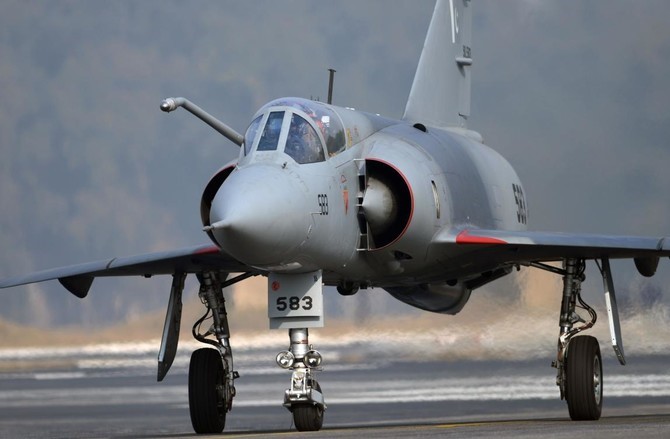
Saudi Arabia’s counter-architecture is anchored by the Saudi-Pakistan Mutual Defense Treaty, a document that serves as a strategic technology conduit rather than a simple manpower agreement. Pakistan provides Riyadh with access to Chinese military hardware, quantum communications architecture, and the nuclear umbrella of a Muslim atomic power – a deterrence framework that bypasses US export restrictions and Washington’s conditional security guarantees. The velocity of this realignment is further propelled by the Somaliland-Israel axis. Israel’s recent formal recognition of Somaliland – the first by any sovereign state – is viewed by Riyadh as a tactical operation facilitated by Abu Dhabi to secure a Zionist military foothold in the Horn of Africa.
For Saudi Arabia, this move represents the ultimate manifestation of the ‘Trojan Horse’ doctrine: bypassing the Arab League’s consensus on territorial integrity to implant an Israeli-aligned outpost on the Red Sea’s southern hinge. This has forced the Somali federal government to annul all security agreements with the UAE, further driving Mogadishu into the arms of the Saudi-Turkish-Pakistani Sovereignty Bloc. This bloc continues to expand as Turkey actively seeks to attach itself to the axis. Former Israeli Prime Minister Naftali Bennett stated publicly that Turkey represents the “next” existential target in Israel’s strategic sequencing after Iran – a threat assessment from a man with intimate knowledge of Israeli defense planning. Turkey, which under President Erdogan has positioned itself as the most consequential Muslim-majority power outside the Gulf, has concluded that Israel’s strategic doctrine cannot tolerate a strong regional hegemon, driving Ankara toward Riyadh and Islamabad with a velocity that would have been unthinkable five years ago.
Little Sparta’s Enclave Strategy – Fragmentation as Foreign Policy
Dr. Andreas Krieg, whose analytical work on UAE strategic behavior has defined the field, coined the term “Little Sparta” to describe Abu Dhabi’s self-conception – a small state punching structurally above its weight through force multiplication, proxy warfare, and alliance management. Krieg’s deeper contribution is mapping how the UAE has operationalized an “axis of secessionists” that is functionally aligned with Israeli strategic doctrine: both parties benefit from a Middle East of weakened, fractured states incapable of projecting collective power.
The theater map is consistent. In Yemen, the UAE backs the Southern Transitional Council against the internationally recognized government that Saudi Arabia supports. In Libya, it backs Khalifa Haftar’s Libyan National Army against the Tripoli-based administration. In Sudan, it backs the Rapid Support Forces against the Sudanese Armed Forces. In each case, the UAE’s preferred faction is the secessionist or the spoiler – the actor whose success would produce fragmentation rather than reconsolidation. As Krieg has documented, this is not opportunism. It is doctrine.
The maritime geometry of this doctrine reveals its logic. Fractured Yemen gives the UAE influence over the Bab el-Mandeb. A divided Libya provides leverage over central Mediterranean routes. Sudan’s RSF, should it consolidate control, would anchor UAE influence across the Sahel corridor. Saudi Arabia has recognized the pattern and responded by financially underwriting the recognized central governments in each theatre – a direct inversion of UAE policy that has turned Yemen, Libya, and Sudan into explicit arenas of Saudi-Emirati confrontation.
The Economic Zero-Sum Game – NEOM vs. Dubai
The rivalry’s economic dimension predates the current rupture. Saudi Arabia’s 2021 “Project HQ” directive – requiring multinational companies to relocate their regional headquarters to Riyadh or forfeit Saudi government contracts – was an undisguised assault on Dubai’s business model. The $500 billion NEOM megaproject is not primarily a tourism venture; it is a deliberate attempt to construct an alternative regional financial and innovation hub that would hollow out Dubai’s gravitational pull on international capital.
The UAE’s response is the OPEC exit strategy outlined above: use unconstrained oil production to suppress global prices below the threshold at which Saudi Arabia can finance its debt-laden transformation agenda. A Saudi Arabia in fiscal crisis cannot sustain NEOM. It cannot underwrite its proxy network. It cannot maintain the social contract that Vision 2030 promised Saudi citizens. Abu Dhabi is betting that economic pressure, applied consistently over three to five years, will force Riyadh to choose between its transformation agenda and its regional ambitions. Riyadh’s bet is the inverse – that Chinese-backed investment, Pakistani military partnership, and the natural gas revenues from expanded production agreements will insulate it from Emirati economic warfare long enough for the UAE’s own structural vulnerabilities to surface.
The Security Paradox and US Complicity
Washington’s position in this rupture is more compromised than American officials appear willing to acknowledge. The presence of US military infrastructure across both countries was designed to provide collective security guarantees that prevented intra-Gulf conflict. It has instead become a structural distortion – providing each party with just enough American backing to feel insulated from consequences while pursuing escalatory policies.
The asymmetry is significant. The UAE has secured bilateral US Treasury financial architecture and maintains close ties with American defense contractors through its F-35 aspirations and AI infrastructure investments. Saudi Arabia, having watched Washington pressure it on oil production during the Ukraine crisis and impose conditions on arms sales, has drawn closer to Beijing as an alternative guarantor – facilitating the China-brokered Saudi-Iran normalization in 2023 and pushing for yuan-denominated oil settlement mechanisms. Qatar has aligned itself with the Saudi diplomatic approach, preferring Chinese-brokered de-escalation with Iran to the UAE’s containment doctrine backed by Israeli intelligence-sharing.
The result is a theatre where both principal adversaries maintain tactical American relationships while the structural drift is away from Washington’s ability to arbitrate. The US presence has not prevented the rupture. It has funded both sides of it.
The Privatization of Statecraft – Gold, Guns, and Deniability
The most technically sophisticated element of UAE strategic practice is its capacity to conduct statecraft without fingerprints. The UAE operates through a layered network of logistics companies, private military contractors, and financial intermediaries that provide what practitioners call “plausible deniability at the operational level.” Abu Dhabi does not deploy uniformed forces into African conflicts. It deploys corporate structures.
The Sudan case is the most instructive and the most damning. The RSF’s ability to deploy high-precision drone capabilities – a level of technical sophistication that has shifted the Sudanese civil war’s balance of power – is not funded by Sudanese revenues. It is funded by Darfur gold. Specifically, raw gold extracted from Darfur’s conflict zones is laundered through Dubai’s banking and commodities infrastructure, converted into liquid capital, and cycled back into weapons procurement and smuggling operations across African transit corridors. The humanitarian aid designation that covers some of these logistics flows provides the legal and reputational cover that makes the operation sustainable.
This mechanism – what analysts have termed a “gold-to-guns carousel” – is not a peripheral scandal. It is a central feature of UAE proxy management. It explains how a state with a military budget that cannot match Saudi Arabia’s can nonetheless sustain simultaneous proxy operations across three major African theatres. The UAE does not need to outspend Riyadh. It needs to convert illicit resource flows into sustainable military capacity faster than Riyadh can respond through conventional state-to-state mechanisms.
Conclusion: Mapping the New Gulf
The hyphenated “Saudi-UAE” is gone. In its place are two competing regional architectures whose internal logic is now incompatible. The UAE’s axis – Israel, secessionist proxies, Western financial alignment, and the privatization of African resource extraction – is built on the premise that regional stability is best achieved through managed fragmentation, with Abu Dhabi as the indispensable node in every fracture. Saudi Arabia’s sovereignty bloc – Pakistan, Turkey, Egypt, Qatar, and Chinese strategic backing – is built on the premise that state integrity and Muslim solidarity are the only durable foundations for regional order.
Neither architecture is stable. The UAE’s model is vulnerable to the legal and reputational exposure of its financial mechanisms, to Israeli strategic overreach that drags Abu Dhabi into conflicts it cannot win, and to the long-run fiscal mathematics of a small state sustaining large proxy commitments. Saudi Arabia’s model is vulnerable to the internal contradictions of a transformation agenda that requires foreign investment while cultivating adversarial relationships with the West’s most capable technology exporters. What is not vulnerable – what has been made structurally durable by Mukalla and by the OPEC exit – is the rupture itself. The GCC has not merely lost relevance. It has been replaced by a conflict whose resolution would require one side to abandon its core strategic doctrine. No diplomatic communique accomplishes that. The Gulf’s new reality is not managed competition. It is a cold war that has already turned hot once and has every structural incentive to do so again.
This analysis draws on the published work and assessments of Dr. Andreas Krieg (King’s College London) on UAE enclave strategy and proxy warfare architecture, and Dr. Ahmed Al-Tuwaijri on the normalization-balkanization nexus in Gulf foreign policy.