





Appraisal System in Pakistan
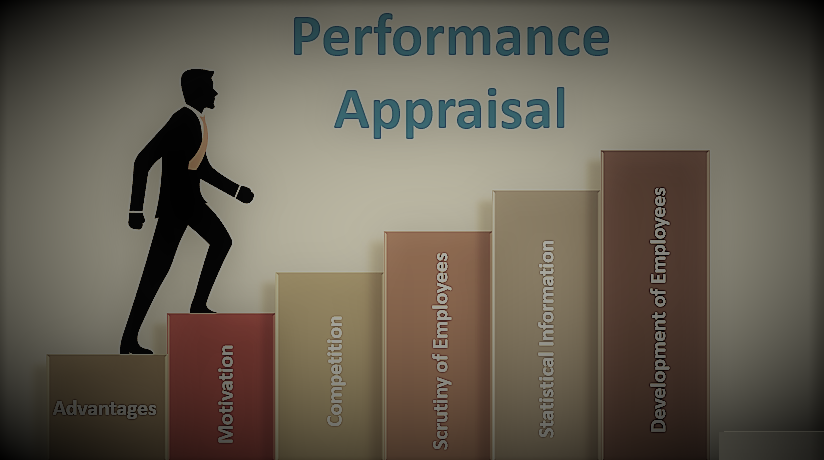
The scarlet thread of any successful management system in any organization hinges around the system of performance appraisal adopted in that organization. Performance appraisal is the systematic evaluation of individuals with respect to their performance on the job and their potential development.1 Hence it can be defined as a process by which organizations evaluate individual job performance.2 Systematic performance appraisal techniques came into prominence during and immediately after World War I and it was used for evaluating the performance of US Military Officers. During the 1920s & 1930s, industrials concerns began installing rational wage structures for their hourly employees. They established the policy that in grade wage increases would be based upon merit. The early employee appraisal plans were called merit-rating programs. Most of the merit rating plans from 1920 to mid-1940 were of the rating scale type with factors, degrees, and points. During the 1950s, great interest developed in the performance appraisal of technical, professional and managerial personnel. It was recognized that appraisal, on systematic basis, was an integral part of a well-designed development program.
Performance of every employee should be managed in such a way that error or deficiency, if any in performance, must be timely checked, corrected, monitored / guided with right solution. This, in turn, reflects the extent of the individual contributions and commitment of the employees in different hierarchical levels towards the achievement of organizational goals. The information obtained through performance appraisal provides foundations for recruiting and selecting new hires, training and development of existing staff, and motivating and maintaining a quality work force by adequately and properly rewarding their performance. Without a reliable performance appraisal system, a human resource management system falls apart, resulting in the total waste of valuable human assets in an organization.3 It is an admitted connotation that an effective performance appraisal can lead an organization to take strides towards marked success and growth. Conversely, an ineffective performance appraisal system can seal the fate of an organization by creating chaos and confusion from top to bottom in the administrative hierarchy. As a consequence, the chances of success and growth of that organization are doomed.
There are two primary purposes of performance appraisal: (1) evaluative and (2) developmental. The evaluative purpose is intended to inform people of their performance standing. The collected performance data are frequently used to reward high performance and to punish poor performance. The developmental purpose is intended to identify problems in employees performing the assigned task. The collected performance data are used to provide necessary skill training or professional development.4 According to William P. Anthony, Pamela L. Perrewe and K. Michele Kacmar, a goal of any performance appraisal system is to effectively evaluate the performance of employees. However, performance appraisal systems also can be used to improve performance, motivate and develop employees.
An effective performance appraisal system will not only evaluate an employee’s abilities, but also opportunities—those elements in the work system that contribute to performance. According to some experts, opportunity factors are more important than individual variables in determining work performance. Opportunity variables may include the physical environment, such as noise and lighting, available resources, such as human and computer assistance, and social processes, such as leadership.5 Managers must recognize that an employee’s development is a continuous cycle of setting performance goals, providing training necessary to achieve the goals, assessing performance as to the accomplishment of the goals and then setting new, and higher goals. A performance improvement plan consists of the following components:
- Where are we now? The answer to this question is found in the performance Appraisal process.
- Where do we want to be? This requires the evaluator and the person being evaluated to mutually agree on the areas that can and should be improved.
- How does the employee get from present position to where he or she wants to be? This step is critical to the performance improvement plan. The appraiser and appraisee must have mutual consensus on the specific steps to be taken. These steps may include training the employee so as to improve his or her performance. It should also contain the mechanism adopted by the appraiser/ evaluator to assist employee in the achievement of performance goals.6
Purpose, Scope & Methodology of the Research
Keeping in mind the fundamental objectives of performance appraisal and to investigate its accomplishment or otherwise in public sector organizations in Pakistan, vis-à-vis to find out the pitfalls (irritants) in the existing system of performance appraisal in vogue in public sector organizations, the researcher has chosen the subject topic for research. The case study of Technical Education and Manpower Training Department (N.W.F.P) was selected because the sense of cognizance of utility and importance of this kind of education is on the rise around the globe. Around 700 respondents, teachers in polytechnic/vocational trade and Commerce/ Management trade were served with the questionnaires and 598 respondents replied with the desired format. The data in question was analyzed through statistical tools of chi-square and co-efficient of correlation. Research succeeded in digging out the inherent lacunas in the existing system of performance appraisal and recommended remedies to overcome the pitfalls. The article explores different styles followed by the appraisers and repercussions of such styles on job satisfaction and work performance of faculty members.
The performance evaluation report forms presently in vogue in Technical Education Department N.W.F.P for conducting performance evaluation of faculty members have been cross examined and analyzed in detail. These forms have been compared with PERs used in different colleges / universities of countries such as USA, Canada, and Malaysia for performance evaluation of employees. University of California Berkeley, Ohio State University, North Eastern University Boston, Princeton University New Jersey, Boston College and Marist College New York are the institutes of U.S.A, University of Waterloo Canada and University Teknologi Mara, Malaysia are the other organizations whose performance appraisal forms could be traced and taken as a sample for analysis and comparison.
Pitfalls in the existing appraisal system
The research findings revealed the under-mentioned pitfalls in the prevailing system of performance appraisal in vogue in public sector organizations.
- Lack of Performance Standards. There are no reliable, clear and measurable standards to be used as yardstick against which employees’ performance could be judged. In the absence of clear/reliable standards, the measurement of employees’ performance is left at the whims of the reporting officers, which may vary from person to person depending upon the personal instincts of the individuals concerned. Unclear standards constitute a potent performance appraisal problem. A graphic rating scale with unclear traits and degrees of merit leads to ambiguity and hence culminates into unfair appraisal. In this way, the opinion of the boss about a subordinate employee’s performance remains vulnerable to errors of judgment, which in turn renders performance appraisal done by him as doubtful. For example, if a person is bold, confident, and candid in his approach but a Reporting Officer who negatively judges these variables may be tempted to give low or poor ratings to the apprisee, regardless of splendid performance/output shown by him. On the contrary, another Reporting Officer may judge these factors as positive points and he may rate his subordinate’s performance very high irrespective of the person’s average or low output. Thus, in the absence of explicit standards of performance, fair and just evaluation of employees actual output remains a dilemma. In this way the opinions / view points of two different officers about a single point, say courage, honesty or confidence may move in divergent directions. As a ramification of this scenario, the employees may, in most of the cases, concentrate on such factors / variables which may fascinate their Reporting Officer, although these variables may be of secondary importance while looking into the overall parameters of an employee’s job contents. In this scenario some employees may concentrate on the struggle to please their immediate boss and may drift from actual domain of their job requirements. The ultimate corollary of this phenomenon may emerge in the shape of poor productivity of the individual/department/society concerned and thereby culminating at the greater loss of the stake holders involved. For example, different appraisers would probably derive different meanings from the phrases, “good performance”, “fair performance” and so on. Similarly, traits such as “quality of work”, “creativity”, or “integrity” may carry different meanings for different appraisers. Research has shown that due to unclear standards of performance, some appraisers resort to giving poor ratings of PER (ACR) to their subordinate employees inspite of good performance displayed by them.
- Lack of feedback. Main purpose of appraisal system is to arrest error on occurrence and let the organization process function in a desired fashion. The extent and magnitude of error, once observed by the appraiser, shall be communicated to the appraisee so as to enable him to reorient in right direction. The feedback helps employees to improve their performance by overcoming their performance shortcomings. Whereas, the research found that there is no system of feed back exist thereby failing top be productive. The following diagram elucidates the significance of feedback.1
- Lack of Performance Interview. Performance appraisal interview between the appraisee and appraiser is not conducted which deprives the employee from availing an opportunity to discuss his achievements of last year goals and note down his strengths and weaknesses, if his performance is not up to the mark. Apart from specific discussion on the domains of main duties and responsibilities of the employee, discussion questions regarding workplace environment are also part of the appraisal interview. These questions concentrate on provision of working environment facilities such as tools and equipments, training and development needs for the ensuing year, changes in job and magnitude of work load, feedback timeliness and relevancy, performance of additional and volunteer duties at his workplace, consonance of duties of employees with their job description, etc.
- Lack of Appraisees’ Comments. Comparative analysis of ACR forms being used in public sector organizations (particularly Technical Education Department N.W.F.P) with PER forms of other countries revealed that no comments and signature of the appraisee is obtained on the appraisal form regarding evaluation carried out by the appraisee whereas this constitutes a significant part of the appraisal process in other countries and even in institutions like Lahore University of Management Sciences (LUMS) in Pakistan, for example. Employee’s comments/ reactions concerning the appraisal and his signature exhibit the fact that he has thoroughly discussed his performance evaluation with the appraiser. He may agree or disagree with the appraisal substantiating the reason of his disagreement with cogent evidence.
- Integrity Assessment. PER (ACR) forms invogue in public sector organization/departments departments contain a column showing the integrity of the appraisees being evaluated by the appraisers. Viewed from PER’s perspective, morality, uprightness and honesty constitute three main ingredients of an employee’s integrity. No one can question the impact of an employee’s integrity on the performance of his job but it is a very personal attribute of an employee and in some cases, the evaluators / appraisers are held astray if they are fascinated by honesty and uprightness of an employee in his private dealings or personal life, instead of concentrating on his professional integrity. The dilemma further aggravates and complicates when, for instance in some cases, the integrity level of the Reporting Officer (boss) is comparatively low than the subordinate employee’s integrity level. Research has shown that 48% of the Reporting Officers don’t appreciate professional honesty of faculty members. Experience also strengthens this viewpoint that a financially and morally corrupt officer cannot be expected to value the personal or professional integrity of the subordinate employee/s while making judgment of their overall performance. In the extreme cases, the Reporting Officer for thwarting his undesirable designs, if the integrity level of the boss is untrustworthy, views the integrity aspect of the subordinate employee’s performance as a potential threat. In such cases the Reporting Officer may resort to using the PER as a discriminatory weapon / tool to harass the employee on one pretext or the other so as to pave his way leading towards dishonest and immoral affairs. Sometimes, his Reporting Officer may also view the integrity aspect of a subordinate employee’s performance negatively, if his viewpoint with regard to honesty deviates from that of the subordinate’s viewpoint. In such cases, the higher integrity level / standard of a person may entitle him for lower or negative ratings of his PER by his Reporting Officer. To conclude, in the absence of reliable yardsticks to measure the integrity level of an employee, the varying view points of different appraisers about the meaning and scope of the word integrity and in the presence of poor system in public sector organizations, the term integrity, being incorporated in the subject PER meant for the faculty of Technical Education and Manpower Training Department NWFP, fails to yield fruitful results in serving the specific purpose of the term. Looking from the students’ perspective, keeping in view the nature of the job of teachers as nation builders and considering the far reaching impact of the behavior of teachers in shaping the behavior of the society, the morality dimension must be rated very high regardless of the tangible results produced by him in reaching organizational goals. Since the teachers serve the purpose of role models in framing the future career of their students, this variable is of paramount importance which needs to be given due consideration, in the true sense of the word, by the appraisers in shaping their opinion concerning assessment of quality output of the appraisee.
- Quantity Focused Evaluation. Research has shown that 62% of the reporting officers strongly focus only on the quantitative aspect of the faculty member’s performance outcome, turning an altogether blind eye to the quality dimension of the job performance being evaluated.
- Appraisers’ Effectiveness/capability. Research shows that female appraisers (Reporting Officers) are found to be more experienced and effective with respect to conducting performance appraisal of their subordinate employees. And as such, they possess more capabilities to make dichotomy between good performance and poor performance as compared to their male counter parts.
- Appraisers’ biasness. Research has shown that male appraisers (ROs) are more biased than female appraisers and they give more weightage to the personal loyalty of the faculty members than their job performance. Similarly, job performance of male appraisees is more negatively affected than female appraisees, as a result of biased attitude displayed by the appraisers. Biased attitude of the appraisers is evident from the fact that below average ratings awarded to faculty members were considered unfair by the second countersigning Officer/Officers and were hence upgraded and negative remarks were expunged from the ACRs /PERs of the affected faculty members. Disowning the negative evaluation by the countersigning officer/officers tantamount to the fact that appraisers have shown unfair and biased attitude, leaving the rating done by them to be incorrect and faulty.
- Consideration of Hygiene (work place) Problems. Research has shown that female appraisers (ROs) and those belonging to Polytechnic / Vocational trades are more conscious of the hygiene factors as compared to their male counter parts and those belonging to Commerce Wing. They give due consideration to the workplace problems, personal problems of faculty members, provision of work place facilities and creation of conducive working environment to improve their performance. Conversely, lack of congenial working atmosphere breed workplace hurdles having negative impacts on the performance of faculty members, which are not fought against by the appraisers to overcome them. It means that no sincere efforts are being made to convert the threats into opportunities.
- Autocratic Style of Appraisers. Male appraisers (ROs) are found to be excessively inclined towards adopting autocratic style of appraisal by dictating job targets/objectives to the faculty members and then evaluating performance results against the said objectives/ targets. In case the subordinate employees fail to achieve the stated goals, appraisers make resort to negative motivational tendency by penalizing them with poor ratings of PER(ACR) regardless of considering the ground realities.
- Democratic Style of Appraisers. A research finding has demonstrated the fact that female appraisers (ROs) are found to be more democratic in their approach to set job objectives for the faculty members than male appraisers.
- Discrimination by the appraisers. Research has indicated that some of appraisers give below average or negative ratings to the subordinate employees on account of personal annoyance and grudges by turning a blind eye to their good performance. It was also found that 62% of the appraisers treat all employees at equal footings irrespective of difference in their level of performance and output simply to please them. This tendency of appraisers will work like a double edged sword. The poor performers will remain complacent and will avoid hard work to improve their performance and the good performers will get disheartened and may avoid hard work due to frustration and lack of recognition of their good performance. 53% of the appraisers have been found to give more weightage to the personal loyalty of employees with them than their actual performance.
Recommended Remedial Measures
To overcome the aforesaid irritants (errors) inherent in the existing performance appraisal system invogue in public sector organizations, particularly Technical Education and Manpower Training Department (N.W.F.P), the under mentioned remedial measures are suggested:
Clear and Measurable Standards: To forestall the chances of public servants and appraisers getting astray from their actual domain of duties and responsibilities, it is imperative that properly measurable standards of performance must be chalked out and strictly adhered to by all the stake holders concerned. These standards will work as a yard stick against which employees’ performance will be assessed and evaluated accurately. This will eliminate the chances of unfair play by the faculty members in shirking heart from their main duties and will also prevent unfair display by the appraisers (Reporting Officers) in the award of unjustified higher ratings to the mediocres. The ultimate corollary of it will emerge in the shape of improved performance of employees, achievement of organizational goals and objectives. Organizational growth and development will ensue as concomitant ramifications of this policy.
Check and Balance of Powers: To muzzle the unfair and biased use of discretionary powers by the appraisers with regard to penalizing excellent performers with award of negative ratings of PER (ACR), it is essential that there must be check and balance system. Appraisers must be subjected to accountability and a remark must be endorsed in their PER (ACR) by the competent authority, if it is proved that they have used the PER (ACR) writing as a discriminatory instrument against the excellent/good performers on account of personal grudges/ biasness. It will have two fold impacts. On one side, it will strengthen and improve the credibility of performance appraisal system and on the other side it will boost up the performance level of employees. Ultimately, it will lead to growth and development of institutions/ organizations.
Timely Feedback: Performance appraisal is a continuous process and it must not end at the evaluation of employee’s performance at the end of the year. For yielding real fruits of performance management, it is imperative that employees must be given relevant/ sufficient and timely feedback at frequent intervals to give them and opportunity to overcome their performance shortcoming and improve their performance. A performance problem detected and rectified in the first quarter of performance evaluation year will avoid its repetition in the forthcoming three quarters of the evaluation year.
As is explicit from the term, feedback is objective information about individual or collective performance. Subjective assessment such as, “You are doing a poor job,” “you are too lazy,” “we really appreciate your hard work” fall outside the domain of objective feedback. Experts are of the opinion that feedback serves two functions for those who receive it, one is instructional and the other motivational. Feedback instructs when it clarifies roles or teaches new behavior. On the other hand, feedback motivates when it serves as a reward or promises a reward. Having the boss tell you that a grueling project you worked on earlier has just been completed can be a rewarding piece of news. Research indicates that pairing specific, challenging goals with specific feedback about results can significantly enhance motivational function of feedback.
Appraisers’ Training: Research has indicated that 38% appraisers lack effectiveness and capability to properly evaluate their subordinate employees’ performance. The reasons being lack of training, incongruity of the reporting officer with the subjects taught by the faculty members reported upon by him/ them or his/ there professional incompetence due to his/their ignorance of the relevant rules and regulations. To rebuff this problem, it is recommended that before appointing a person as head of an institution/ department, it must be made obligatory that he must undergo compulsory training, so that his professional competency be flourished, enabling him to properly monitor the performance of his subordinate employees and alleviate his skill and knowledge for properly conducting performance evaluations of his subordinate employees.
Creation of Conducive Working Environment: In the absence of a congenial working atmosphere, even the best performers may not deliver the goods and their efficiencies and capabilities may be may be derailed due to existence of work place problems. Ignorance of workplace problems by the appraisers may undermine the credibility and fairness of performance evaluations done by them. The performance evaluation report must contain a column for the officer reported upon to comment whether congenial workplace environment is created or otherwise and the reporting officer must substantiate this comment to be examined by the countersigning or second countersigning officer.
Quantification of PERs and Efficiency Index: The government of N.W.F.P, Establishment and Administration Department, fortunately realizing the importance of performance evaluation reports, adopted a new policy of quantification of PERs and efficiency index for mandatory training courses and promotion in March, 2008.7 Under the new policy, proper scoring of the marks earned by the incumbent candidate for promotion is done and his promotion remains suspended unless he has earned the required stipulated marks for promotion to the next grade or position. The ultimate result of this policy change would emerge in the shape of good governance by sorting out best brains possessing the capabilities of combining knowledge and skills and well equipped with leadership qualities to meet the challenges occurring in the field of management and administration around the globe.
The procedure of quantification of performance evaluation reports is, no doubt, a good effort in the right direction, but it still contains flaws which need to be addressed and amended. An amendment has been introduced in the said policy on 16th June, 20088 wherein “outstanding” grading has been introduced in the performance evaluation report form carrying 10 marks which shall be awarded to officers demonstrating exceptional performance. The embargo imposed on the award of this grade states that, in no case it be granted more than 10 % of the officers reported upon. It embodies the following flaws:-
(a) Firstly, it restrict the exercise of legitimate powers of reporting officers not to award this outstanding grading to more than 10% of the officers serving under his administrative control.
(b) Secondly, it will create a sense of frustration and deprivation on the part of exceptional performers whose performance will go unrecognized and unrewarded simply for the reason that they fall outside the ambit of 10% officers who can be awarded outstanding grading. Resultantly, it will create negative impact on the performance of all outstanding performers who cannot not expect that their best efforts and excellent performance will be reciprocated in the same coin be granting them adequate grading of PER.
(c) Thirdly, how can it be summed up that only 10% of the officers in all the organizations can display exceptional performance and remaining 90% not? Resultantly, the good performers will not strive to improve their performance due to this restriction and a sort of professional jealousies will breed in the organizations. This restriction needs to be lifted and a chance of open and healthy competition instead of cut throat competition should be given to all the employees that any one showing exceptional performance will be awarded outstanding grading and scoring.
Conclusion
The above detailed discussion revealed the fact that retardation of the process of growth and development in public sector organizations in Pakistan is mainly due to faulty appraisal system in vogue in these organizations. The crux of the problem, as indicated by research, is that the appraisers lack proper training as to how conduct effective performance appraisal? Most of the appraisers are swayed by the influence of personal biasness with the appraisees and hence are tilted to discriminatory attitude towards their subordinate employees. Moreover, they don’t give timely and relevant feedback to the appraisees, the ultimate corollary of which emerge in the shape of repetition of mistakes and errors by the appraisees and hence can’t improve their performance and productivity. Research has further manifested that most of the appraisers are quantity conscious and hence focus only on the qualitative dimensions of appraisee’s job performance and output. The carrying need of the hour is that attention must be focused on the quality parameters of the appraisee’s job performance and productivity to ensure sustainability and survival in the fast changing global competitive environment. So it becomes imperative that people setting at the helm of the affairs in public sector organizations should put their heads together and make sincere efforts by tasking practical steps to make the pivotal management activity, which is performance appraisal, a viable and sustainable tool to ensure growth and development of organizations. This will become possible only if the irritants pointed out above are properly cured, which in turn will improve performance and productivity of the individuals leading towards providing competitive edge to the departments and organizations.
References
1. Source: Kreitner & Kinicki, Organizational Behavior, McGraw Hill Co., USA, ed.5th 2001, p-273.
1Dale S Beach, Personnel- The management of People at Work, Ed.5th, Macmillan Publishing Company U.S.A.1985,P-205.
2. William B.Werther, Jr. & Keith Davis, Human Resources and personnel Management, 5th ed. McGraw- Hill Inc.USA.1996, p-341.
3. http://findarticles.com/p/articles/mi_gx5209/is_1999/ai_n19125832/pg_2?tag=artBody;col1
4. Ibid.
5. William p. Anthony, Pamela L. Perrewe, K. Michael Kackman, Strategic human Resources, Harcourt Brace Jovanovich, Inc. Florida U.S.A, 1993, P-441.
6. Lloyd L. Byars, Leslie W. Rue, Human Resource Management McGraw Hill (Asia ) Singapore, ed. 7th, 2004, p-261.
7. Government of N.W.F.P, Establishment & Administration Department, (Peshawar) letter no. SO-111(E&D) 1-3/2008, dated 15th March, 2008.
8. Ibid. 16th June, 2008