




The Ground under our feet
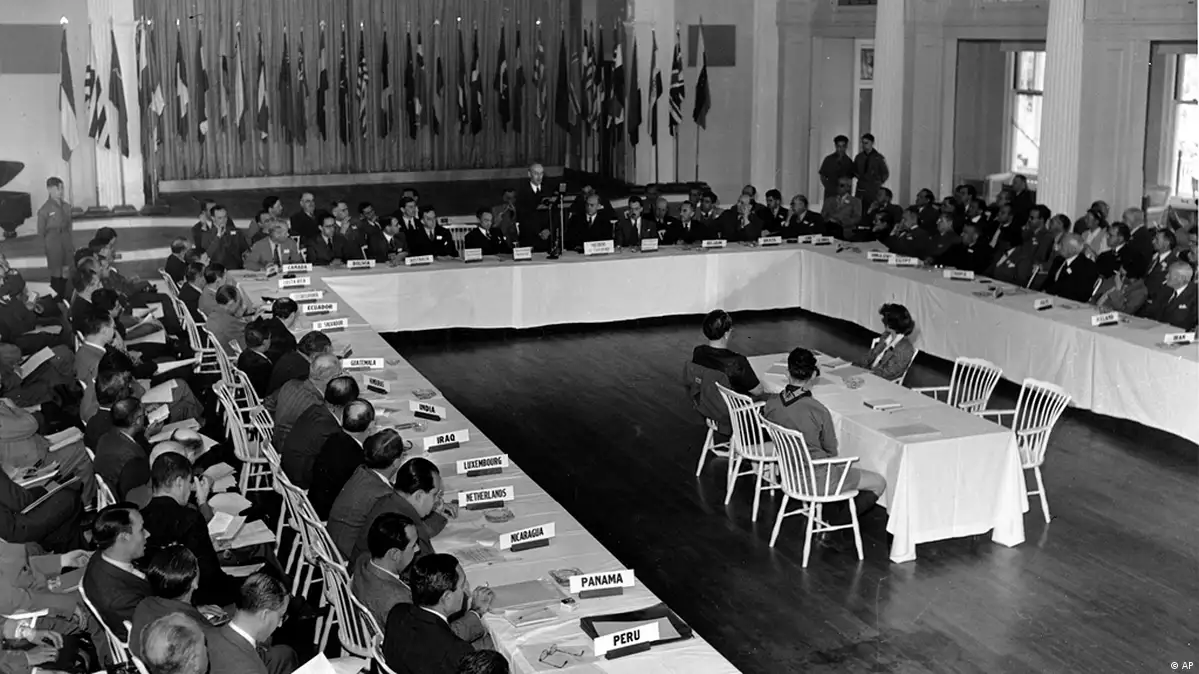
The world as we knew it is no longer holding together. This is neither a prediction nor a warning but a simple observation available to anyone watching the news headlines. The genocide in Gaza, the fires in Ukraine, the missile exchanges and smoldering across the Middle East, the trade wars between Washington and Brussels, and the creeping realization that the International institutions built after 1945 are no longer fit, or at least becoming irrelevant. We are living through an age where multiple tectonic plates, may that be economic, technological, military, and cultural, etc. are moving simultaneously, making the ground beneath every established assumption shift in ways that are extremely difficult to fathom in its entirety. The post-war architecture of Bretton Woods, the United Nations, NATO’s security umbrella, and the long era of American unipolarity that followed the Cold War is visibly fraying. Into this already volatile landscape, the artificial intelligence revolution has inserted itself not as a peripheral technological trend, but as a central organizing force of geopolitical competition. It is not only influencing but accelerating every existing fault line while quietly creating entirely new ones that governments, militaries, and financial systems are only beginning to understand. This is not a story about better chatbots or more efficient supply chains. It is a story about the redistribution of power at every level of human organization, from the individual to the nation-state and to the global system itself.
Evolving Dynamics of National Power
Every era of great power competition has had its dynamics and control levers (the strategic resources whose control confers decisive advantage across all dimensions of national power). In the nineteenth century, they were coal and steel. In the twentieth, oil, nuclear technology, Air power and the blue-water navies. The Cold War was, at its core, a competition between two economic and military systems, each anchored in its ability to mobilize these resources to project its power. However, in the twenty-first century, these have shifted to semiconductors, data, computing infrastructure, and the artificial intelligence models that run on them. This is not a technological observation. It is a geopolitical one. Whoever controls these resources does not merely win an economic and technological competition but also shapes and architects the decision-making environment of the modern world. The statement necessitates a detailed and analytical unpacking because it sounds like hyperbole until one traces the causal chains.
Consider military superiority. The nation that leads in AI can process signals intelligence at scale no human analyst can match, undertake electronic warfare that adapts in real time to enemy Electronic Order of Battle (EOB) and develop autonomous weapon systems, thereby compressing the battlefield decision cycles (OODA loop) from minutes to milliseconds.
The United States Department of Defense has already integrated AI into everything from predictive maintenance for aircraft to targeting recommendations for strike platforms. China’s People’s Liberation Army has made AI-assisted command and control a centerpiece of its modernization strategy. The Ukrainian battlefield is manifesting the same facts, where AI-enabled drone systems learn to evade jamming and identify targets much faster than any human operator. Targeting algorithms identify military-relevant objects from satellite imagery faster than any human analytical team. Command and control architectures synthesize sensor data from hundreds of distributed sources simultaneously. This is not futurism. It is the current operational reality, and its implications for conventional military doctrine are more radical than anything ever been observed.
Consider economic productivity. AI is not a sector of the economy in the way that automotive manufacturing or financial services are sectors. It is what economists call a general-purpose technology, like electricity, the internal combustion engine, etc., that raises productivity across every sector simultaneously. It optimizes logistics networks, accelerates discovery, personalizes marketing, automates customer service, forecasts demand, detects fraud, and manages energy grids. The productivity differentials that AI leadership will create between nations over the next decade will be structural, compounding, and extraordinarily difficult to reverse.
Consider what could be called algorithmic leverage — the power that flows from controlling the systems through which the majority of the world’s population now receives information. The capacity to generate millions of convincingly authentic social media posts, comments, articles, and audio clips tailored to the psychological profiles of individual targets is no longer theoretical. It is already reshaping elections, inflaming ethnic tensions, and destabilizing the epistemic foundations on which democratic governance depends. It is one fundamental element that makes AI a National Security imperative, the states that control these algorithms in their manifestation will have the ability to influence and ultimately change the culture, tradition, historical context and eventually challenge the very identity of a nation that happens to be a mere AI user or dependent on others.
And finally, consider diplomatic leverage. The nation that leads in AI can offer or withhold access to this technology as a tool of alliance-building. It can provide surveillance systems to friendly governments, train their military personnel in AI-enabled tactics, integrate their financial systems into AI-powered payment networks, and shape the technical standards that govern how all these systems interoperate. Technology dependency has become a new form of geopolitical leverage as powerful as any predecessor, but far more difficult to see, to quantify, or to resist.
“This is the fundamental reality of our era: the nation or bloc that leads in AI does not just build better products. It builds the infrastructure upon which all other forms of power increasingly depend. The race to control AI is, in its strategic significance, the defining competition of the twenty-first century”.
Why This Time is Different
It is tempting to understand the AI Race through familiar Cold War frameworks — two superpowers competing for global dominance, with everyone else forced to choose side. This framing captures something real, but it misses what is genuinely novel about the current moment. Three features distinguish the AI competition from previous great power rivalries, and each has profound implications for how the world order will evolve.
First, the pervasiveness of the technology. Nuclear weapons, the defining technology of the Cold War, were single-purpose instruments of deterrence. They could destroy cities, but they could not meaningfully enhance economic productivity, shape public opinion, optimize logistics, accelerate scientific discovery, or manage financial systems. AI can do all of these things simultaneously.
It is a general-purpose technology that enhances every domain of national power at once. This means the returns to leadership are not linear but exponential.
Second, the continuous deployability. Nuclear weapons sit in silos, on submarines, and under bombers, held in reserve for existential contingencies. Their very destructiveness limits their utility as tools of daily statecraft. AI systems, by contrast, operate continuously. They are shaping battlefield decisions, financial markets, and public opinion in real time, every hour of every day. The competition does not pause, and the advantage compounds.
Third and most critically, the absence of a deterrence framework. Mutually assured destruction created a strange form of stability during the Cold War because no rational actor could use nuclear weapons without facing annihilation. The logic of deterrence imposed constraints that, however nerve-wracking, were mathematically inescapable. There is no equivalent logic for AI. No mutually assured destruction applies to algorithmic competition. No second-strike capability immunizes against information operations. No arms control treaty limits the deployment of autonomous weapons. The absence of these guardrails makes the AI race fundamentally more destabilizing than the nuclear competition ever was — not because AI is more destructive, but because nothing prevents its use across the full spectrum of conflict, from below the threshold of armed attack to full-scale warfare.
This asymmetry has profound implications for global stability. The Cold War, for all its dangers was a predictable confrontation between two clearly defined blocs with known capabilities, established red lines, and regular channels of communication. The AI era is characterized by rapid, opaque technological change, shifting alliances, unclear escalation ladders, and the constant risk that some autonomous system will act in ways its creators did not anticipate.
The world is not entering a new Cold War. We are entering something messier, more unpredictable, and potentially far more dangerous.
Invisible Battlefield
We hear much talk and analysis on AI models and algorithms; however, as with many other strategic events, the most consequential dynamics are rarely the ones generating the most headlines. The AI race is no different. While commentators fixate on model benchmarks and Chatbot capabilities, the real competition is being waged in the electrical grids, the rare earth supply chains, the undersea cable networks, and the diplomatic backchannels where the material foundations of AI dominance are secured or surrendered.
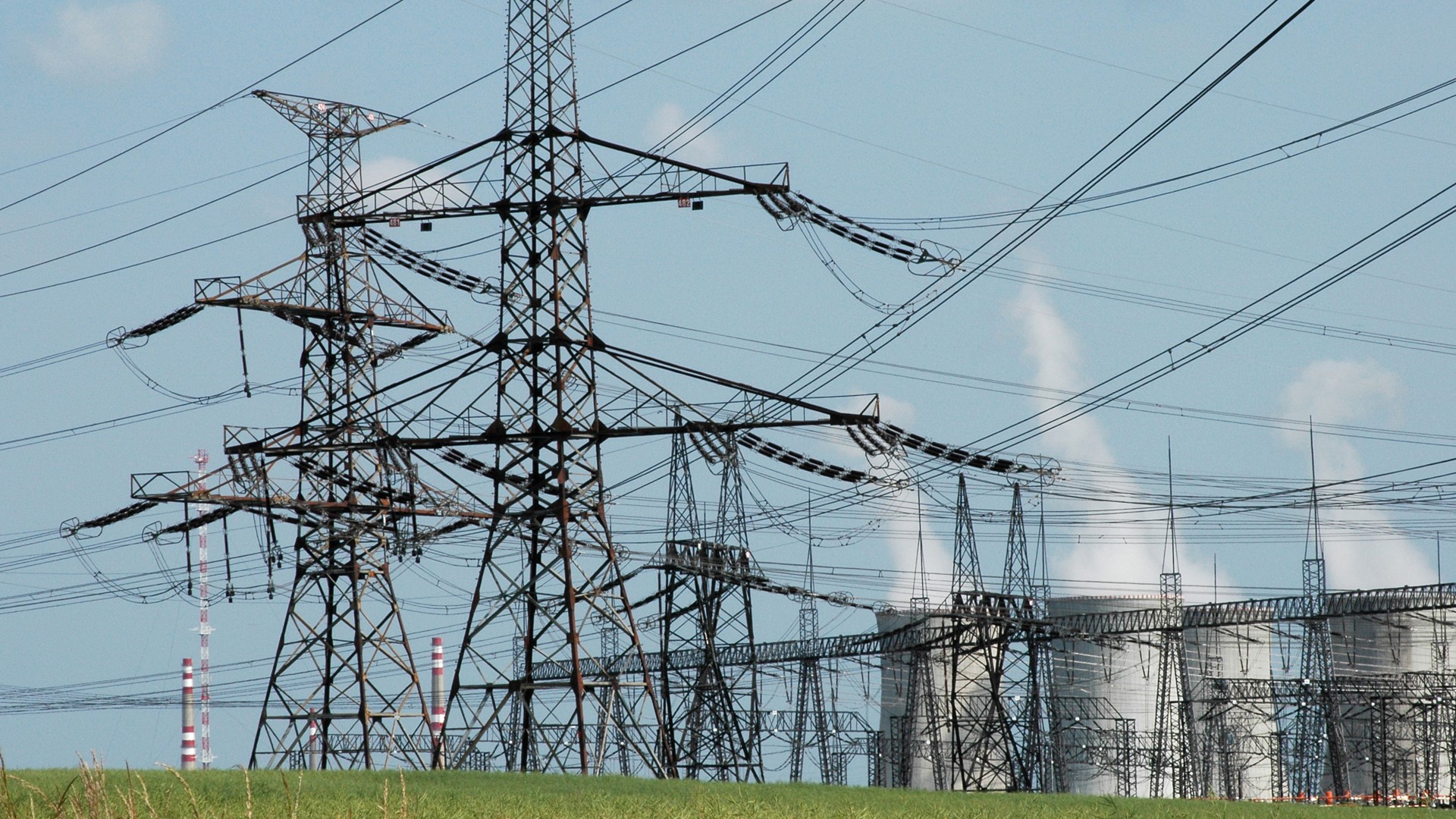
The energy imperative is perhaps the most underappreciated dimension of this competition. Training a single frontier AI model consumes as much electricity as a small city uses in a year. Running inference at scale multiplies that demand exponentially. The largest AI data centers now require dedicated power infrastructure comparable to medium-sized industrial facilities. Water consumption for cooling is equally staggering. What this means in practical terms is that the AI race is inseparable from the energy race, and the energy race is inseparable from the geopolitical race for resource control.
This energy appetite is quietly reshaping global power dynamics. China has recognized the connection between energy sovereignty and AI sovereignty with striking clarity. It is now the world’s fastest-growing nuclear power producer, with over thirty reactors under construction, with half of all nuclear builds globally.
Every reactor China exports through its Belt and Road Initiative creates an eighty-year dependency chain. China supplies the fuel, its maintenance, the training, and eventually the technology for spent fuel processing. This is energy colonialism for the AI age, and it is happening largely unnoticed beneath the headlines of trade disputes and military maneuvers. The United States, meanwhile, is pursuing a contradictory energy strategy. The CHIPS Act provided fifty-two billion dollars for semiconductor manufacturing — a necessary and significant investment.
But the same administration has canceled clean energy projects essential for powering those new labs, including hydrogen hubs, grid modernization initiatives, and battery manufacturing facilities already under construction. The result is that America is building AI capacity on an increasingly brittle and outdated electrical grid, vulnerable to everything from cyberattacks to extreme weather events.
Beyond energy lies the question of critical minerals. The rare earth elements essential to advanced electronics like neodymium for magnets in hard drives and electric motors, gallium and germanium for semiconductors, and cobalt for batteries, are overwhelmingly controlled by China, which has not hesitated to weaponize that control through export restrictions. The specialized gases, photoresists, and chemical precursors that chip manufacturing requires are sourced from a handful of producers in Japan, South Korea, and Germany. The semiconductor supply chain is geographically concentrated to a degree that would be considered strategically reckless in any other domain. Taiwan Semiconductor Manufacturing Company alone produces roughly ninety percent of the world’s most advanced logic chips. What the ongoing Middle East crisis has demonstrated is that you do not need to invade Taiwan to cause catastrophic disruption to the global technology supply chain. A naval blockade, a missile strike on port infrastructure, an undersea cable cut, any of these, in a sufficiently tense regional scenario involving China and Taiwan, would trigger a supply shock that would make the COVID semiconductor shortage look minor by comparison. And unlike a shipping disruption that can be rerouted around a cape, there is no alternative route around TSMC. This is a geopolitical vulnerability of stunning proportions, and it is precisely why the United States, Japan, South Korea, and the European Union are spending tens of billions trying to reshore semiconductor manufacturing — not because it makes economic sense in the short run, but because the strategic risk of continued concentration has become intolerable.
Tech Nationalism and the New Mercantilism
What is emergingfrom these pressures is something that can fairly be called tech nationalism — a twenty-first century mercantilism in which governments treat AI capability and semiconductor supply chains the way eighteenth-century states treated gold reserves. It is mercantilism with server farms instead of bullion, export controls instead of tariffs, and data sovereignty instead of territorial exclusion yet the underlying logic is identical: accumulate, protect, and if necessary weaponize.
The evidence of this shift is now overwhelming and global. The United States has its CHIPS and Science Act. The European Union has its own Chips Act. Japan is subsidizing TSMC to build fabrication plants on Japanese soil. India has launched its India AI mission. The Gulf States are deploying sovereign wealth into AI infrastructure at a scale that dwarfs most national defense budgets. Everyone, with varying degrees of coherence, has concluded that AI and semiconductor sovereignty is now a matter of national survival.
The most consequential and historically underappreciated expression of this tech nationalism is the weaponization of export controls. The Commerce Department rules on advanced computing exports issued in 2022 and 2023 are, in the assessment of every independent analyst, the most aggressive use of export control authority since the multilateral restrictions on technology transfer to the Soviet Union in the 1950s. They do not merely restrict the sale of advanced chips to China, they restrict chip-making equipment, cloud computing services, and software updates. They effectively attempt to freeze the relative AI capability trajectory of the United States’ principal rival — which is an act of economic warfare by any historical definition, dressed in the language of national security.
The broader significance of these measures extends far beyond the US-China competition. The signal they send to every other nation is unambiguous: access to the infrastructure of AI is conditional on alignment with American strategic preferences. Countries that host Huawei network infrastructure engage in strategic partnerships with Chinese technology companies, or appear on restricted lists for other geopolitical reasons find their access to American AI infrastructure, not just chips, but cloud services, software licenses, and research partnerships, constrained or withdrawn.
The Dependency Trap
The dimension of the AI transition that is most troubling morally, and that receives by far the least serious attention in the strategic literature, is its structural inequality. The Industrial Revolution created what economic historians call the Great Divergence of the nineteenth century, a gap between industrializing powers and primary-product exporters that persisted for more than a hundred years and whose effects are measurably present in the income distributions of today. The AI revolution threatens to create a new and potentially more durable divergence, only compressed into a fraction of the time. The basic dynamic is straightforward. The nations that lead in AI development will, in the assessment of every serious analysis, hold decisive advantages across every domain of national power may that be economic productivity, military capability, intelligence and surveillance, information operations, diplomatic influence, and the structural power that comes from setting the standards, governing the infrastructure, and determining the norms of the technology that the rest of the world depends on. The nations that cannot afford to build their own AI infrastructure will become clients of those that can. This is the new dependency theory of the twenty-first century, and it echoes the old post-colonial dependency trap with disturbing fidelity. A 2026 report from Microsoft’s AI Economy Institute found that 27.5% of working-age adults in developed countries use generative AI tools regularly, compared to just 15.4% in developing nations — and the gap is widening. This is not merely a productivity statistic. It is a measure of the speed at which cognitive dependency is being structured into the global economic architecture.
The countries falling behind in AI adoption are not simply falling behind in productivity, they are becoming structurally dependent on foreign cognitive systems for their own governance, their own economic management, their own military planning, and the informational reality of their own identity.
China has been particularly aggressive in offering a way out of this trap for developing nations, through its Digital Silk Road. It provides turnkey AI surveillance systems, smart city platforms, digital payment infrastructure, and connectivity to African, Latin American, and South Asian nations, often with fewer conditions attached than Western alternatives and with financing that cash-strapped governments find hard to refuse. The United States and its allies are scrambling to offer alternatives through initiatives like the Partnership for Global Infrastructure and Investment, but the gap in speed, scale, and terms remains significant.
The result is a digital bidding war for the allegiance of the Global South. Middle powers with significant sovereign wealth or strategic importance can extract concessions from this competition. But the vast majority of smaller nations lack the sovereign wealth for large-scale AI investment, the talent pools for serious domestic development, the geopolitical weight to negotiate independence from both poles, and the institutional capacity to manage the complex tradeoffs of strategic
non-alignment.
In the current technology order, they are price-takers rather than price-setters. Their technology choices are constrained by what larger powers are willing to supply on what terms.
Lack of International Order
Perhaps the feature of the current moment is the almost complete absence of effective global governance for AI. The European Union’s AI Act, American executive orders, China’s domestic AI regulations, and the United Kingdom’s pro-innovation approach are all national or regional frameworks. They are deeply inconsistent with each other, and none of them addresses the most consequential questions.
What are the rules for AI in warfare? The international humanitarian law framework — the Geneva Conventions, the Law of Armed Conflict, the Rome Statute — was constructed on a set of assumptions about human decision-making that autonomous weapons systems are already rendering obsolete. These frameworks assume that someone can be held accountable for violations, that intent can be determined, that proportionality can be judged by a human mind. When an AI system misidentifies a school bus or a school building as a military convoy and command structure, respectively, and attacks it, who is responsible? The commander who deployed the system? The programmer who wrote the targeting algorithm? The manufacturer whose training data contained unrecognized biases? International law has no coherent answers to these questions, and the pace of deployment is fast outrunning the pace of legal development.
Over a dozen countries are actively developing autonomous weapons systems — from loitering munitions that select their own targets to naval drones that patrol without human direction. There is no international register of these systems, no verification mechanism, no binding prohibition on any particular capability and no forum for discussing escalation risks. The closest thing to international regulation is a set of non-binding political declarations that the major military powers have signed, with all the commitment they bring to press releases only.
How are AI-generated disinformation campaigns treated under international law? When a state-sponsored AI system generates millions of convincingly authentic-seeming posts, comments, and articles tailored to the psychological profiles of individual citizens in a rival country, is that an act of war? A violation of sovereignty? A form of information warfare that falls below the threshold of armed attack? International law has no answer, and the absence of an answer creates an operational gray zone that every major power is aggressively exploiting.
What constraints apply to the use of AI for surveillance by governments? The technology for mass surveillance, facial recognition, behavioral prediction, and social credit systems is rapidly advancing and globally available. A government that wishes to monitor every citizen, predict their future behavior, and punish deviations from approved norms can now do so at scales previously unimaginable.
There is no international framework governing what constitutes acceptable surveillance, no protection for digital privacy as a human right, no mechanism for holding governments accountable for algorithmic oppression.
The standards war playing out in international bodies is, in a profound sense, a war over who gets to answer the governance questions. Technical standards are not boring administrative details. They are the invisible constitution of the digital world, determining what is possible, what is interoperable, and who has structural leverage over whom. The nation or bloc that writes the technical standards of AI shapes the architecture of the global system for decades, as surely as the Bretton Woods institutions shaped the global economic architecture for the seventy years following 1944. Both the United States and China understand this, and are aggressively trying to export their technical architectures as global norms through every multilateral forum available to them.
The European Union is trying to use its regulatory authority to shape standards from a position that lacks dominant technology companies. The rest of the world is largely watching, which is to say the rest of the world is ceding the outcome to others.
“The absence of agreed international norms on AI creates a governance vacuum into which adventurous states, reckless companies, and well-resourced non-state actors are already moving. This is not an abstract risk. It is happening now, and the window to shape it by negotiation rather than by fait accompli is closing”.
Emerging Architecture
Noone who has spent a career in strategic analysis claims to predict the future — the discipline has a poor enough track record that epistemic humility is professionally mandatory. What one can do is sketch plausible trajectories and evaluate the gap between the best and worst of them. In the AI competition, that gap is enormous, and it seems the world is currently drifting toward the wrong end of it.
The most probable near-term outcome, absent significant political intervention, is a stable but deeply tense bifurcation into American-led and Chinese-led AI ecosystems. Technology becomes the primary axis of alliance formation.
Countries align themselves with one ecosystem or the other based on existing relationships, economic dependencies, security calculations, and preferences about which model of AI governance they find more congenial. Middle powers perpetually navigate the space between extracting what leverage they can from both while trying to avoid being forced into an irreversible choice.
This bifurcation scenario produces something like a Cold War equilibrium. It is managed, predictable enough to avoid open great power conflict, and structured enough to prevent the worst forms of chaos.
But it is profoundly innovation-suppressing because knowledge, talent, and data do not flow freely across the divide. It is structurally incapable of addressing genuinely global challenges like climate change, pandemic preparedness, nuclear proliferation, etc. as it require cooperation between the blocs. And it is deeply unequal: the asymmetry between the two ecosystems is not symmetrical. The American-led ecosystem currently has more advanced models, more venture capital, and more global institutional reach.
The Chinese-led ecosystem has more state-directed investment, more integration with manufacturing, and more reach in the Global South through the Digital Silk Road. A more disorderly but in some ways more balanced scenario emerges if the US-China rivalry exhausts both powers sufficiently that regional players develop genuine autonomous AI capacity. India, the European Union, the Gulf States, perhaps a Southeast Asian coalition — each building their own AI ecosystems, their own standards, their own geopolitical affiliations. Five or six competing spheres produce a world that is more balanced than bipolarity but vastly less efficient and more prone to the friction of incompatibility. Global coordination becomes extremely difficult. The world fragments not just politically but cognitively, with populations in different ecosystems literally operating on different informational realities, seeing different news, using different tools, and living under different algorithmic regimes.
The least probable scenario is one in which a sufficiently alarming AI safety event creates the kind of shared alarm that has historically motivated international cooperation on existential risks. This could be a catastrophic failure of an autonomous weapons system that causes mass casualties, an AI-generated financial crisis that cascades across global markets, or a biological weapons breakthrough enabled by AI that demonstrates the technology’s capacity for destruction. In the aftermath of such an event, an AI equivalent of the Nuclear Non-Proliferation Treaty becomes possible — imperfect and incomplete, but establishing basic guardrails, verification mechanisms, and forums for ongoing coordination.
Technology-sharing provisions for developing nations are included as the price of their participation. This is the most stable and equitable outcome, but it requires political will that does not currently exist — though neither did the NPT, until Hiroshima and Nagasaki made the alternative imaginable.
How Pakistan is Navigating the Muddy Waters
I want to close with Pakistan, not because it is the largest player in this competition. It manifestly is not, but because it represents, in crystallized form, the dilemma facing every middle power that lacks the resources to lead in AI but possesses the strategic significance to refuse pure followership.
Pakistan is, in my assessment, one of the most instructive and consequential cases in the new geopolitics of AI precisely because its navigation challenges are so nakedly difficult. Consider the geography first, which is both Pakistan’s greatest asset and its most unrelenting burden. Pakistan borders China, India, Iran, and Afghanistan — four relationships, each of which is itself a study in managed complexity of a kind that would test any diplomatic service in the world. Its China relationship, anchored in the sixty-two-billion-dollar China-Pakistan Economic Corridor, provides infrastructure investment and a strategic backstop while simultaneously creating debt dependency risks and quiet alignment pressures that constrain Islamabad’s room for maneuver on issues Beijing considers core interests. Its relationship with the United States has oscillated historically between strategic partnership and strategic abandonment at a frequency that would test the patience of any ally, and the current era of American transactionalism offers Islamabad little predictability. Its relationship with India remains frozen in mutual nuclear deterrence and periodic crisis, with the additional dimension that India is now emerging as a serious AI power — attracting Western technology investment and Silicon Valley enthusiasm that Pakistan, despite its talent base, is not. And its border with Iran, which is now at the epicenter of the most dangerous military confrontation in the region, adds a layer of volatility that Islamabad neither controls nor can safely ignore.
On the technology and AI front, Pakistan’s position is that of a nation with genuine raw material but limited strategic execution. It has a young and large population, over sixty percent under the age of thirty, that could become a massive workforce if properly skilled. It has a high-achieving diaspora with deep connections in Silicon Valley and London. It has one of the world’s fastest-growing freelance technology workforces, with hundreds of thousands of Pakistanis earning foreign exchange through platforms like Upwork and Fiverr. It has a growing domestic information technology export sector that has survived despite chronic energy crises and macroeconomic instability.
But raw material is not a strategy. Pakistan lacks the state capacity, the capital markets depth, the policy coherence, and the political attention span to translate that raw material into sovereign AI capability that would give it real strategic options. In February 2026, Prime Minister Shehbaz Sharif announced a one billion dollar AI investment plan by 2030, including one thousand fully funded PhD scholarships and training for one million non-information technology professionals. This followed the launch of Indus AI Week and the approval of a National AI Policy. These are necessary first steps, but having spent years seeing the Pakistani governments announcing strategic initiatives, we need to analyze them not by their mere announcements but by their institutional continuity across political transitions. Over the years, Pakistan’s challenge has not been producing the plan; it has been sustaining the plan through the next election, the next IMF negotiation and the next civil-military friction point. The problem is a structural one: the political system’s chronic instability, the civil-military balance of power, and the fiscal constraints produced by decades of crisis management have systematically prevented the translation of strategic insight into sustained strategic execution. Pakistan knows what it needs to do. It has repeatedly been unable to do it for long enough to produce durable results.
Pakistan’s strategic situation vis-à-vis the bifurcating AI world is also particularly acute because it is already simultaneously embedded in both ecosystems in ways that are difficult to disentangle. Huawei equipment is woven into Pakistani telecommunications networks. Chinese AI surveillance and smart city proposals have been advanced for urban security applications. Chinese payment infrastructure is expanding through CPEC’s digital components.
At the same time, American platforms power Pakistan’s growing digital economy, Silicon Valley connections sustain its diaspora links, and dollar-denominated systems remain the backbone of its international trade and the IMF programs that have become a structural feature of Pakistani fiscal life. This dual embeddedness is simultaneously a hedging asset — Pakistan has genuine leverage derived from not being fully committed to either side — and a vulnerability, because neither ecosystem will indefinitely tolerate a client that appears to be playing both ends. The Middle East dimension adds a layer of personal urgency that no abstract geopolitical analysis fully captures. Pakistan’s remittance inflows are one of the most critical structural pillars of its external account, and come very substantially from Pakistani workers employed across the Gulf States. Those workers’ livelihoods depend on the Gulf’s energy economy remaining functional. The ongoing Iran-US-Israel confrontation, the closure of Hormuz, and the destabilization of the Arabian Peninsula’s labor markets are not distant geopolitical events for Pakistan. They are direct threats to the economic foundation of millions of Pakistani households, and through those households, to the fiscal and social stability of the state itself. Any Pakistani strategic assessment that treats the Middle East crisis as someone else’s problem is not merely intellectually incomplete, it is dangerous. What Pakistan urgently needs is a coherent national AI and technology strategy grounded in Pakistani interests rather than in the appeasement of larger powers. That means investing seriously in domestic AI literacy and research capacity even under fiscal constraints, because the alternative is producing a generation permanently dependent on foreign cognitive infrastructure. It means using its weight in multilateral forums like the OIC, the SCO, the G77, and the United Nations to advocate aggressively for AI governance frameworks that protect developing nations’ interests before the great powers write those frameworks unilaterally and call them global. It means making deliberate, clear-eyed choices about technology infrastructure partnerships. And it means, above all, recognizing that its position at the intersection of Chinese ambition, Indian rise, Iranian volatility, Gulf capital, and Central Asian connectivity is a strategic asset of enormous potential value — but only if managed with far greater coherence and long-term vision than Pakistan’s political culture has typically been able to sustain.
Conclusion- A Window that is Closing
The world order being born around us is not yet determined. The trajectories are powerful but they are not destiny, and the decisions made in Washington, Beijing, Brussels, New Delhi, Riyadh, Tehran, and in a hundred smaller capitals, including Islamabad, over the next five to ten years will shape the architecture of global power for a generation at minimum.
What is abundantly clear is that artificial intelligence is not a sector of the economy that can be governed separately from foreign policy, managed by technology ministries while foreign ministers attend to other things. It is the infrastructure of everything else — military power, financial power, soft power, the developmental capacity of nations, the sovereignty of governments, and the daily life of ordinary people. The supply chain vulnerabilities exposed by the Middle East’s ongoing convulsion, the rare earth dependencies on China, the semiconductor concentration in Taiwan and South Korea, the energy chokepoints at Hormuz — these are not technical problems awaiting technical solutions. These are geopolitical vulnerabilities of the first order being actively exploited by every actor with the capability and the motivation to do so.
For middle powers navigating this environment — and Pakistan stands as one of the most instructive and consequential cases — the imperative is simultaneously clear and extremely difficult to act upon. Avoid complete dependency on any single AI ecosystem. Invest in sovereign data governance and the institutional capacity to enforce it. Build human capital in technology as aggressively as any previous generation built literacy. Use every multilateral forum available to advocate for rules that protect smaller nations before the great powers write those rules unilaterally.
The nations that treat AI as a technical matter for their technology ministries will find, too late, that it was in fact the central strategic question of their era. The window to shape this new world order — rather than merely adapt to it on someone else’s terms — is closing. The question is – who is paying attention?