




The world’s political stage has been dramatically changed at a very fast pace from 2020 to 2025. The pandemic affected the global economy, rules of engagement in all sphere of life changed and political stage shifted from Europe to China and Russia followed by a chaotic withdrawal of NATO forces from Afghanistan and rise of the Taliban in Afghanistan. Pakistan’s 96-hour war with India was a major event in the latest contemporary history and has uncovered many myths, misunderstandings, and misconceptions since Pakistan emerged victorious. Moreover, the world has observed many wars recently including wars between Israel and Hamas, Iran-Israel war, India-Pakistan war, US-Iran war and now Yemen-Saudi war which is sensitive in nature due to the presence of the Mecca Joint Defence Mechanism. The strategic needs require Pakistan to seek expansion westward in order to handle the emerging and existing challenges better. Such an expansion must be stretched not only on ground but also in the maritime domain.
This article examines the rationale, mechanisms, and constraints of Pakistan’s westward expansion, with particular attention to the extension of its naval domain. It draws on observable policy shifts, naval modernization trends, and formal defence agreements to assess both the opportunities and the limits of this trajectory.
Pakistan’s geopolitical orientation has long been defined by its eastern frontier with India and its northern and western borders with Afghanistan and Iran. In recent years, however, a clear westward vector has emerged in Islamabad’s strategic calculus. This involves deeper security partnerships with Gulf states, active participation in maritime security arrangements spanning the Persian Gulf and Red Sea, and exploratory engagement extending toward North Africa. The drivers are structural: energy dependence, economic imperatives, the search for strategic depth beyond the South Asian theatre, and an evolving regional security architecture in which traditional external guarantors face credibility challenges.
Historical Foundations and the Contemporary Pivot
Pakistan’s engagement with the broader Muslim world is not new. From the 1970s onward, Pakistani military personnel trained Gulf armed forces, advised on air force development, and at times deployed contingents in support of Saudi security. Remittances from millions of Pakistani workers in the Gulf have long formed a critical pillar of the national economy. Energy imports from the region underpin industrial and transport needs.
What has changed is the formalization and operational intensity of these ties. In September 2025, Pakistan and Saudi Arabia signed a Strategic Mutual Defence Agreement treating an attack on one as an attack on both. This was expanded in August 2026 into the Mecca Joint Defence Agreement incorporating Türkiye. Parallel arrangements with Kuwait and exploratory discussions with other Gulf partners have followed. These pacts reflect a Gulf search for additional security providers amid doubts about exclusive reliance on external powers, and Pakistan’s willingness to assume greater responsibility in exchange for political, financial, and strategic benefits.
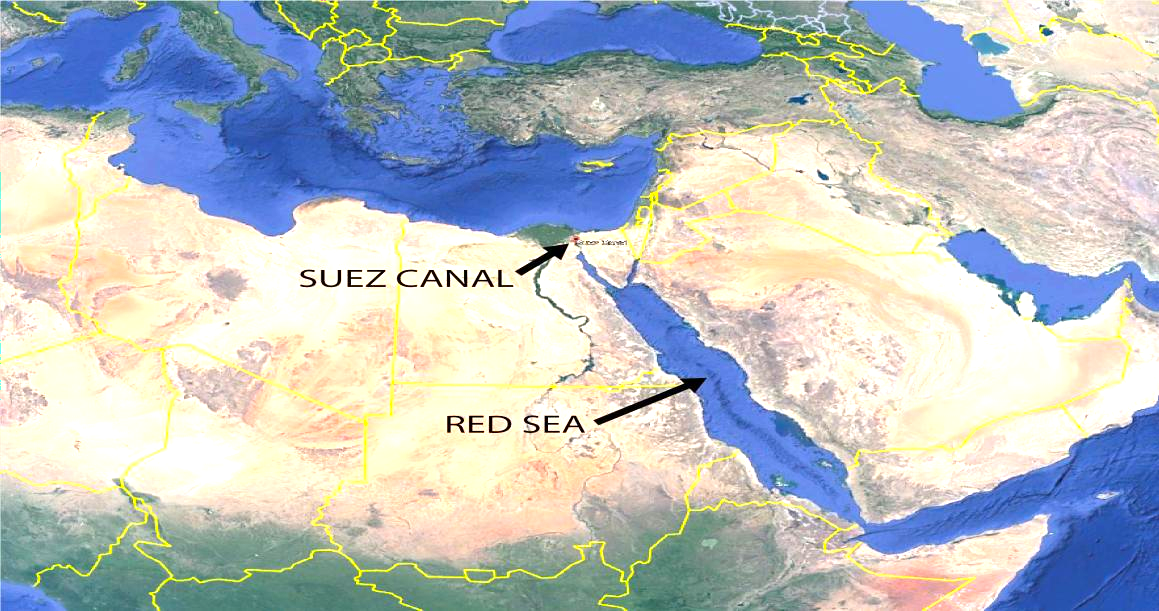
Concurrently, disruptions in the Strait of Hormuz and Houthi-related threats in the Red Sea and Bab al-Mandab have elevated maritime security from a secondary concern to a core national interest. Approximately 90 percent of Pakistan’s trade moves by sea, and a large share of its energy supplies transits Gulf waters. When traditional routes face interruption, alternative pathways through the Red Sea become vital. Pakistan’s response has included the launch of Operation Muhafiz-ul-Bahr to escort merchant shipping and formal participation in a Saudi-led multinational maritime coalition focused on the Red Sea corridor. These steps represent more than reactive crisis management. They signal an intentional effort to convert geographic proximity and historical ties into sustained influence westward.
Strategic Rationale for Westward Expansion
Several interlocking factors drive this orientation. Firstly, energy and economic security. Reliance on Gulf hydrocarbons exposes Pakistan to chokepoint risks at Hormuz and, increasingly, Bab al-Mandeb. Diversifying supply routes and securing the sea lines of communication (SLOCs) that carry those supplies is a practical necessity. Remittances from the Gulf which constitute a major share of foreign exchange inflows, further bind economic health to regional stability.
Second is the pursuit of geopolitical strategic depth. Pakistan’s primary military focus remains the eastern border. A more robust western and maritime posture offers diplomatic and operational breathing room, potential access to financing and investment, and a platform for demonstrating utility to larger powers. Participation in Gulf security architectures also positions Pakistan as a net contributor rather than solely a recipient of external support.
Third is diplomatic versatility. Pakistan maintains working relations with Iran, Saudi Arabia, Türkiye, Egypt, and others. This multi-vector approach allows it to mediate or facilitate dialogue during hours of tension while avoiding exclusive alignment that would close the doors in the heat of the moment. Since geography reinforces the opportunity, Gwadar and the China-Pakistan Economic Corridor (CPEC) create a potential logistics node linking the Gulf, the Arabian Sea, and broader Eurasian routes.
North Africa enters the picture more tentatively for now, but this carries the considerable importance for economic and strategic expansion. Defence-industrial and training cooperation with stake holders in Libya and engagement with Egypt, forms part of a wider web of Muslim-world security ties. These contacts expand the geographic scope of Pakistani influence without yet constituting a primary operational theatre.
Extending the Naval Domain: Persian Gulf, Red Sea, and Beyond
Pakistan’s navy has historically prioritized sea denial and coastal defence in the northern Arabian Sea, oriented primarily against Indian naval power. Modernization is changing the force’s capacity for sustained presence farther afield.
Pakistan’s dominion of interest is going through rapid navigational transformation and we see the presence of large number of world navies in the Indian Ocean and Arabian Sea. Dealing with such massive traffic adjacent to our extended EEZ in addition to CPEC related interests, requires utmost attention and planning for keeping close eyes on the ambitions and activities of adversaries. Geography, energy dependence, and the shifting regional balance of power ensure that the western maritime domain will remain a permanent feature of Pakistani strategic thinking.
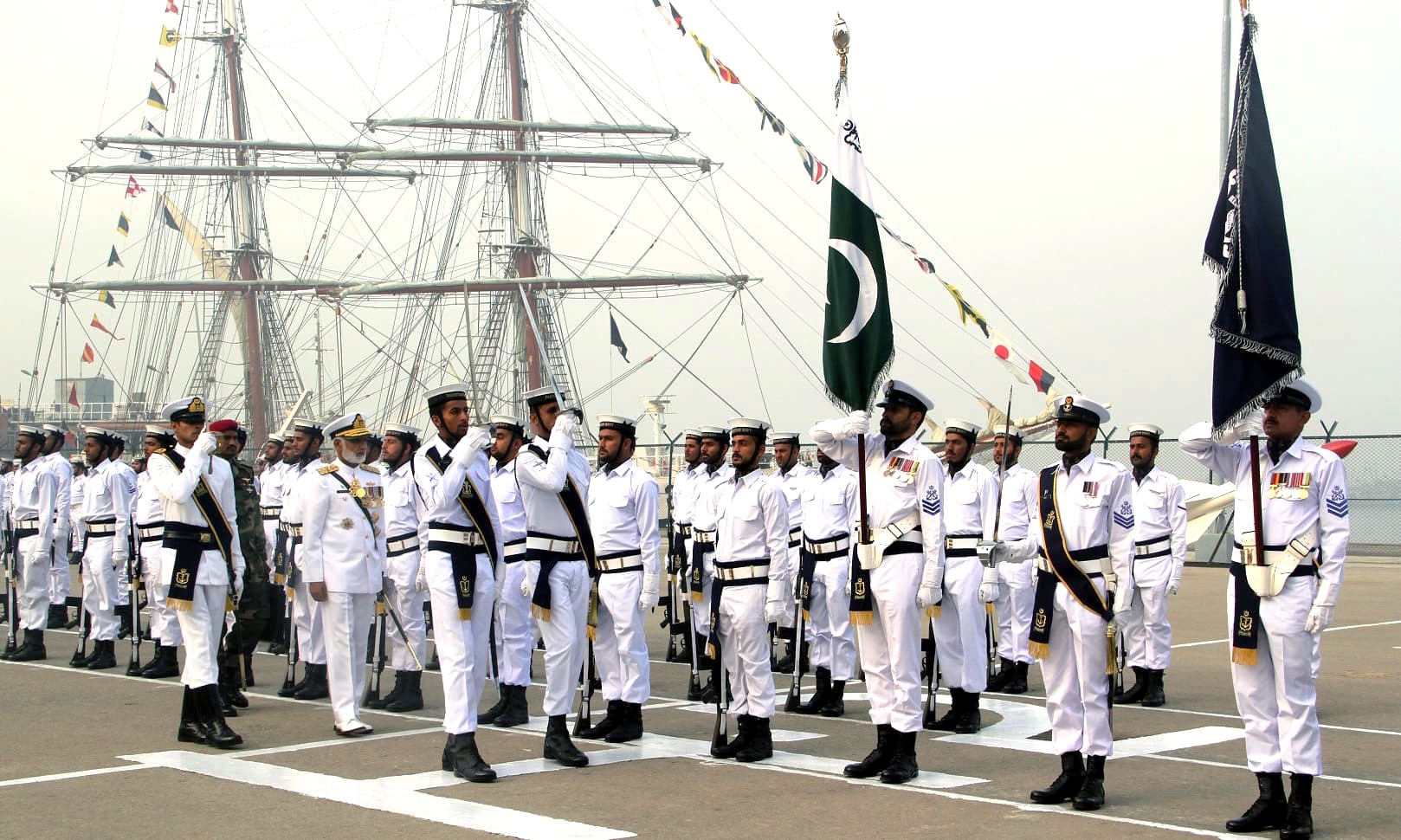
Key platforms include Chinese-origin Type 054A/P (Tughril-class) frigates, Turkish MILGEM-derived Babur-class corvettes, offshore patrol vessels, and the induction of Hangor-class submarines (the first commissioned in 2026, with seven more planned). These assets improve anti-surface, anti-submarine, and air-defence capabilities. Missile systems and growing integration of unmanned platforms support an anti-access/area-denial posture closer to home while enabling longer-range patrols and escort missions. In the Persian Gulf and approaches to Hormuz, Pakistan has conducted escorts of national shipping and proposed cooperative maritime mechanisms. The navy’s experience commanding Combined Task Forces 150 and 151 provides institutional familiarity with multinational operations in the Gulf of Aden and adjacent waters.
The Red Sea and Bab al-Mandeb represent a more significant extension. Participation in the Saudi-led coalition, the appointment of Pakistani officers to coalition roles, and statements reserving the right of self-defence when maritime interests are threatened mark a departure from earlier strategic ambiguity. Escorts and presence operations protect energy lifelines that have shifted toward Red Sea routing during periods of Hormuz disruption.
North Africa remains peripheral for sustained naval deployment. Logistical reach, sustainment capacity, and competing priorities limit blue-water ambition contemporarily for now and current capabilities support presence and cooperation rather than independent power projection across the full arc from the Gulf of Oman to the Mediterranean approaches. Defence and security analysts note that the Pakistan Navy remains more littoral and regional than a classic blue-water force, lacking aircraft carriers, extensive underway replenishment, or organic long-range air cover. Nevertheless, the doctrinal conversation has shifted. Calls for an articulated “blue water” or extended maritime strategy reflect recognition that energy security and alliance commitments pull the navy beyond traditional operating areas.
Pakistan’s ability to sustain this expansion rests on three pillars:
- Force modernization
- Alliance frameworks
- Domestic capacity
Modernization continues despite fiscal pressures. New surface combatants and submarines improve qualitative edges, while experience in multinational task forces builds operational credibility. Partnerships with China (platforms and technology), Türkiye (corvettes and broader defence industry links), and Gulf states, multiply limited national resources. The Mecca framework and related bilateral pacts provide political legitimacy and potential logistical support for deployments. Joint exercises, intelligence sharing, and training programs deepen interoperability.
The requirements for sustaining military and possible future blue water naval operations specifically under the Mecca pact, to provide security in multiple domains while same time meeting obligations being a net security provider, Pakistan must raise the bar by increasing platforms significantly. The obligation to safeguard the 290000 Km^2 EEZ and CPEC related economic trade dictates that pay full attention is rendered in this matter. In this regard, increasing the naval budget from current level, double the size of submarines and destroyers gradually in next 1 to 2 years, develop strategy for employing helicopter carriers which seem to be feasible instead of acquiring traditional carrier with fighter jets. This will help boosting operational capabilities. A Heli carrier can be developed at our naval shipyard. Moreover, acquire nuclear subs for maintaining longer operational sustainability, modernization of shipyards and destroyers manufacturing via joint ventures and effective local repair capabilities in-house for maritime inventory, modernization of second-strike capability utilizing submarines.
Massive improvement in naval aviation for supporting longer maritime operations and specialized drone technology can be utilized for limited to distant naval flight operations. In this regard, a pragmatic step could be taken by entering into agreements with friendly nations for using strategic islands in Arabian Sea, Strait of Hormuz, the Red Sea and beyond. The overwhelming challenges demand Pakistan Navy to adopt long term strategy to take shape as a powerful standing navy during next decade or even earlier.
There are some valid constraints that are equally real and worth paying attention to. Although, Pakistan’s economic challenges recommend limiting the scale and tempo of the already stretched naval operations for the time being, the near and distant future requires comprehensive extended planning as well due to rapidly changing geopolitical landscape, specifically in light of recent strait wars. The eastern border with India continues to absorb the bulk of military attention and resources. Balancing relations with Iran while deepening ties with Saudi Arabia and its partners requires constant diplomatic calibration. Finally, the navy’s sustainment and logistical infrastructure for prolonged distant operations remains underdeveloped relative to the ambitions implied by coalition membership and escort commitments. The logistical infrastructure must be rapidly developed in order to sustain the prolonged and distant naval operations.
Strategic Alignments
Pakistan has secured a strong position in the new world order after the recent 96-hour war with India. Global and regional drawing boards have been modified/updated/altered. As a rule of thumb in this power-driven world, only power speaks by itself, so Pakistan has demonstrated its worth, capacity and resolve. This was all possible due to exercising the golden words – Unity, Faith, Discipline and Resilience which was exhibited by entire Pakistani while backing up its armed forces.
Pakistan has gained world attention by mediating the US-Iran conflict. Islamabad Talks (held on April 11–12, 2026) marked a historic geopolitical milestone, serving as the first direct, high-level, in-person engagement between the United States and Iran since the 1979 Islamic Revolution. Orchestrated to halt the devastating 2026 Iran war and reopen the critically blocked Strait of Hormuz, the diplomatic channel positioned Pakistan as an indispensable global mediator.
The Mecca Defence Alliance (originally the Mecca Joint Defence Agreement), signed on August 7, 2026, by Pakistan, Saudi Arabia, and Turkey, binds the three nations to a collective security arrangement where “an armed attack against any one of the three states shall be regarded as an attack against them all”. The concept of a “net security provider” applies specifically to Pakistan, which is leveraging the pact to transition from a historic recipient of external financial aid into an indispensable operational and military stabilizer in West Asia. In addition to the Mecca agreement, historically, Pakistan and Turkey are radically expanding their strategic alignment westward, anchoring their relationship around defence industrial cooperation, joint technological development, and a powerful new collective security architecture in the Middle East. Moving far beyond symbolic diplomacy, the two nations are integrating their militaries into localized axes aimed at gaining greater strategic autonomy away from traditional Western security frameworks.
The proxy distortions will intensify the moment when Middle East, West Asia and Central Asian geopolitical bloc get more into strategic landscape. Adversaries are cautioned with the Mecca pact which is a sort of next level achieved and adversaries are trying to create hurdles in merging Middle East-Central Asia strategically and geopolitically. The game is really big, a master piece great game.
Concluding Remarks:
Pakistan’s westward orientation and naval extension do not amount to territorial expansion or classic imperial projection. They constitute a pragmatic effort to secure energy routes, convert historical military-diplomatic capital into formal influence, and position the country as a useful security partner in a multipolar Middle East and Central Asia. Success would yield several benefits including more reliable energy access, diversified sources of investment and remittances, enhanced diplomatic weight, and a measure of strategic depth that complements rather than replaces eastern deterrence.
Failure or mismanagement could produce overstretch, strained relations with Iran, or perceptions of diminished focus on core national defence requirements. The trajectory remains contingent. The sustainable economic stabilization, continued naval modernization, careful alliance management, and realistic assessment of logistical limits will determine how far the westward horizon can realistically extend. For now, Pakistan has moved from peripheral participant to active stakeholder in the maritime security of the Persian Gulf and Red Sea, with North African contacts forming a secondary outer ring. This represents one of the more significant reorientations in its post-independence strategic posture. The coming years will test whether this expansion consolidates into durable influence or remains episodic crisis response. This expansion domain specifically will be focussed amongst intellectual circles regarding future of Wakhan and safeguarding Pakistan-Afghanistan border region with a permanent buffer zone option.