



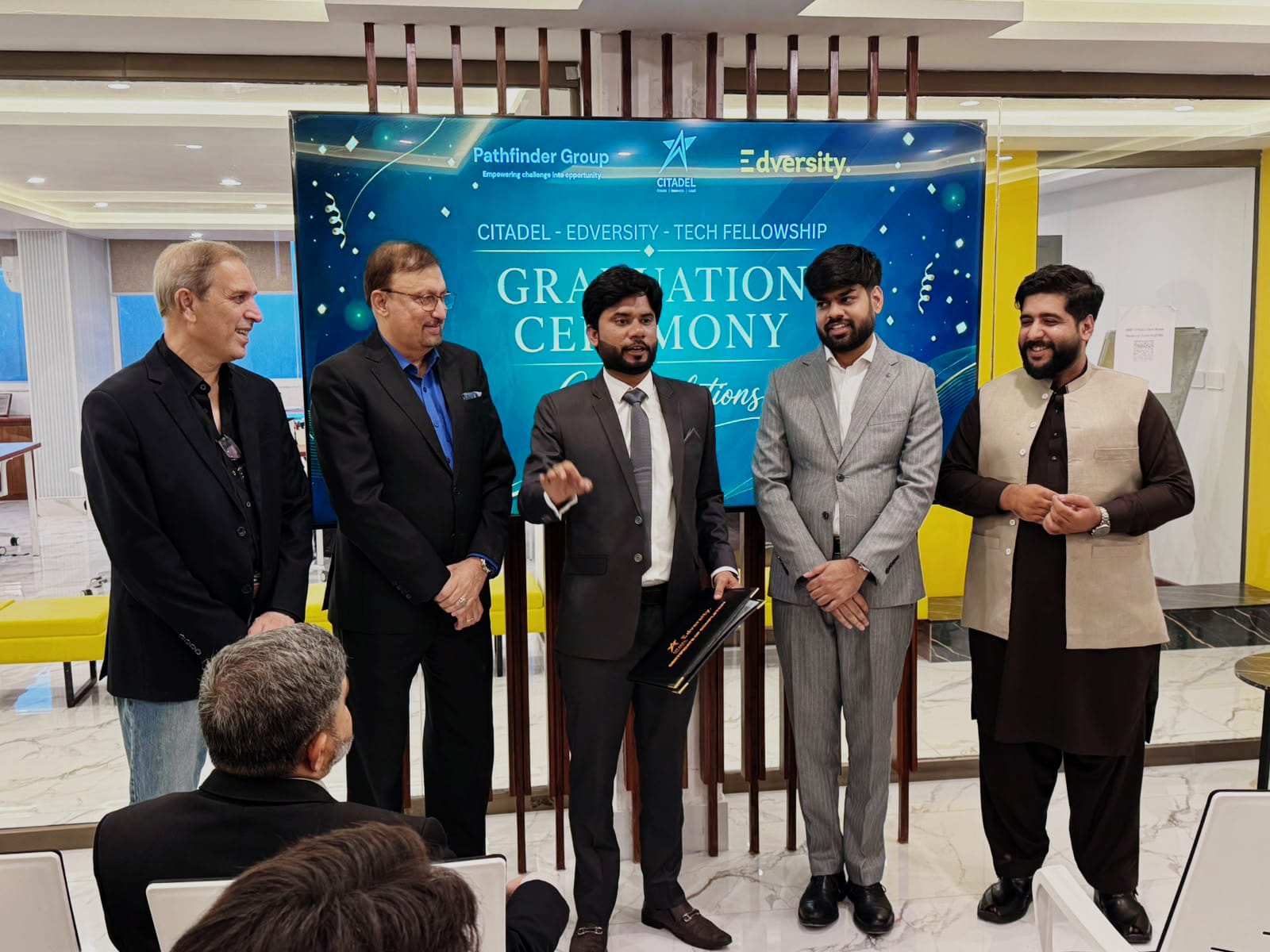
I am a civil engineer who could not write a line of Python. Twelve weeks later I had built an artificial intelligence that designs houses. This is how it happened, and what it cost.
The Two O’clock Hour
There is an hour that belongs to no one. It arrives long after the traffic on Islamabad’s arteries has thinned to nothing, after the last cup of tea has gone cold, after your mind has already asked twice to be allowed to stop. Two o’clock in the morning. For the better part of a year, that was the hour in which I did my most important work.
The routine would look unreasonable written down, and it was. I left home at half past seven and worked a full engineering day, eight until five. Then I rode fifty kilometres, on a motorcycle, in heat and dust and rain, to a classroom in Blue Area, Islamabad, for a lecture from seven until nine at night. I reached home at half past ten with nothing left in me — and then, most nights, opened my laptop and worked until two.
Out of those hours came a piece of software called Design & Build (AI Architect). You type in the dimensions of your plot. Minutes later you have a residential floor plan, cross sections, a fully animated three-dimensional model, a complete bill of quantities, a construction programme against whatever time frame you choose, and a project video showing the building rise from bare ground. It took first place at the Citadel graduation ceremony, and we are now preparing it for global launch.
But the software is the end of this story, and the story does not begin with software. It begins with my family, a uniform, and a decision I made in 2010 when I had just finished my intermediate.
The Son of a Soldier
I M. Waqas come from a lower-middle-class family, a phrase that in Pakistan carries a particular weight. It means the household runs on discipline rather than surplus. It means a son who does well is not merely a source of pride but a source of income. It means your education and your family’s survival are the same project, and you carry both at once or drop them together.
My father Muhammad Tufail served in the Pakistan Air Force (PAF) and retired as JCO from PAF. Retirement did not mean rest. In 2005 he joined Security & Management Services, the security division of the Pathfinder Group, as a security supervisor, and served in that role for twenty years until his retirement in 2025. Two decades of turning up and standing watch. I have come to believe that loyalty of that length is rarer than talent, and considerably harder.
A son watches. Long before I had words for it, I was learning from him what it looks like to do unglamorous work extremely well, for a very long time, without being asked whether you feel like it.
Work began in 2010, immediately after my intermediate — not later, not once things were settled, but at the first possible moment. It never stopped. Every qualification I hold was earned while employed full time and contributing to the running of my home. There was no gap year, no funded degree, no season in which somebody else carried the weight. I have only ever studied in the margins of a working life, because the margins are all I have had.
The First Rescue
And then, as it does, the margin closed completely.
There came a point when I was out of work with a university fee I could not pay. This is where a great many promising stories in Pakistan simply stop — not for want of ability, but for want of a few months of income arriving at the right moment. A degree abandoned at that stage is very rarely finished later.
What happened instead was this. I took a job as a security supervisor with Security & Management Services — the same company my father served — and worked in that role for six months. It was not the job I had trained for. It was the job that existed. I took it, kept my family fed, paid what needed paying, and finished my bachelor’s degree.
I have described this since as being evacuated from the ocean, and I use the phrase deliberately. Nobody handed me a prize. I was pulled out of water that was closing over my head, set down on something solid, and left to walk the rest of the way myself. That is exactly what opportunity looks like when it arrives in time.
Building the First Two Minds
I qualified as a civil engineer — the discipline of load paths and bearing capacities, of what stands and what does not. It gave me a cast of mind whose value I did not appreciate until much later: that a number is either right or it is dangerous, and there is no third category. You learn to distrust an answer that has not been checked twice, by different means.
Then came a postgraduate qualification in Building Information Modelling and Construction Management. BIM is the discipline of the coordinated model — the insistence that the plan, the section, the quantities and the programme are not four documents that happen to describe the same building, but four views of one object. If the drawing and the bill disagree, one of them is lying, and BIM exists to make that lie impossible to hide.
The Third Mind, and the Fear That Came With It
In 2026, Citadel — Pakistan’s Centre for Innovation, Technological Advancement, Digital Entrepreneurs and Leadership, an initiative of the Pathfinder Group — launched a twelve-week Applied AI and LLM Engineering programme with Edversity, taught onsite in Blue Area, Islamabad. It was industry-led, project-driven and unapologetically demanding. I applied, and was admitted.
And then I was afraid, because this was genuinely unlike anything I had studied before.
Everything I had learned until then had been continuous. Civil engineering led naturally into construction management, and that into BIM; each new subject stood on ground I already occupied. Applied artificial intelligence stood on no such ground. It was somebody else’s field entirely — Python, neural architectures, retrieval systems, model training, algorithmic design — and I was, without exaggeration, the only student in that room who arrived knowing nothing whatever about it.
Let me be honest about how that felt, because accounts like this one usually skip it. It felt like drowning in a room full of people who were swimming comfortably. It felt as though every question I wanted to ask would only reveal how far behind I was. The temptation is never to work harder; it is to go quiet, do the minimum, take the certificate and leave with your dignity intact.
I decided to ask the questions instead. I did the hours nobody was checking. And I was not left to do it alone.
My teacher, Sir Ammad Durrani, helped me a great deal, and the help I needed was not in any syllabus — it was the patient re-explanation of a thing everyone else had absorbed the first time. Our mentors and the management ran the programme superbly. Sir Farhan, Director at Citadel, and Sir Khalid Banuri gave me something worth more than instruction: belief, at precisely the moments my own was running out.
Choosing the Hardest Thing in the Room
Then came the moment when we chose our projects — a moment of quiet self-assessment, in which most people sensibly choose something they are confident of finishing.
I chose to build an artificial intelligence that designs houses.
On the face of it this was not rational — the newest student in the class attempting the most ambitious project on offer. At the start it was honestly just a dream. But there was a logic I could only see afterwards. I was not starting from nothing. I was starting from fifteen years of knowing how buildings work, how their information must be structured, and where my profession wastes its time. What I lacked was the machinery. The programme handed me the machinery.
The three minds met. And together they produced something none of them could have managed alone.
What the Machine Actually Does
Design & Build (AI Architect) is a web application, and its promise is deliberately simple: give it the dimensions of your plot, and it gives you back a building.
Not a sketch. A building, described completely.
It produces a residential floor plan, arranged by an engine that places circulation first — entrance, stair, corridor — and hangs the rooms off that spine. I built it that way because a house in which every room must be entered through another is not a house anyone wants to live in, however neatly it packs. It draws the plan properly dimensioned, on a structural grid, then grades its own output against the rules a draughtsman would fail a sheet for.
It produces cross sections, cut deliberately through the staircase on both axes. A section drawn anywhere shows a wall and a slab; a section through the stair shows the thing most likely to be wrong. What the cutting plane passes through is drawn heavy and hatched, what lies behind it faint — the distinction between a real section and a picture that merely looks plausible.
It produces a complete foundation design: columns at the junctions where walls actually meet, pad footings sized from each column’s tributary area against the soil’s allowable bearing pressure, eccentric shoe footings where a pad may not cross the plot boundary, and plinth beams running on precisely the same lines as the roof beams above them.
It produces a fully animated three-dimensional model, built from the same wall runs and openings the two-dimensional plan draws — so a door is a real gap you can see through rather than a line painted on a sealed box, and the model can never disagree with the drawing.
It produces a complete bill of quantities — not an estimate scaled from a rate per square foot, but a measured bill: excavation, blinding, reinforced concrete, brickwork net of every opening, plaster, flooring, paint, services, and a bar bending schedule counting the reinforcement bar by bar. Every line carries its own working, so a quantity surveyor can see exactly how I reached the number and argue with me if he disagrees.
It produces a full construction programme against whatever time frame you ask for: a work breakdown structure generated from the bill, a critical path by forward and backward pass, crew levelling, resource histograms, an S-curve, and an export a planner can open in Primavera.
And it produces a project video — the building assembling itself from bare ground, foundation to roof, in the sequence the programme says it will actually be built.
Let me be careful about the claim I am making, because the honest version is stronger than the boastful one. I am not claiming that any single item on that list has never been done; each exists somewhere, in some expensive specialist package, operated by a trained professional. What I have not found anywhere is all of it together, from one input, in minutes, and consistent with itself. Change the soil bearing capacity and the footings grow, the excavation rises, the bill increases, the sections redraw. Move a wall and the plan, the model, the bill and the programme all move with it. There is one building inside the system, described five ways, and the drawing cannot say one thing while the bill says another.
The Discipline Underneath
The hard part of building a tool like this is not making it produce output. Modern models will produce output all day long, fluently and confidently, and a great deal of it will be subtly wrong. The hard part is making the output correct — and then proving it is correct, again and again, as the system grows underneath you.
This is where the civil engineer and the BIM engineer earned their place at the table. I built Design & Build with an unusual amount of suspicion towards my own work. Its geometry is checked by permanent regression tests asserting what an engineer would assert. That the plinth beams and the roof beams describe the same frame, segment for segment. That no column stands in the middle of a room. That every column sits on the beam carrying it. That adding a storey does not silently change the storey below. That the quantities reconcile against the plan by independent hand calculation — and that a building costs the same, to the last rupee, whether shown in feet or in metres.
Before preparing for launch I put the whole application through a full audit, and I am glad I did, because it found four genuine defects: a formatting fault that made every dimension in the schedules unreadable; a parameter path that could have caused the bar bending schedule to under-report reinforcement with no error appearing anywhere; a malformed plot that could collapse an entire foundation onto a single point; and a hard-coded beam depth that would have put the drawings at odds with the bill the moment anyone changed a parameter. Not one was visible in ordinary use. All four were found because I had built the system to be interrogated.
I record that here rather than hide it, because accuracy is not a decorative word in my field. A bill of quantities is a document somebody borrows money against. A construction programme is a document somebody signs a contract against. If my software is wrong, a real person loses real money on a real plot of land. Having spent fifteen years on the receiving end of those documents, I am not willing to be the reason somebody’s figures do not add up.
Three Minds, One Head
A software engineer with no construction background could have built something that looked exactly like this. It would have produced beautiful plans with columns standing in drawing rooms, beams that did not line up between floors, and bills of quantities that were internally consistent and professionally meaningless.
A civil engineer with no software ability could have specified every part of it perfectly, in a document nobody would ever build.
What the problem required was one person holding all three at once: the civil engineer who knows what must be true of a building, the BIM engineer who knows how its information must be coordinated so no two views can disagree, and the applied AI engineer who can express all of it in Python — in models, in retrieval over a library of real measured drawings, in algorithms that put a column where a column belongs.
I did not plan that combination. I acquired it one piece at a time, in the hours after work, over sixteen years, because I could never afford to stop earning long enough to do it any other way. The slow route, it turned out, had assembled exactly the right toolkit.
Coal and Diamonds
Pakistan does not have a talent problem. It has a discovery problem. I can say that with some authority, because I very nearly was not discovered.
This country produces, every single year, an enormous number of capable and determined young people whose ability is invisible because nothing in their circumstances is designed to reveal it. They are working. They are supporting families. They are studying in the margins, as I did. They lack the network that turns competence into opportunity, and often the few months of financial slack that would let them take a risk on themselves. Their talent is real, it is buried, and most of it stays buried for a lifetime.
What Citadel Pathfinder did — twice, in two different decades, for one family — was reach into that seam and pull something out.
The first time it was a security supervisor’s post that let a young man finish his degree instead of abandoning it. The second was a place on a twelve-week fellowship that gave a civil engineer the tools to build something I have not seen elsewhere. Neither was charity. Both were opportunity extended to somebody who had spent years demonstrating he would use it.
Coal and diamonds are the same element. The only difference between them is what pressure has been applied, and for how long.
The True Face of Pakistan
There is a version of this country that dominates the coverage, and it is not the one I have lived in. Let me say plainly what I think this story shows.
It shows a retired air force serviceman who gave twenty further years of loyal service after his uniform came off, and never once treated it as beneath him. It shows a teacher who stayed behind to explain a concept a third time to the slowest student in his class. It shows a director and a mentor who encouraged somebody visibly struggling rather than quietly writing him off. And it shows a group that decided technology capacity in Pakistan was worth investing in, then actually invested rather than talking about it.
Design & Build (AI Architect) was not built in Silicon Valley by a team of thirty with venture funding behind them. It was built in Islamabad, at night, by one man on a motorcycle, after a full day’s work. That is the Pakistan I know, and it is a considerably more impressive one than the picture usually painted.
Faith, and the Debts I Owe
My thanks are owed in a particular order, and the order matters to me.
First and above all, to Almighty Allah — for the strength to survive a routine that should not have been survivable, and for an outcome no amount of planning on my part could have guaranteed. Faith is not a decorative closing remark in a story like this. It is what makes two o’clock in the morning bearable when there is not yet any evidence that any of it will work.
Then to my parents. To my father, whose twenty years of steady service taught me what consistency looks like before I had any language for it. And to my mother, whose support appears on no curriculum vitae of mine but underwrites every line of it.
Then to Citadel Pathfinder, and to its Chairman, His Highness Sir Ikram Sehgal, who announced a prize in recognition of what I had built. Sir Ikram is a retired Pakistan Army officer who received a battlefield promotion to Major in December 1971, went on to build one of Pakistan’s largest security and technology groups, and is a long-standing member of the World Economic Forum. That a man of that standing took personal notice of a student’s graduation project tells you how this organisation regards the people inside it.
To Sir Farhan-Director at Pathfinder CITADEL, and Sir Khalid Banuri-Principle Advisor at Pathfinder CITADEL, for encouragement that arrived at exactly the right moments. To Sir Ammad Durrani for the teaching and the patience. And to the mentors and management, for running a programme that took its students seriously enough to be genuinely difficult.
And to Security & Management Services, which twice gave my family ground to stand on: once for my father across twenty years, and once for me across six months that saved a degree.
What Happens Next
We are preparing Design & Build (AI Architect) for global launch in collaboration with Citadel. The work in front of me now is the unglamorous kind: hardening, auditing, closing the last gaps, making certain that a tool people will make financial decisions with is worthy of that trust.
The market is not a small one. Every plot of land in every growing city in the developing world represents a family who will need a plan, a cost and a schedule, and who must currently either pay professional fees they cannot easily afford or proceed without any of the three. A tool that compresses weeks of coordinated professional output into minutes, and keeps it consistent, is not a convenience. In a country where most houses are built without a proper bill of quantities, it is a correction to something structurally wrong.
What I Would Tell You
If you take one thing from this, I would rather it were useful than inspiring.
Your existing expertise is not an obstacle to entering a new field. It is your advantage, provided you are willing to be a beginner long enough to connect the two. I did not succeed in artificial intelligence in spite of being a civil engineer. I succeeded because I was one. Every other student in that room could write better Python than I could on the first day, and most of them still can. Not one could have told you why a plinth beam must run on the same line as the roof beam above it.
The second thing is about consistency. Nothing here was achieved by a burst of brilliance. It was achieved by doing a difficult thing every single day for a very long time, with every reasonable excuse available to stop. Sixteen years of working and studying at once. Twelve weeks of a hundred-kilometre daily round trip. Months of nights ending at two in the morning. I am sorry to report there was no shortcut, because I did look for one.
And the third is about opportunity, the part that was never in my hands. Talent never found is wasted quietly, at enormous national scale, every year. The institutions that go looking — that hand a job to somebody who needs six months, that admit a student who has never written a line of code — do something far more valuable than they are usually given credit for. Citadel Pathfinder pulled me out of the ocean twice. I did the swimming afterwards, but I would have drowned without the hand.
There is a laptop in Islamabad that was open at two o’clock this morning. I intend to keep it that way.